Space Dandy
スペース☆ダンディ (Space☆Dandy)
- Comedy
- Sci-Fi
- Adult Cast
- Space
- Episodes
- 13
- Duration
- 24 min per ep
- Aired
- Jan 5, 2014 to Mar 27, 2014
- Status
- Finished Airing
Synopsis
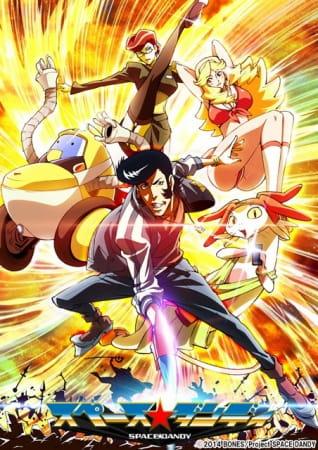
Dandy, a slick, pompadour-sporting space explorer, roams the galaxy hunting down unusual aliens for cash—though his heart is set on a more personal destination: BooBies, the famed diner of the cosmos. He pilots the Aloha Oe alongside two unmistakable partners, QT, a vacuum-cleaner robot, and Meow, a catlike alien with plenty of attitude.
No two days on the job look the same. Dandy and his crew bounce from one unpredictable escapade to the next, stumbling into dangerous scrapes, romantic detours, and bizarre encounters across the stars, all while trying to stay one step ahead of Dr. Gel and the Gogol Empire.
Otaku Consensus
Space Dandy earns its 7.89 MAL and 77 AniList reputation as a director-driven Bones playground: Shinichirou Watanabe’s cool-as-genre instinct, Shingo Natsume’s elastic comic timing, and a deliberately unruly episodic format give the series a personality few 2014 TV anime matched. The divide is real: viewers expecting Cowboy Bebop-style emotional continuity often read the pacing as wasted potential, while supporters value the surreal parody, high production values, soundtrack, and willingness to let an episode chase a bizarre idea to its endpoint. The most consistent criticism is not technical quality but tolerance level for crass, juvenile humor and low-commitment characterization.
Why You Should Watch
Watch Space Dandy if you want the latitude of Cowboy Bebop’s genre experiments without the noir weight or homework continuity. It is best approached as a 13-episode anthology of comic sci-fi riffs: one episode can lean into parody, another into trippy philosophy, another into pure audiovisual swagger, and the show treats tonal whiplash as the point. Bones gives the format enough craft that even a joke episode has production design to inspect, from alien silhouettes to color palettes and music cues. The ideal viewer is the one who rewatches opening animations, notices background creatures, and enjoys when an anime risks a failed bit for the chance at a strange one. If juvenile fanservice jokes are a deal-breaker or you need cumulative character drama, this will fight you.
Key Characters
- DDandy(VA: Junichi Suwabe)
Dandy works because the show treats his ridiculous confidence as both a punchline and a philosophy, turning a vain comic lead into the axis for its anything-goes experiments.
- MMeow(VA: Hiroyuki Yoshino)
Meow is the crew’s loudest source of friction, a catlike alien whose slack attitude and constant complaining make him feel less like a mascot than a terrible roommate in space.
- QQT(VA: Uki Satake)
QT’s vacuum-cleaner design hides one of the show’s best running contrasts: the most practical member of the trio is also the easiest to underestimate visually.
What Makes It Stand Out
- 1
The structure is openly episodic and achronological, matching AniList’s high tags for Episodic, Meta, Surreal Comedy, and Philosophy. That format lets the series behave less like a serial and more like a rotating lab for sci-fi premises, visual jokes, and tonal one-offs.
- 2
Studio Bones’ production is a major part of the text rather than decoration: reviews repeatedly single out the series as visually stunning, smooth, colorful, and unusually diverse from episode to episode. The staff stack includes Shinichirou Watanabe as chief director and Shingo Natsume as director, which explains why the comedy often lands through timing, motion, and staging rather than dialogue alone.
- 3
The alien design approach is one of the show’s clearest identity markers. Critical coverage noted a melting-pot method with different artists creating individual aliens, helping the setting avoid the unified species-design look common to more conventional space anime.
- 4
The music and title sequences carry their own fan reputation: reviewers praised the upbeat, heavily animated opening for how tightly the visuals sync to the song, while the main ending was noted for a more mellow tone and more interesting-than-usual ending visuals. Some episodes also use special ending songs, reinforcing the show’s habit of treating individual episodes as self-contained events.
- 5
Its humor is not just gag comedy; the show leans into parody and meta-sci-fi, with AniList tags placing Parody at 81% and Meta at 79%. That is why reactions skew so sharply: the same looseness that makes it inventive also makes it feel disposable to viewers who want plot accumulation.
Fun Facts & Trivia
- Fun fact 1
- Space Dandy’s reception numbers show a stable but not universally adored cult profile: MAL lists it at 7.89 from 165,453 votes, while AniList places it at 77/100 with 2,914 favourites. That gap fits the review pattern, where admiration for craft coexists with frustration over the loose format.
- Fun fact 2
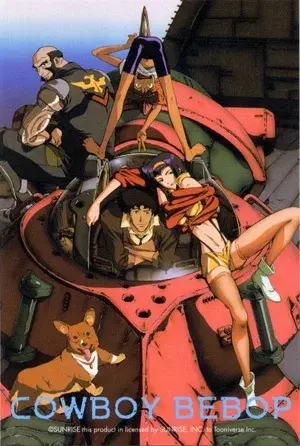
- The series is often discussed in the shadow of Cowboy Bebop because of Shinichirou Watanabe’s chief-director role, but reviews repeatedly warn that the comparison can mislead viewers. Space Dandy trades Bebop’s melancholic continuity for surreal sketchbook freedom and a much less serious baseline.
- Fun fact 3
- The art-side credits point to how carefully the show’s look was managed: Yoshiyuki Itou handled character design, Shingo Takeba is credited for design works, Ryou Kouno served as art director, Yumiko Kondou as assistant art director, and Yuuko Kobari as color designer.
- Fun fact 4
- The photography, editing, and CG pipeline also had named specialists: Yoshiyuki Takei handled photography direction, Kiyoshi Hirose editing, and Kouki Oota CG direction. For a comedy, that level of visible craft matters because many jokes depend on rapid cutting, visual exaggeration, and clean compositing.
- Fun fact 5
- The main trio’s Japanese cast gives the show three very different comic textures: Junichi Suwabe’s Dandy leans into swagger, Hiroyuki Yoshino’s Meow supplies abrasive looseness, and Uki Satake’s QT plays the robot as a practical counterweight rather than a cold machine stereotype.
Studios
- Bones