Revolutionary Girl Utena
少女革命ウテナ (Shoujo Kakumei Utena)
- Award Winning
- Drama
- Mahou Shoujo
- Psychological
- School
- Episodes
- 39
- Duration
- 23 min per ep
- Aired
- Apr 2, 1997 to Dec 24, 1997
- Status
- Finished Airing
Synopsis
As a child, Utena Tenjou is shaken by the loss of her parents, until a passing prince offers comfort, wipes away her tears, and leaves her with a ring marked by a rose crest—promising they will meet again if she keeps it close. The encounter changes Utena’s life, inspiring her to live not as a princess awaiting rescue, but as a prince in her own right.
Years later at Ootori Academy, the same rose emblem appears around her, and a chance scene in the rose garden draws her attention to Anthy Himemiya alongside Student Council President Touga Kiryuu and Vice President Kyouichi Saionji, whose dispute seems to center on Anthy. Soon, a misunderstanding pulls Utena into the secret world of Duelists—students who bear rings like hers and battle for the right to claim Anthy as the “Rose Bride,” said to hold tremendous power. Outraged by how Anthy is treated and determined to prove what it means to be a prince, Utena steps into the duels to challenge the rules that bind her.
Otaku Consensus
Revolutionary Girl Utena endures because Kunihiko Ikuhara’s direction turns school ritual, swordplay, fairy-tale language, and psychosexual symbolism into a tightly controlled visual argument rather than decorative weirdness. Critics and fans consistently praise its imagery, world design, existential character writing, and Be-Papas’ original-TV ambition, while the genuine sticking point is its deliberately formulaic episode rhythm, which can feel repetitive before its patterns start to mutate.
Why You Should Watch
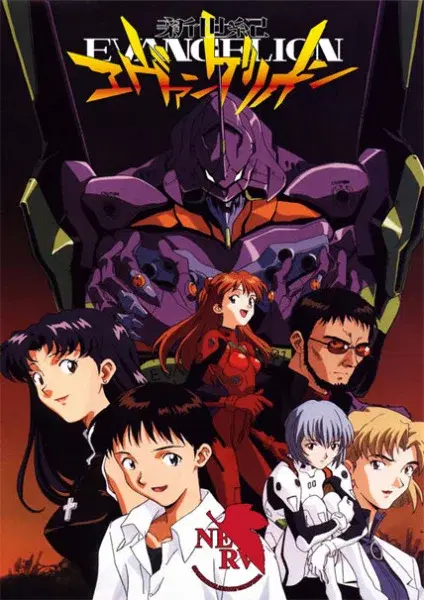
Watch Revolutionary Girl Utena if you want a shoujo classic that treats gender roles, desire, power, and adolescence as systems to be interrogated, not simply emotions to be dramatized. It scratches a similar itch to Neon Genesis Evangelion’s psychological pressure-cooker and Puella Magi Madoka Magica’s dismantling of magical-girl mythology, but with theatrical school rituals, yuri-coded tension, sword duels, surreal comedy, and fairy-tale iconography in place of mecha or horror mechanics. The ideal viewer is someone who enjoys decoding repeated images, symbolic staging, and characters whose contradictions matter more than plot twists. If you want every metaphor explained aloud, it will frustrate you; if you want anime that trusts form, repetition, and visual language to carry meaning, it rewards close attention.
Key Characters
- UUtena Tenjou
Utena remains one of anime’s defining tomboy heroines because her princely self-image is treated as both a liberating ideal and a fragile performance under social pressure.
- AAnthy Himemiya
Anthy is fascinating because the series builds tension around the gap between her quiet presentation and the symbolic weight everyone projects onto her.
- TTouga Kiryuu
Touga embodies the series’ interest in charisma as control, making him less a simple rival than a study in how romance, hierarchy, and performance overlap.
- KKyouichi Saionji
Saionji’s volatility gives the early duels a sharp psychological edge, showing how wounded pride and possessiveness can masquerade as devotion.
What Makes It Stand Out
- 1
The series was produced by J.C.Staff as a 39-episode television anime, giving it an unusually extended three-cour structure for developing recurring rituals, mirrored character conflicts, and symbolic escalation.
- 2
Kunihiko Ikuhara is credited with both the original plan and direction, and the show carries the stamp of an auteur project: repeated visual motifs, theatrical staging, and abrupt tonal shifts are central to how it communicates.
- 3
Youji Enokido handled series composition, and the show’s much-discussed formula is not incidental: episodes often spotlight a character’s psychological fracture before channeling that conflict into ritualized confrontation.
- 4
The production’s visual identity was shaped by Shinya Hasegawa’s character designs, Shichirou Kobayashi’s art direction, and Kunio Tsujita’s color design, helping Ootori Academy feel less like a normal school setting and more like a symbolic stage.
- 5
AniList’s tag profile is unusually dense for a school drama, with Coming of Age, Psychosexual, Philosophy, Fairy Tale, Yuri, Bisexual, LGBTQ+ Themes, Cars, and Surreal Comedy all registering as major viewer-recognized elements.
Fun Facts & Trivia
- Fun fact 1
- Revolutionary Girl Utena is credited to Be-Papas as original creator, with Kunihiko Ikuhara and manga artist Chiho Saitou both listed under the original plan, reflecting its identity as a coordinated multimedia concept rather than a straightforward adaptation pipeline.
- Fun fact 2
- The anime aired from April 2, 1997 to December 24, 1997, completing 39 episodes within the same calendar year while still running long enough to develop multiple distinct phases of its dueling structure.
- Fun fact 3
- Its database reception shows the gap between cult stature and mainstream reach: on MAL it holds an 8.25 score from 72,630 votes with a #393 rank, while its popularity sits lower at #1141.
- Fun fact 4
- AniList users rate it 83/100 and have favorited it 6,193 times, reinforcing its reputation as a smaller but highly devoted canon title rather than a broad casual hit.
- Fun fact 5
- Contemporary viewer commentary repeatedly circles the same contradiction: the series is praised for heavy metaphor, existentialism, psychological analysis, and character writing, yet even positive discussions acknowledge the repetition as its most divisive structural choice.
Studios
- J.C.Staff