Lupin III
ルパン三世
- Action
- Adventure
- Comedy
- Mystery
- Adult Cast
- Episodes
- 23
- Duration
- 24 min per ep
- Aired
- Oct 24, 1971 to Mar 26, 1972
- Status
- Finished Airing
Synopsis
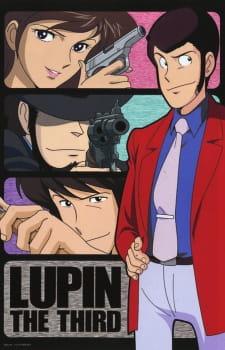
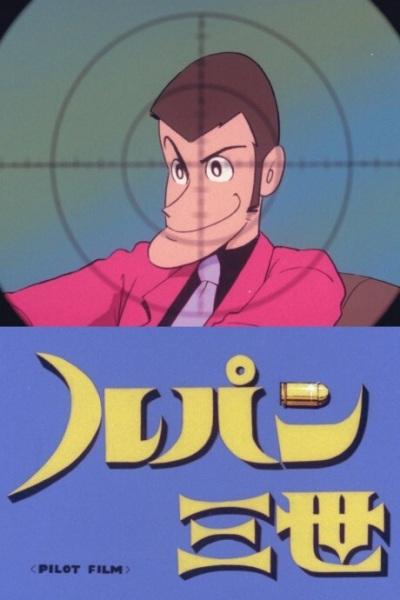
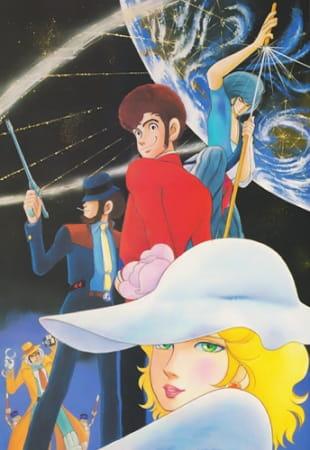
Lupin III follows the notorious gentleman thief who carries on the name of his grandfather, Arsène Lupin, with a talent for escape, disguise, and elaborate deception. With crack shot Daisuke Jigen at his side, Lupin sets his sights on priceless treasures and buried secrets, turning each caper into a high-speed game of wits.
Complicating every job is Fujiko Mine, a captivating opportunist who isn’t above charming Lupin—or betraying him—whenever it benefits her. Hot on their trail is relentless inspector Kouichi Zenigata, whose tireless pursuit ensures that every heist comes with its share of close calls, twists, and comedic mishaps.
Otaku Consensus
Lupin III remains a foundational crime-adventure anime whose reputation rests less on a single storyline than on its adult anti-hero energy, Takeo Yamashita’s stylish music, and the visible production handoff that brings Hayao Miyazaki and Isao Takahata into much of the back half. Its 7.63 MAL score and 74 AniList score reflect durable respect rather than modern hype: fans prize the brisk caper pacing and Tokyo Movie Shinsha craft, while the most consistent criticism is that the early 1971 episodes can feel tonally uneven and visually spare beside later Lupin entries.
Why You Should Watch
Watch Lupin III if you want compact, adult-leaning crime capers without lore homework, power scaling, or a season-long villain board. Its appeal is in the friction: a fugitive hero who is charming but never sanitized, a police pursuit that doubles as comedy machinery, and a rotating set of robberies, betrayals, guns, cars, and disguises that make each episode feel like a pulp magazine with motion. It scratches the same episodic-cool itch later associated with Cowboy Bebop, but with more slapstick criminal swagger and a rougher early-TV edge. For viewers curious about anime history, it is also a rare chance to see pre-Ghibli Hayao Miyazaki and Isao Takahata working inside a mainstream action-comedy franchise rather than a prestige auteur project.
Key Characters
- AArsène Lupin III
Lupin is compelling because the series lets him be clever, vain, funny, and morally slippery at once, making him feel closer to a pulp outlaw than a conventional heroic lead.
- DDaisuke Jigen
Jigen gives the capers their dry, gunman-cool counterweight, grounding Lupin’s theatrical impulses with professional skepticism and deadpan loyalty.
- FFujiko Mine
Fujiko stands out because the show treats her alliance with Lupin as unstable by design, turning every appearance into a test of desire, greed, and trust.
- IInspector Zenigata
Zenigata is more than a chase gag: his obsessive pursuit supplies the series with its police-procedural spine and keeps Lupin’s victories from feeling consequence-free.
What Makes It Stand Out
- 1
The series is structurally episodic across 23 episodes, which makes it closer to a run of self-contained crime stories than a modern serialized heist anime. That format keeps the emphasis on schemes, reversals, and character chemistry rather than long-term mythology.
- 2
Tokyo Movie Shinsha’s production is anchored by Yasuo Ootsuka, who served as both character designer and animation director. His designs translate Monkey Punch’s adult, angular manga sensibility into television animation while leaving room for broad physical comedy.
- 3
Hayao Miyazaki and Isao Takahata directed a substantial portion of the series, including episodes 8, 10, 11, and 13 through 23. Their involvement makes the back half especially important for viewers tracing how major anime directors handled movement, comedy, and action before their later auteur reputations.
- 4
Takeo Yamashita’s music gives this first Lupin TV series its own identity, preceding the more widely recognized Yuji Ohno sound of later franchise entries. The score helps frame the show as a crime-comedy for adults rather than a straightforward adventure serial.
- 5
The AniList tag profile is unusually concentrated for an early 1970s TV anime: Seinen at 100%, Anti-Hero at 97%, Fugitive at 94%, Episodic at 91%, and Crime at 87%. That combination explains why the show still reads as adult genre television rather than simply as vintage family entertainment.
Fun Facts & Trivia
- Fun fact 1
- This 1971–1972 TV anime is the first Lupin III television series, adapting Monkey Punch’s original manga into a 23-episode format that established the franchise’s screen language.
- Fun fact 2
- Souji Yoshikawa storyboarded both episode 1 and episode 23, giving him a role at the series’ opening and closing points rather than only in the middle of the run.
- Fun fact 3
- Seiji Okuda storyboarded episodes 8 and 9, placing his work directly around the stretch where Hayao Miyazaki and Isao Takahata are credited as directors on episode 8 and then return for much of the latter half.
- Fun fact 4
- Yasuo Ootsuka’s dual credit as character designer and animation director made him one of the central visual authors of the series, not merely a contributor to isolated episodes.
- Fun fact 5
- Despite airing from October 24, 1971 to March 26, 1972, the series still maintains measurable modern database traction, with a 7.63 MAL score from 34,224 votes and 659 AniList favourites.
Studios
- Tokyo Movie Shinsha