Gunsmith Cats
ガンスミス キャッツ
- Action
- Comedy
- Racing
- Episodes
- 3
- Duration
- 29 min per ep
- Aired
- Nov 1, 1995 to Sep 1, 1996
- Status
- Finished Airing
Synopsis
In the rougher outskirts of Chicago, bounty hunters Irene “Rally” Vincent and “Minnie” May Hopkins keep busy running Gunsmith Cats, a gun shop that operates in a legal gray area. Their day-to-day work takes a sharp turn when Bill Collins, an agent from the Chicago office of the Bureau of Alcohol, Tobacco, Firearms, and Explosives, corners them into assisting with an investigation.
With pressure mounting and danger close behind, Rally’s expert marksmanship and May’s talent for explosives become their best edge. As the case grows more tangled, the pair are forced into a string of firefights and blasts where quick thinking—and quicker trigger fingers—are the difference between making it out and not coming back.
Otaku Consensus
Gunsmith Cats earns its reputation through Takeshi Mori’s taut direction, OLM’s unusually tactile action animation, strong voice work, and Atsuji Kaneko’s ability to keep a twist-heavy case readable across only three episodes. Its stylish Chicago noir atmosphere and grounded handling of guns and cars remain the chief attractions, while compressed plotting and limited time to deepen the leads’ chemistry are the most persistent weaknesses.
Why You Should Watch
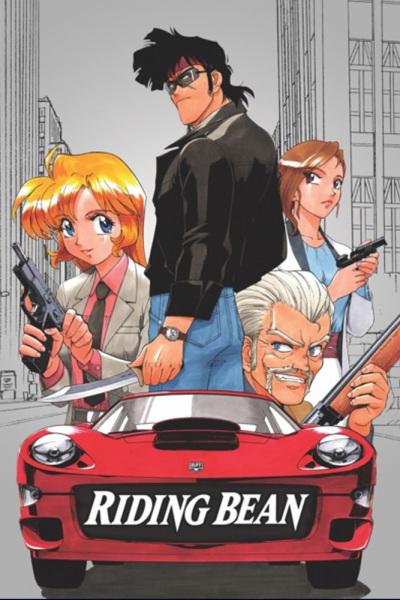
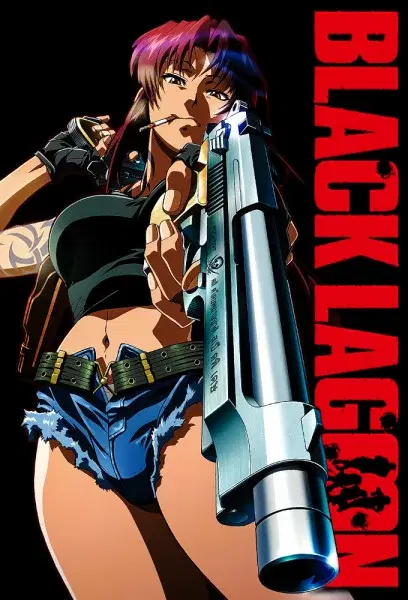
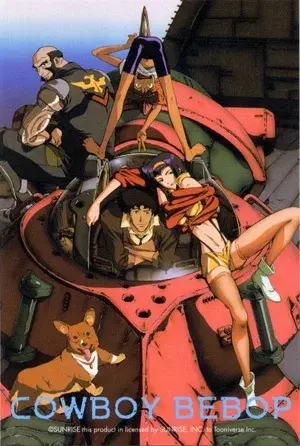
If your ideal action anime favors mechanical credibility over superpowers, this three-episode OVA is a concentrated hit. OLM gives firearms, cars, and urban movement a tactile weight, while Peter Erskine’s jazz and the 1970s-style split-screen opening supply the cool that later viewers associate with Cowboy Bebop. The appeal is not spectacle alone: Rally and May are capable adults whose mistakes and vulnerability keep the shootouts tense, and the friction among bounty hunters, federal agents, police, and gunrunners creates a compact procedural texture. It scratches Cowboy Bebop’s bounty-hunter itch without science fiction and delivers grounded crime action without Black Lagoon’s larger-than-life escalation. The trade-off is scale: three installments leave little room for deep character development. Choose it when you want tight pacing, practical weapon detail, car-chase energy, and a complete evening’s watch rather than a long franchise commitment.
Key Characters
- IIrene “Rally” Vincent(VA: Michiko Neya)
Rally stands out because her confidence and technical expertise never erase her vulnerability, giving her confrontations more tension than the invincible-gunfighter archetype usually allows.
- MMay Hopkins(VA: Kae Araki)
May supplies the partnership’s streetwise, irreverent energy, with her more impulsive temperament creating the contrast behind the duo’s fan-favored chemistry.
What Makes It Stand Out
- 1
OLM’s animation emphasizes smooth physical motion and grounded action rather than exaggerated superhuman feats, an approach repeatedly praised by viewers for making the firearms and vehicle sequences feel unusually tangible.
- 2
Peter Erskine’s jazz-driven music combines with a 1970s-style split-screen opening to establish a retro crime-show identity that predates Cowboy Bebop’s better-known fusion of bounty hunters and jazz cool.
- 3
Atsuji Kaneko scripted all three episodes, while Kazuya Murata directed each installment, giving the short OVA a consistent tempo and visual language despite its release being spread across ten months.
- 4
Cars receive nearly as much production attention as guns: racing is an official theme, and the vehicle action reinforces the series’ Western crime-cinema sensibility rather than functioning as incidental transportation.
- 5
Its adult, primarily female leads operate within a distinctly American urban-noir framework, setting it apart from school-centered action anime and from science-fiction treatments of bounty hunting.
Fun Facts & Trivia
- Fun fact 1
- Original creator Kenichi Sonoda also served as a character designer on the OVA alongside Norihiro Matsubara, preserving a direct visual connection to the source creator’s designs.
- Fun fact 2
- Weapon specialist Yukitoshi Murotani received a dedicated weapon-design credit for episode one, reflecting the production’s emphasis on firearm detail.
- Fun fact 3
- The three episodes were released from November 1, 1995, to September 1, 1996, making this compact OVA a production distributed across almost a full year.
- Fun fact 4
- Studio OLM later became globally associated with Pokémon and also worked on the 1997 Berserk adaptation, making Gunsmith Cats an early example of the studio’s range beyond family-oriented television anime.
- Fun fact 5
- Episode three specifically credits Masahide Okino as director of photography, while Nobuyuki Wasaki handled the production desk for episodes two and three.
Studios
- OLM