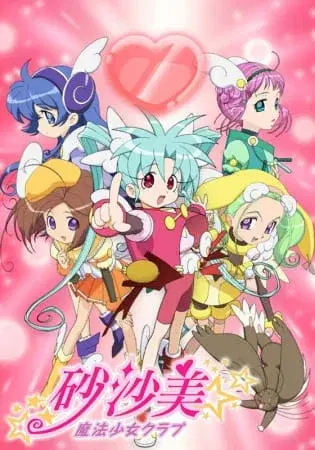
Kirarin Revolution
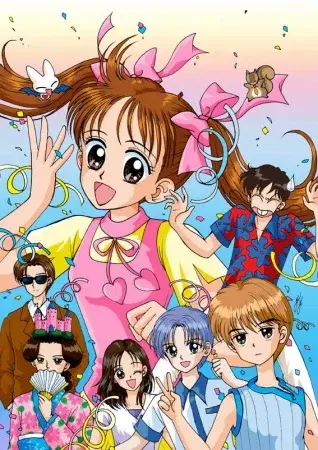
きらりん☆レボリューション (Kirarin☆Revolution)
- Comedy
- Drama
- Romance
- Showbiz
- Episodes
- 153
- Duration
- 22 min per ep
- Aired
- Apr 7, 2006 to Mar 27, 2009
- Status
- Finished Airing
Synopsis
Kirari Tsukishima is a beautiful, food-loving 14-year-old whose thoughts rarely drift beyond her next meal—least of all toward idols, show business, or romance. With her appetite taking center stage, love is something she barely notices.
Everything shifts after she rescues a turtle stuck in a tree and meets Seiji, a kind and handsome boy who thanks her with a ticket to a SHIPS concert. On the way in, another boy tears up the ticket and bluntly warns her to keep her distance from Seiji, insisting they belong to “different worlds.” Kirari pushes her way into the concert anyway, only to learn the truth: Seiji and the boy—Hiroto—are both members of SHIPS. Realizing what the gap between an ordinary middle schooler and a top idol really means, Kirari refuses to back down and decides to chase Seiji by aiming for the spotlight herself.
Otaku Consensus
Kirarin☆Revolution endures less as a polished idol classic than as a durable shoujo comfort watch: Masaharu Okuwaki’s direction keeps the 153-episode run light, gag-driven, and romance-forward, while the adaptation preserves An Nakahara’s clean, friendship-centered wish-fulfillment appeal. Fans remember its charm, cute character presentation, and music-first idol identity; critics most often fault the series for sanitizing showbiz and for animation that is serviceable rather than memorable, especially once the CGI elements become noticeable.
Why You Should Watch
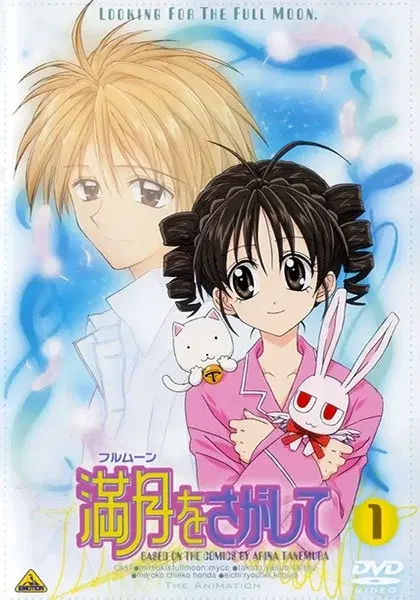
Watch Kirarin☆Revolution if you want a long-form shoujo idol series that treats fame as a stage for comedy, crushes, costumes, and school-age persistence rather than industry cynicism. It scratches a similar itch to Aikatsu! in its bright idol fantasy and to Full Moon wo Sagashite in its music-and-romance appeal, but it is goofier, more food-motivated, and more invested in everyday showbiz mishaps than melodrama. The 153-episode length is the selling point: this is a slow-burn comfort machine where auditions, image changes, rivalries, and performances can breathe. Viewers who need prestige animation may bounce off it, but anyone hunting for mid-2000s shoujo idol energy with a genuine pop-idol voice at the center will find its specific charm hard to replace.
Key Characters
- KKirari Tsukishima(VA: Koharu Kusumi)
Kirari stands out because her idol story is performed by Koharu Kusumi, who also sang many of the anime’s openings and endings, giving the character an unusually direct link to real idol culture.
- SSeiji Hiwatari(VA: Souichirou Hoshi)
Seiji functions as the series’ soft-focus ideal idol, a calm contrast to the louder comedy around him and a major reason the romance angle stays gentle rather than sharp-edged.
- HHiroto Kazama(VA: Akio Suyama)
Hiroto is the friction point fans latch onto: more blunt and guarded than Seiji, he gives the love-triangle setup its push-pull energy.
- NNaa-san(VA: Chigusa Ikeda)
Naa-san is the mascot presence that helps define the show’s child-friendly comedy, often carrying the kind of broad visual humor that balances the idol and romance material.
What Makes It Stand Out
- 1
The series ran for 153 episodes from April 2006 to March 2009, making it a notably long continuous shoujo idol TV commitment rather than a one-cour music promotion vehicle.
- 2
G&G Entertainment and SynergySP handled the animation production, and the show is specifically associated with visible CGI elements, reflected by AniList’s CGI tag at 40%.
- 3
Kirari’s voice actress, Koharu Kusumi, also performed multiple theme songs, including openings 1–3 and 5 plus several endings, blurring the line between character branding and real idol promotion.
- 4
The reception profile is unusually consistent: positive comments praise the comedy, romance, clean artwork, and light tone, while negative ones point to fair-but-unexceptional visuals and a showbiz fantasy that avoids harsher industry critique.
- 5
AniList’s high-weight tags frame the show very precisely as shoujo, idol, female-protagonist entertainment, with secondary emphasis on love-triangle dynamics, a primarily child cast, fashion, and CGI.
Fun Facts & Trivia
- Fun fact 1
- Kirarin☆Revolution was created by An Nakahara, and Carlo Santos of Anime News Network singled out the early material’s friendship focus, light tone, and clean artwork as part of its appeal to young readers.
- Fun fact 2
- Anime News Network later ranked Kirarin☆Revolution at number 6 on its list of “6 Idols that Fandom Forgot,” a telling placement for a series that ran for three years yet remains less internationally discussed than many shorter idol anime.
- Fun fact 3
- MilkyWay is credited with performing opening 6, opening 7, and ending 10, marking the later stretch of the anime with a distinct theme-song identity.
- Fun fact 4
- The French-language credits are unusually visible in the theme-song data: Isabelle Volpe is credited for French performances of openings 1–7, while Caroline Combes and Kelly Marot are credited for French performances of openings 6–7.
- Fun fact 5
- Across major database reception, the show sits in affectionate middle territory rather than cult-masterpiece status, with a 7.15 MyAnimeList score and a 68/100 AniList score supported by a small but persistent favorite base.
Studios
- G&G Entertainment
- SynergySP