Black Jack
ブラック・ジャック
- Drama
- Mystery
- Suspense
- Medical
- Psychological
- Episodes
- 12
- Duration
- 50 min per ep
- Aired
- Dec 21, 1993 to Dec 16, 2011
- Status
- Finished Airing
Synopsis
Kuroo Hazama—better known as Black Jack—has become a near-mythic name in medicine: a brilliant surgeon who operates without a license and succeeds where others fail. Working alongside his assistant Pinoko, he takes on desperate cases that reputable hospitals can’t or won’t touch, demanding fees so extreme that many dismiss him as cold, greedy, and merciless.
Yet each operation reveals a different side of the man behind the scalpel. Moving through a shadowy world of underground medicine, Black Jack confronts baffling illnesses and dangerous circumstances, pushing his abilities—and his own safety—to the limit, even when saving a life means defying every rule in the book.
Otaku Consensus
Black Jack is treated by many viewers as the premium animated entry point to Osamu Tezuka’s outlaw-surgeon saga, with Osamu Dezaki’s direction and Akio Sugino’s redesigns giving the OVA a harder, more adult texture than the original manga’s rounder cartoon language. Its case-by-case pacing is praised for turning medical problems into moral pressure chambers, while the recurring criticism is comparative: fans often note that later Black Jack TV animation lacks this OVA’s visual force, and the realistic update inevitably loses some of Tezuka’s eccentric softness.
Why You Should Watch
Watch this if you want medical suspense without hospital-soap reassurance: Black Jack is built around ethically charged cases, adult consequences, and the uncomfortable price of intervention. It scratches a similar itch to Monster in its interest in medicine, guilt, and human damage, but its episodic structure makes it closer to Mushishi: each episode is a sealed encounter with its own rules, setting, and moral aftertaste. The Dezaki-Sugino production gives Tezuka’s material a noir-adjacent 1990s severity, with cleaner adult proportions and heavier atmosphere than the manga’s more elastic look. For viewers who like procedural anime but want surgical tension, psychological ambiguity, war-zone context, and environmental or drug-related fallout folded into the cases, this is a compact, high-density watch.
Key Characters
- KKuroo Hazama(VA: Akio Ootsuka)
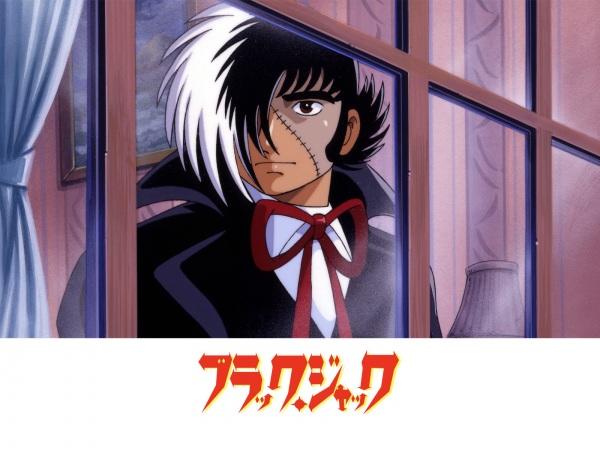
Kuroo Hazama stands out because Akio Ootsuka’s performance gives Black Jack both surgical authority and emotional opacity, letting the character feel severe without flattening him into a simple antihero.
- PPinoko
Pinoko functions as the series’ sharpest tonal counterweight, bringing the faint found-family texture that keeps the OVA from becoming purely clinical or punitive.
What Makes It Stand Out
- 1
This is an unusually long-tail OVA project: its 12 episodes aired from December 21, 1993 to December 16, 2011, making it feel less like a normal seasonal run and more like a series of prestige specials.
- 2
The production pairs director Osamu Dezaki with character designer and animation director Akio Sugino, a combination that reshapes Tezuka’s manga into a more realistic 1990s anime idiom while preserving its moral-theatrical intensity.
- 3
Its structure is strongly episodic, a point reflected in AniList’s 84% Episodic tag; the appeal is not escalation toward a single villain, but the accumulation of medical, psychological, and social dilemmas.
- 4
The tag profile is unusually international and political for a medical anime: War is marked at 80%, Foreign at 77%, Environmental at 75%, and Drugs at 64%, indicating that the cases often extend beyond the operating room into larger social conditions.
- 5
Despite being based on an Osamu Tezuka property, the OVA carries a seinen-leaning adult texture, with AniList marking a Primarily Adult Cast at 73%, Seinen at 62%, and Nudity at 60%.
Fun Facts & Trivia
- Fun fact 1
- The OVA comes from Tezuka Productions, the studio directly associated with Osamu Tezuka’s legacy, with Tezuka credited as the original creator.
- Fun fact 2
- Akio Sugino is credited twice in core visual roles, handling both character design and animation direction, which helps explain why reviewers often single out the OVA’s look as a major strength.
- Fun fact 3
- Osamu Dezaki did more than serve as director: he is specifically credited with storyboarding episode 6, while Satoshi Kuwabara is credited as chief director and storyboard artist on episode 1.
- Fun fact 4
- The photography credit goes to Hirokata Takahashi, a key technical role for an OVA frequently praised for looking more polished and cinematic than later television versions.
- Fun fact 5
- Its cross-platform reception is notably consistent: the title holds a 7.76/10 on MyAnimeList from 13,612 votes and a 76/100 on AniList, where it also has 341 favourites.
Studios
- Tezuka Productions