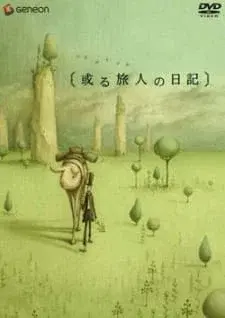
Kino's Journey
キノの旅 -the Beautiful World- (Kino no Tabi: The Beautiful World)
- Adventure
- Drama
- Fantasy
- Psychological
- Episodes
- 13
- Duration
- 24 min per ep
- Aired
- Apr 8, 2003 to Jul 8, 2003
- Status
- Finished Airing
Synopsis
Kino’s Journey follows Kino, a 15-year-old traveler, and Hermes, a motorcycle that can speak, as they roam from country to country with no certainty about what lies ahead. Their road is guided less by a destination than by the simple truth that every step forward brings something unknown.
Each place they pass through has its own rules, customs, and contradictions—sometimes morally ambiguous, sometimes tragic, sometimes quietly fascinating. Along the way, Kino and Hermes meet people driven by work, by the desire to support others, or by dreams they refuse to abandon. Rather than judge what they see, they remain observers, choosing not to interfere even when a nation’s values seem strange or unsettling, holding to the idea that the world isn’t necessarily beautiful—yet it exists all the same.
Otaku Consensus
Kino's Journey (2003) earns its classic reputation through Ryuutarou Nakamura's cool, controlled direction, Sadayuki Murai's parable-like scripts, and A.C.G.T.'s unusually consistent visual finish across thirteen self-contained episodes. As an adaptation of Keiichi Shigusawa's work with Kouhaku Kuroboshi's character-design foundation, it favors achronological moral thought experiments over momentum, which is also its chief barrier: viewers looking for catharsis, recurring-cast warmth, or conventional escalation can find it remote and bleak.
Why You Should Watch
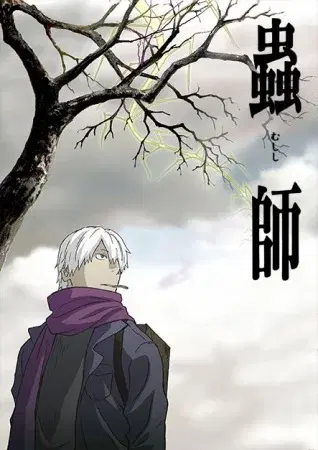
Watch Kino's Journey if you want speculative anime that treats each episode like a philosophical short story rather than a step toward a boss fight. It scratches the same itch as Mushishi's quiet case-file structure and Girls' Last Tour's travel-worn melancholy, but with less comfort and more ethical sting. The 2003 production keeps its scale disciplined: thirteen episodes, spare dialogue, muted fantasy design, and a refusal to tell you how to feel. Ryou Sakai's music and Youta Tsuruoka's sound direction help make the silence feel intentional instead of empty. If you want adventure without power progression, drama without melodrama, and fantasy that leaves its moral contradictions unresolved, this is one of the medium's sharpest compact packages.
Key Characters
- KKino(VA: Ai Maeda)
Kino's fascination comes from emotional restraint, ambiguous presentation, and the way tiny practical choices reveal more than any explanatory monologue could.
- HHermes(VA: Ryuji Aigase)
Hermes works as the series' dry counterweight, turning abstract moral inquiry into pointed conversation and often puncturing solemnity with blunt, mechanical pragmatism.
What Makes It Stand Out
- 1
A.C.G.T.'s animation is frequently singled out for maintaining stable art quality across the full 13-episode run, an important strength for a series built around constantly changing locations and supporting casts.
- 2
The structure is heavily episodic and achronological, reflected in AniList's 92% Episodic and 76% Achronological Order tags; the show builds meaning through contrast between episodes rather than through linear plot escalation.
- 3
Ryuutarou Nakamura did not only direct the series overall; he is also credited as episode director for the opening, ending, and episodes 2 and 5, giving the adaptation a noticeably unified authorial tone early on.
- 4
Sadayuki Murai's script work leans into philosophical 'what if' scenarios, matching the series' 95% Philosophy tag and giving the anime its reputation as more of a moral inquiry anthology than a conventional adventure drama.
- 5
The music package is unusually identifiable: Ryou Sakai composed the score, Youta Tsuruoka handled sound direction, Mikuni Shimokawa performed the opening theme, and Ai Maeda performed the ending theme.
Fun Facts & Trivia
- Fun fact 1
- The anime adapts the work of original creator Keiichi Shigusawa, with original character design credited to Kouhaku Kuroboshi, whose clean silhouettes help the 2003 version preserve Kino's iconic androgynous visual identity.
- Fun fact 2
- Kino's Journey aired from April 8 to July 8, 2003, completing as a compact one-cour series of 13 episodes rather than stretching its episodic concept into a longer broadcast run.
- Fun fact 3
- The series has strong cross-platform esteem without blockbuster popularity: it holds an 8.28/10 MAL score from 106,643 votes, a MAL rank of #357, an AniList score of 81/100, and 3,937 AniList favourites.
- Fun fact 4
- Tetsuya Endou is specifically credited as episode director for episode 8, while Ryuutarou Nakamura personally episode-directed the OP, ED, episode 2, and episode 5.
- Fun fact 5
- Critical discussion often frames the 2003 anime as less optimistic than later perceptions of the franchise, with reviewers noting that many episodes land on tragic or emotionally unresolved endings.
Studios
- A.C.G.T.