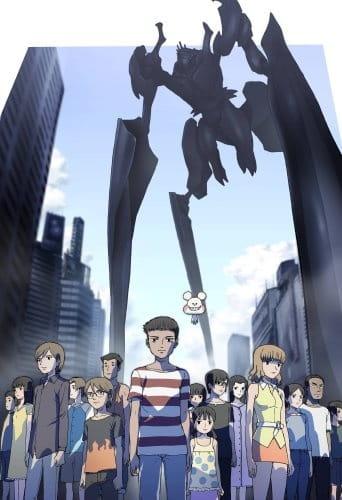
Bokurano
ぼくらの (Bokura no)
- Drama
- Sci-Fi
- Suspense
- Mecha
- Psychological
- Survival
- Episodes
- 24
- Duration
- 23 min per ep
- Aired
- Apr 9, 2007 to Sep 25, 2007
- Status
- Finished Airing
Synopsis
Fifteen kids spending summer camp by the beach wander into a small seaside cave and discover a hidden chamber, where a peculiar man introducing himself as Kokopelli asks them to join a “game.” He explains that they’ll take turns piloting a robot to defend Earth from alien attackers, and—treating it like an exciting simulation—everyone but one signs the contract.
The same day, the towering machine manifests for real and the children are pulled into its cockpit, forced to watch as Kokopelli fights a matching mechanical opponent nearby. When the battle ends and they’re returned to the ground amid the aftermath, the robot vanishes, leaving them shaken and unsure of what they’ve agreed to. What began as a harmless challenge quickly reveals harsher consequences, tying their choices to fears and histories they never expected to confront.
Otaku Consensus
Bokurano earns its cult respect through Gonzo’s bleak, anti-wish-fulfillment handling of mecha: the series’ rotating character-focus structure, psychological pacing, and widely praised opening make its 24 episodes feel closer to a moral autopsy than a robot show. Its 7.59 MAL score and 73/100 AniList score fit the split response: admirers call it one of anime’s stronger ensemble tragedies, while detractors point to underwhelming fights, abrasive cast behavior, and direction choices they read as plot-hole-prone rather than deliberately alienating.
Why You Should Watch
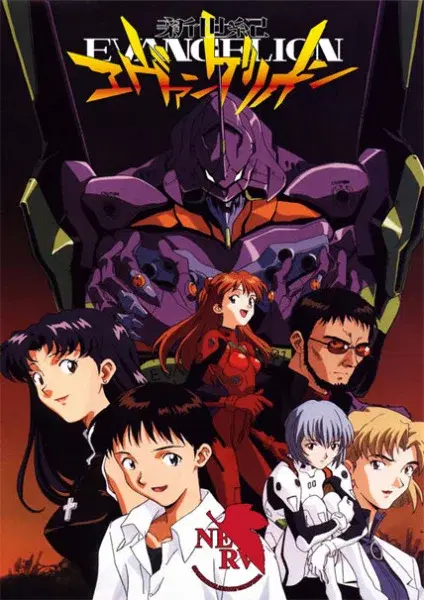
Watch Bokurano if you want post-Evangelion mecha anxiety without the comfort of heroic escalation or toy-commercial catharsis. It scratches the same itch as Neon Genesis Evangelion’s child-pilot dread and the fatalistic structure of later survival dramas, but its power comes from how methodically it hands the emotional spotlight across a large ensemble. The hook is not who wins a battle; it is how a different young person processes fear, family, shame, obligation, and moral responsibility under impossible pressure. Viewers who need kinetic robot choreography may bounce off it, since even positive reviews concede the fights are not the draw. Viewers who want a dark psychological drama with political, military, and philosophical edges will find a unusually cold, patient series.
Key Characters
- MMaki Ano(VA: Kumiko Higa)
Maki stands out as one of the ensemble’s warmer perspectives, with her material framed around family bonds and responsibility rather than pilot bravado.
- CChizuru Honda(VA: Ao Takahashi)
Chizuru’s focus pushes Bokurano into some of its most uncomfortable psychological territory, making her a key reason the series is remembered as social drama as much as sci-fi.
- IIsao Kako(VA: Yoshinori Fujita)
Kako is intentionally difficult to embrace, using fear, entitlement, and adolescent ugliness to test the viewer’s patience with an ensemble that refuses to be likable on demand.
- YYousuke Kirie(VA: Shintaro Asanuma)
Kirie gives the cast a withdrawn, reflective counterweight, and his presence fits the show’s preference for moral paralysis over conventional action-hero decisiveness.
What Makes It Stand Out
- 1
Gonzo structures the 24-episode run around an ensemble handoff rather than a single ace pilot arc, which is why positive reviews repeatedly cite the show’s ability to make a large cast feel individually consequential.
- 2
The mecha action is deliberately not the main attraction; even recommended reviews note disappointment with the fight scenes, while stronger praise centers on the psychological fallout, social context, and one-life-per-fight dramatic rhythm.
- 3
AniList’s tag profile captures the show’s unusual genre balance: Tragedy at 100%, Ensemble Cast at 93%, Super Robot at 90%, Death Game at 84%, Philosophy at 83%, and Military at 80%, with Politics and Yakuza also appearing as notable secondary labels.
- 4
The production’s visual leadership is unusually stacked on environment and design roles, with Kenichi Konishi on character design, Shigemi Ikeda as art director and art designer, Shuuichi Ookubo on art design, Takae Iijima on color design, and Kenji Fujita as director of photography.
- 5
Its opening theme is one of the rare elements praised even by harsh detractors; web discussion specifically notes viewers discovering Bokurano through a NicoNico Douga music compilation before seeking out the anime.
Fun Facts & Trivia
- Fun fact 1
- Bokurano aired from April 9 to September 25, 2007, giving Gonzo a two-cour, 24-episode window to build its ensemble tragedy rather than compress it into a single-season format.
- Fun fact 2
- The anime credits Mohiro Kitou as original creator, with Kazuyoshi Yaginuma as chief director, Hiroyuki Morita as director, and Erkin Kawabata as assistant director.
- Fun fact 3
- Its reception numbers reflect a niche but durable reputation: MAL lists it at 7.59 from 56,484 votes with a popularity rank of #1397, while AniList records a 73/100 score and 464 favourites.
- Fun fact 4
- Web and user reactions consistently frame it as a post-Evangelion work, but the praise is less about symbolism and more about how it weaponizes the mecha setup against teenage power fantasy.
- Fun fact 5
- Among user reviews, the same traits divide audiences sharply: one side highlights the character-by-character structure as the series’ greatest strength, while the other attacks the direction, cast abrasiveness, and lack of satisfying robot spectacle.
Studios
- Gonzo