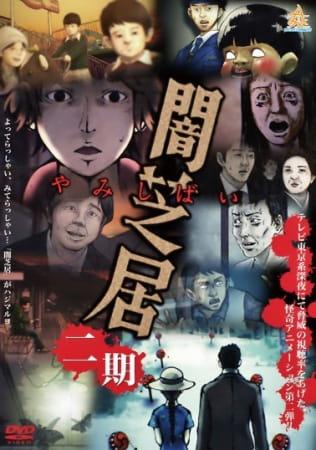
Theatre of Darkness: Yamishibai
闇芝居 (Yami Shibai)
- Avant Garde
- Horror
- Supernatural
- Psychological
- Urban Fantasy
- Episodes
- 13
- Duration
- 4 min per ep
- Aired
- Jul 15, 2013 to Sep 30, 2013
- Status
- Finished Airing
Synopsis
At dusk, a strange storyteller in a yellow mask appears where children gather, his name and origins unknown. With the help of kamishibai—traditional illustrated paper panels—he brings unsettling Japanese urban legends to life, his quiet narration matched by visuals that make each tale feel uncomfortably close.
The short-form anthology opens with a bachelor settling into a new apartment, only to feel an ominous presence fixed on him. A lone talisman on the ceiling offers protection he doesn’t understand, hinting at what waits if that barrier fails. From there, the masked narrator continues with one eerie episode after another, drawing his listeners deeper into the darkness of the stories he tells.
Otaku Consensus
Theatre of Darkness: Yamishibai earns its cult reputation through Tomoya Takashima’s deliberately rigid direction, ultra-short pacing, and ILCA’s paper-theatre visual language, which turns limited movement into a source of unease rather than a budget apology. Critics and viewers consistently praise how efficiently it delivers J-horror folklore shocks in bite-sized form, while the main complaint is equally consistent: the static settings and minimal character motion can feel too bare for viewers expecting conventional TV anime animation.
Why You Should Watch
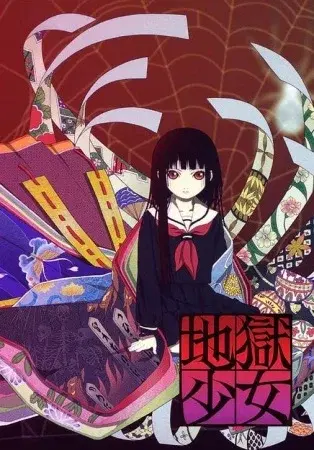
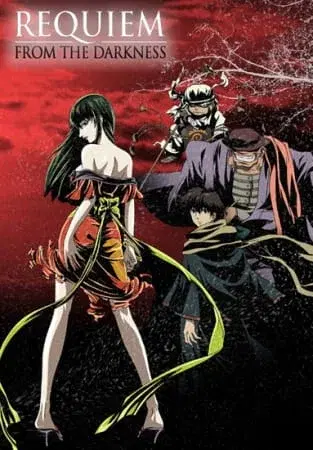
Watch Yamishibai if you want Japanese horror stripped down to the nerve: no long investigations, no action detours, no comic relief safety valve. It scratches a related itch to Hell Girl’s urban-legend cruelty and Mononoke’s theatrical staging, but in a much harsher short-form rhythm where each episode has to land fast. The appeal is not sakuga; it is timing, negative space, and the discomfort of images that barely move until your brain starts filling in what might. Viewers who enjoy ghost stories, cursed-rumor anthologies, and supernatural dread involving demons, trains, body horror, and tragedy will get the most from it. Viewers who need expressive animation or character arcs should treat it as an audio-visual horror pamphlet, not a conventional series.
Key Characters
- SStoryteller(VA: Kanji Tsuda)
Kanji Tsuda’s restrained narration makes the Storyteller feel less like a host than a ritual function, anchoring the anthology with a voice fans remember as much as the images.
What Makes It Stand Out
- 1
Studio ILCA uses a deliberately limited kamishibai-inspired approach, with static compositions and sparse movement that reviewers repeatedly singled out as both the show’s signature and its most divisive trait.
- 2
The 13-episode first season is built as a pure episodic anthology, a structure reflected in its strongest audience tags: Episodic, Demons, Ghost, and Anthology all dominate its AniList profile.
- 3
Its horror range is broader than simple ghost-of-the-week material, with audience tags also flagging body horror, tragedy, trains, and urban fantasy as recurring textures across the season.
- 4
The series’ short-form format is central to its reputation; multiple reviewer summaries praise it as a way to get a concentrated dose of J-horror without committing to feature-length or full-cour pacing.
- 5
The masked Storyteller is the only listed main character, which makes the framing performance unusually important for an anthology where each individual tale resets the human cast.
Fun Facts & Trivia
- Fun fact 1
- The ending theme is credited to Miku Hatsune, an unusual mainstream database credit that gives the first season a distinct 2013-era vocal-synth footprint.
- Fun fact 2
- Tomoya Takashima is credited twice on the project, as series director and as an episode director, tying the season’s overall concept directly to its individual short-form execution.
- Fun fact 3
- The writing credit goes to Hiromu Kumamoto, while episode direction is also credited to Manabu Nakamura and Tact Aoki, indicating a compact but multi-director production structure.
- Fun fact 4
- Its reception sits in cult-horror territory rather than consensus classic territory: MyAnimeList lists it at 6.99/10 from 51,027 votes, while AniList records a 65/100 score and 253 favourites.
- Fun fact 5
- Production-side credits include Midori Iwashita as animation producer, Norio Yamakawa and Takuya Iwasaki in planning, and Nobuyuki Hosoya as producer, with ILCA as the credited studio.
Studios
- ILCA