Hell Girl
地獄少女 (Jigoku Shoujo)
- Horror
- Mystery
- Supernatural
- Suspense
- Psychological
- Episodes
- 26
- Duration
- 25 min per ep
- Aired
- Oct 5, 2005 to Apr 5, 2006
- Status
- Finished Airing
Synopsis
Whispers circulate about the Hell Correspondence, a website that can only be reached at midnight. Enter the name of the one you hate, and Ai Enma—known as the Hell Girl—appears to offer a simple bargain: she will consign that person’s soul to hell.
The exchange is never free. Those who make the request are promised the same fate when their own life ends, a consequence some cannot accept and others barely register amid the misery they already endure. Unmoved and ever-present, Ai carries out her role night after night, guiding the condemned into the darkness as new grudges find their way to her door.
Otaku Consensus
Hell Girl endures because Takahiro Oomori and Studio Deen turn a simple revenge-horror device into a severe, ritualized morality play, anchored by Mariko Oka’s unforgettable Ai design and Yasuharu Takanashi and Hiromi Mizutani’s oppressive score. Its strongest stretch is the late-series shift from stand-alone grievance tales into a more staged, three-act structure, but the most persistent criticism is legitimate: the formula can feel repetitive, with recurring visual material and thin characterization outside Ai.
Why You Should Watch
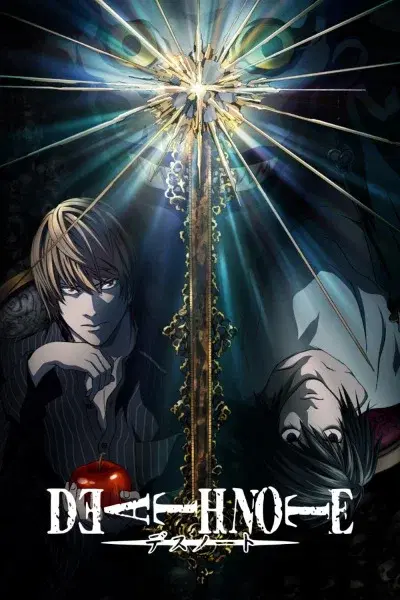
Watch Hell Girl if you want urban-legend horror that behaves less like a monster show and more like a punishment machine. It scratches a similar itch to Death Note’s supernatural ethics and Mononoke’s case-by-case unease, but without the former’s mind-game flamboyance or the latter’s painterly abstraction. The appeal is in repetition with pressure: each episode tests how far resentment can deform ordinary people, then locks that choice inside a cold, ceremonial aesthetic. Studio Deen’s 2005 production gives the series a distinct late-night digital-era mood, with elegant character designs, lonely urban spaces, and a soundtrack that treats dread as something slow and inevitable. If you prefer psychological horror built on consequences rather than jump scares, this is one of the genre’s signature TV artifacts.
Key Characters
- AAi Enma
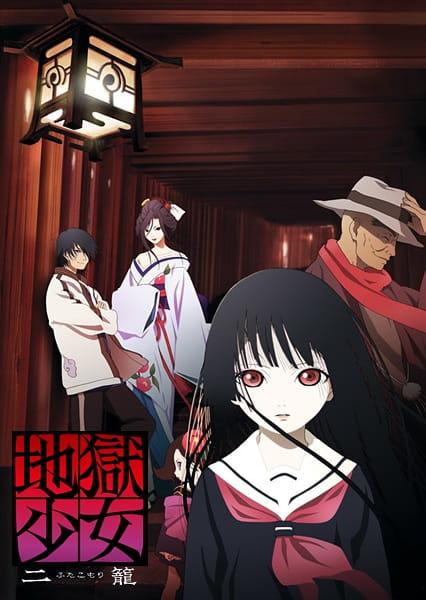
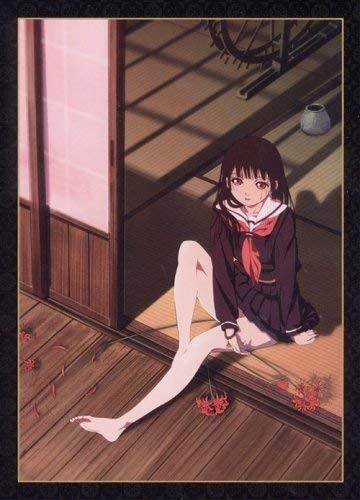
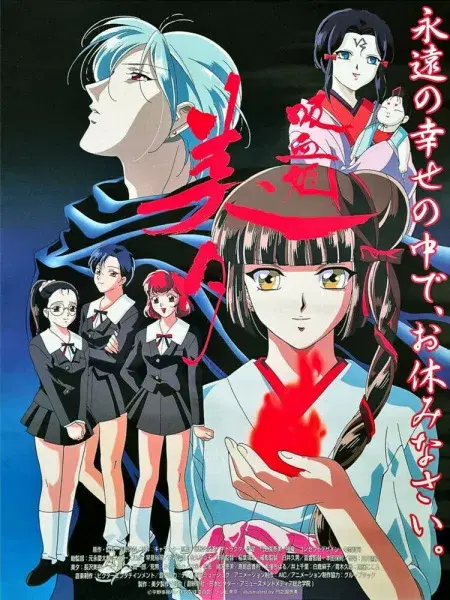
Ai is remembered less as a conventional heroine than as an icon of stillness: a black-haired, red-eyed figure whose calm delivery makes the series’ revenge rituals feel judicial, mournful, and inhuman at once.
What Makes It Stand Out
- 1
The series is deliberately episodic, a structure reflected in AniList’s high Episodic tag at 82%, but critics have noted that it gradually takes on a three-act shape rather than remaining only a string of isolated revenge stories.
- 2
Studio Deen’s visual identity is carried by Mariko Oka’s character designs and Yoshinori Hishinuma’s art direction, with contemporary reviews singling out Ai’s forlorn red-eyed design and the often beautiful backgrounds as major reasons the show lingers.
- 3
The soundtrack is credited to Yasuharu Takanashi and Hiromi Mizutani, and contemporary viewer commentary repeatedly calls out the music as one of the production’s strongest assets rather than mere horror accompaniment.
- 4
Its genre profile is unusually concentrated: AniList places Revenge at 96%, Tragedy at 82%, Afterlife at 80%, and Urban, Ghost, and Curses all at 79%, which accurately captures its blend of modern social cruelty and folkloric damnation.
- 5
The most divisive formal choice is the repeated punishment framework; admirers read it as ritualistic inevitability, while detractors cite the same structure and reused artwork as the reason the middle stretch can feel mechanically familiar.
Fun Facts & Trivia
- Fun fact 1
- Hell Girl aired as a 26-episode TV anime from October 5, 2005 to April 5, 2006, giving it a full two-cour run rather than the shorter horror-anthology format common to later late-night series.
- Fun fact 2
- The core production team paired director Takahiro Oomori with series composer Kenichi Kanemaki, while Shinyo Kondou handled photography and Masahiro Matsumura handled editing, a staff split that helped define the show’s controlled, ritual-like pacing.
- Fun fact 3
- English ADR work on selected episodes was handled by Stephanie Sheh, specifically episodes 5, 9, and 22 according to the provided staff data.
- Fun fact 4
- The show’s reception sits in a distinct middle-high cult zone: it holds a 7.6 MAL score from over 140,000 votes, an AniList score of 72/100, and 1,185 AniList favorites, indicating broad recognition without top-rank consensus.
- Fun fact 5
- Contemporary reviews repeatedly praised the striking artwork and Ai’s character design while also identifying the same two weaknesses: limited development for recurring characters and the sense that the revenge stories can repeat their emotional beats.
Studios
- Studio Deen