Nichijou - My Ordinary Life
日常 (Nichijou)
- Comedy
- Gag Humor
- School
- Episodes
- 26
- Duration
- 23 min per ep
- Aired
- Apr 3, 2011 to Sep 25, 2011
- Status
- Finished Airing
Synopsis
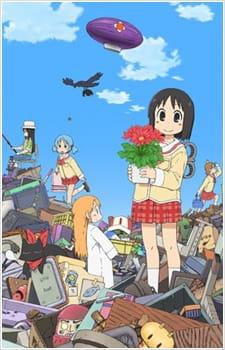
Nichijou follows the everyday misadventures of three childhood friends in high school—Mio Naganohara, Yuuko Aioi, and Mai Minakami—whose routines gradually overlap with the world of child prodigy Hakase Shinonome, her robot caretaker Nano, and their talking cat, Sakamoto. Around them, classmates, teachers, and neighbors drift in and out as ordinary moments take unexpected turns.
From the walk to school to hanging out after class, the smallest events can spiral into surreal chaos: a run-in with a talking crow, a casual conversation that escalates, or even the principal suddenly suplexing a deer. Nichijou balances the quiet rhythms of daily life with bursts of gleeful absurdity, turning the mundane into something memorably strange.
Otaku Consensus
Otaku Consensus: Nichijou earns its reputation as a modern gag-comedy benchmark through Tatsuya Ishihara's precision timing, Kyoto Animation's unusually lavish motion for throwaway jokes, and a relentless sketch-to-sketch rhythm that critics repeatedly single out as its defining strength. Keiichi Arawi's involvement in series composition assistance gives the adaptation a strong authorial fingerprint rather than the feel of a loose gag compilation. Its real barrier is also its identity: the episodic, surreal, sometimes achronological structure can feel like comic overload for viewers who need plot momentum or conventional punchline logic.
Why You Should Watch
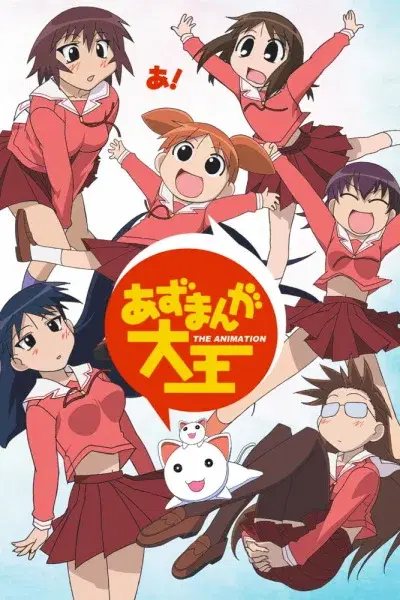
Watch Nichijou if you want slice-of-life comedy without the usual low-energy comfort-food pacing: this is school comedy treated like an action blockbuster, where a tiny misunderstanding can receive the animation intensity of a fight scene. It scratches the same ensemble-sketch itch as Azumanga Daioh, but with Kyoto Animation pushing expressions, timing, and physical comedy to extremes closer to theatrical slapstick. The best fit is a viewer who likes rapid gag escalation, deadpan non sequiturs, and jokes that use editing and movement as much as dialogue. If your favorite anime comedies are the ones that make ordinary social friction feel catastrophically funny, Nichijou turns that exact impulse into a 26-episode endurance test of comic invention.
Key Characters
- YYuuko Aioi
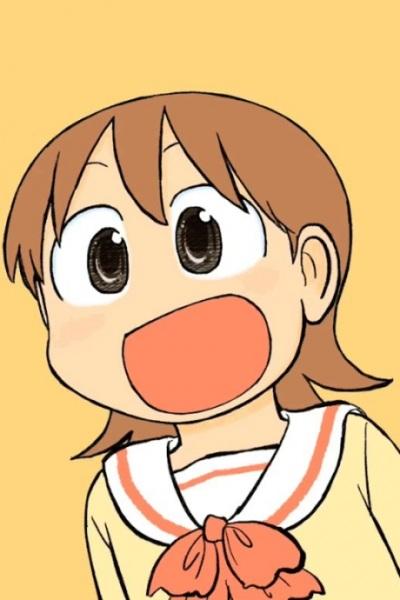
Yuuko is the show's chaos conductor, a character fans remember for turning minor embarrassment and bad decisions into full-scale comic set pieces.
- MMio Naganohara
Mio stands out because her outwardly normal role keeps colliding with volcanic reactions, making her one of the series' sharpest tools for escalation.
- MMai Minakami
Mai is a deadpan anti-comedy specialist whose calm face and opaque motives let the show weaponize silence as effectively as shouting.
- NNano Shinonome
Nano gives the absurdity an emotional counterweight, with her robotic identity playing less like a gimmick than a source of anxious self-consciousness.
What Makes It Stand Out
- 1
Kyoto Animation applies feature-level physical animation to disposable gags, a choice repeatedly highlighted by reviewers who call the series unusually fluid and gorgeous for a TV comedy.
- 2
The series uses an episodic, sketch-based structure rather than a conventional plot engine, allowing jokes to pivot between school banter, surreal interruptions, and miniature set pieces with little warning.
- 3
Tatsuya Ishihara's direction treats timing as the main punchline delivery system: pauses, hard cuts, exaggerated reactions, and sudden bursts of motion often carry the joke before dialogue does.
- 4
The adaptation is not detached from its source creator; Keiichi Arawi is credited both as original creator and for series composition assistance, giving the anime a closer link to the manga's comic sensibility.
- 5
Its comedy profile is unusually extreme even within school gag anime, with AniList tags placing Surreal Comedy at 97%, Episodic at 94%, and Slapstick at 94%.
Fun Facts & Trivia
- Fun fact 1
- Nichijou aired as a 26-episode TV series from April 3, 2011 to September 25, 2011, giving Kyoto Animation a full two-cour run to build its rotating sketch format.
- Fun fact 2
- The main creative lineup combines Kyoto Animation regular Tatsuya Ishihara as director with Taichi Ishidate as assistant director and Jukki Hanada on series composition.
- Fun fact 3
- Futoshi Nishiya handled character design, while Jouji Unoguchi served as art director and Kana Miyata handled color design, anchoring the show's clean character acting against bright, readable environments.
- Fun fact 4
- Critical writeups consistently focus on production value rather than only joke writing, with multiple reviews singling out the series' fluid animation and high gag-per-minute density.
- Fun fact 5
- Its fan footprint remains unusually strong for a 2011 comedy: the provided data lists a MAL score of 8.47 from over 400,000 votes and more than 12,000 AniList favourites.
Studios
- Kyoto Animation