Trigun
トライガン
- Action
- Adventure
- Sci-Fi
- Adult Cast
- Episodes
- 26
- Duration
- 24 min per ep
- Aired
- Apr 1, 1998 to Sep 30, 1998
- Status
- Finished Airing
Synopsis
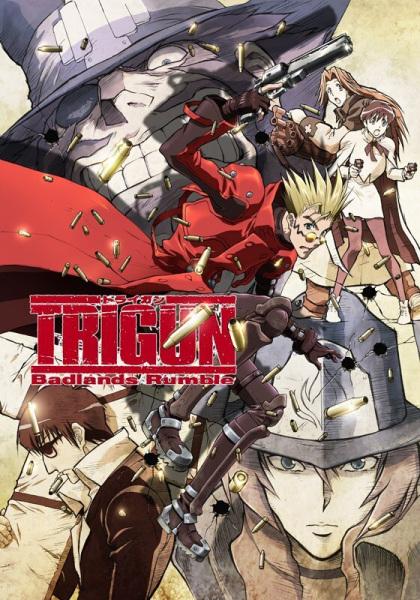
Vash the Stampede carries a staggering $$60,000,000,000 bounty and an infamous reputation as “The Humanoid Typhoon,” blamed for leveling towns and leaving ruin in his wake. Stories paint him as a ruthless destroyer who kills without a second thought—yet the man behind the rumors is a disarmingly gentle drifter who insists he’s never taken a life and goes out of his way to avoid violence.
Roaming the harsh desert world of Gunsmoke with a goofy demeanor and an unwavering love of doughnuts, Vash finds himself tailed by insurance agents Meryl Stryfe and Milly Thompson, assigned to limit the damage that seems to follow him. Their pursuit turns increasingly dangerous as deadly assassins close in, forcing Vash’s ideals—and the painful truths of his past—into the open.
Otaku Consensus
Trigun endures because Satoshi Nishimura’s direction turns a loose, slapstick-heavy travel show into a mournful space western without sanding off Vash’s comic warmth, and the 26-episode pacing lets the late-series turn toward his past hit with real weight. Critics and longtime fans consistently single out Vash and the guitar-driven score as the hook, while the fairest criticism is adaptation depth: readers often find Yasuhiro Nightow’s manga richer in plot construction and character arcs, making the anime feel comparatively compressed and episodic early on.
Why You Should Watch
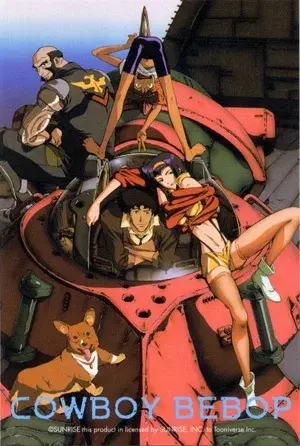
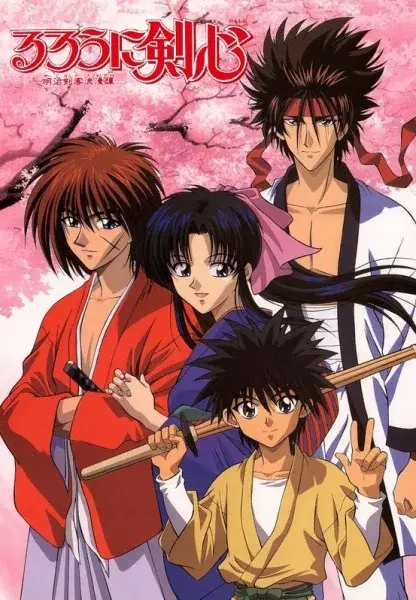
Watch Trigun if you want gunfights, outlaw mythology, and frontier towns without the usual power-fantasy worship of violence. It scratches the same itch as Cowboy Bebop’s lonely space-western cool and Rurouni Kenshin’s non-killing ethics, but filters both through desert absurdism, insurance-office comedy, and a sharper question: what does mercy cost when everyone else has a gun? The show is especially rewarding for viewers who like tonal escalation, because its early comic misadventures gradually reveal why fans describe it as one of anime’s saddest classics. Madhouse’s 1998 TV craft gives it a rougher, dustier texture than modern reimaginings, which suits Gunsmoke’s battered frontier energy. If you want philosophy embedded in action rather than speeches standing apart from it, Trigun earns its reputation.
Key Characters
- VVash the Stampede
Fans often point to Vash as the reason the series works: his pacifism is treated as an active, exhausting discipline rather than a harmless personality quirk.
- MMeryl Stryfe
Meryl’s insurance-agent pragmatism gives the series a dry, bureaucratic counterweight to its outlaw legends and makes the collateral damage feel socially absurd, not just explosive.
- MMilly Thompson
Milly’s warmth and deceptively simple reactions make her a fan-favorite stabilizing presence in a cast defined by trauma, panic, and moral pressure.
What Makes It Stand Out
- 1
Madhouse’s 1998 production leans into a dusty TV-anime texture rather than polished futurism, matching the series’ blend of desert travel, cowboy iconography, steampunk machinery, and post-apocalyptic settlement life.
- 2
The structure is deliberately lopsided: early episodes play closer to episodic road comedy and slapstick, while the later stretch pivots into tragedy and philosophy, a tonal shift reflected by AniList’s high tags for Philosophy, Tragedy, Travel, and Episodic.
- 3
Composer Tsuneo Imahori’s guitar-forward soundtrack is one of the adaptation’s most cited strengths, giving the show a bluesy, western-inflected identity that separates it from cleaner sci-fi action scores of the period.
- 4
The anime’s reputation is unusually character-centered for an action title; even critical blurbs that praise the show broadly tend to reduce the case for watching it to one name: Vash.
- 5
Trigun occupies an important adaptation position: the 1998 anime became a gateway space western for late-90s and early-2000s Western anime fans, while the manga is still frequently recommended for deeper plotting and fuller character arcs.
Fun Facts & Trivia
- Fun fact 1
- Trigun aired as a 26-episode TV series from April 1 to September 30, 1998, placing it squarely in the same late-90s wave that helped define anime fandom outside Japan.
- Fun fact 2
- The core production team paired director Satoshi Nishimura with series composer Yousuke Kuroda, character designer Takahiro Yoshimatsu, mechanical designer Noriyuki Jinguuji, and art director Hidetoshi Kaneko under Madhouse.
- Fun fact 3
- Its reception remains strong decades later: the series holds an 8.22 MAL score from more than 403,000 votes, with MAL popularity at #266 and AniList listing 7,108 favorites.
- Fun fact 4
- The source-material conversation around Trigun is unusually active because many readers argue that Yasuhiro Nightow’s manga has stronger plot development and character arcs than either anime adaptation.
- Fun fact 5
- One modern review of Trigun Stampede framed the 1998 version as a full-on fandom identity marker, with the writer recalling Meryl cosplay, Otakon LARP memories, and even naming a betta fish Vash.
Studios
- Madhouse