Samurai Champloo
サムライチャンプルー
- Action
- Adventure
- Comedy
- Historical
- Samurai
- Episodes
- 26
- Duration
- 24 min per ep
- Aired
- May 20, 2004 to Mar 19, 2005
- Status
- Finished Airing
Synopsis
Fuu Kasumi, a well-meaning but accident-prone waitress at a small teahouse, turns an ordinary day into chaos when she spills a drink on the wrong customer. Cornered by a band of samurai, she’s saved by Mugen, a brash swordsman whose unpredictable, breakdance-like style makes quick work of them. The trouble escalates when Mugen provokes Jin, a reserved ronin who fights with disciplined precision—leaving the teahouse in ruins and the local magistrate’s son dead in the aftermath.
Arrested and facing execution, Mugen and Jin are unexpectedly freed by Fuu, who recruits them as her bodyguards. With nowhere left to go, she sets out to find a mysterious “samurai who smells of sunflowers,” dragging her reluctant escorts into the search. Set in an alternate Edo-era Japan, Samurai Champloo follows the trio’s rough-edged journey across the country, balancing sharp humor and kinetic swordplay with a distinctive hip-hop-tinged atmosphere—provided Fuu can keep her two protectors from turning on each other.
Otaku Consensus
Samurai Champloo’s reputation rests on Shinichirou Watanabe’s confident genre fusion: kinetic sword action, hip-hop rhythm, and episodic travel stories that feel curated rather than random. Its 8.52 MAL score, #154 rank, and 84/100 AniList score reflect a durable fan-and-critic consensus that the action direction and soundtrack are exceptional; the recurring criticism is that the central throughline is less compelling than the smaller, self-contained stories.
Why You Should Watch
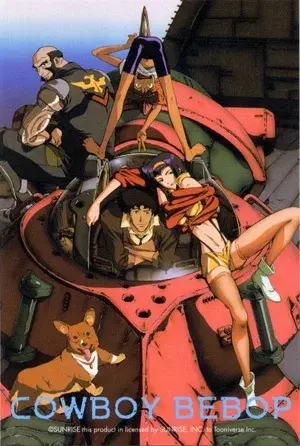
If your ideal period anime has dirty roads, adult drifters, and sword fights cut to the logic of a mixtape rather than a dojo manual, Samurai Champloo is the target. It scratches the same genre-hybrid itch as Cowboy Bebop, but trades space noir for Edo backroads, criminals, assassins, rural detours, and comedy that can turn into violence in a single edit. The 26-episode run favors self-contained encounters over lore accumulation, so it lands best for viewers who want atmosphere, choreography, and character friction without shounen power systems or a homework-heavy mythology. Mugen and Jin offer two readable combat philosophies — improvisational chaos versus disciplined precision — while Fuu gives the journey its human pressure, keeping the show from becoming a pure style exercise.
Key Characters
- FFuu Kasumi
Fuu is the emotional engine of the trio, a female protagonist whose persistence turns a pair of volatile fighters into reluctant traveling companions without reducing her to a passive escort mission.
- MMugen
Mugen is remembered for swordplay that rejects formal kenjutsu in favor of breakdance-like improvisation, making every fight read as personality before technique.
- JJin
Jin’s appeal comes from contrast: a bespectacled ronin whose controlled, disciplined style gives the series a classical samurai counterweight to Mugen’s anti-authority chaos.
What Makes It Stand Out
- 1
The series uses an episodic travel structure at unusually high confidence in fan tagging, with AniList marking Travel at 99% and Episodic at 79%. That structure lets individual encounters carry their own tone, from comedy to assassin drama, instead of forcing every episode to serve lore buildup.
- 2
Its anachronism is not decorative: AniList tags Anachronism at 78% and Hip-hop Music at 75%, matching the show’s deliberate collision of Edo-era iconography with modern rhythm, editing, and attitude.
- 3
Manglobe’s production gives the action a loose, physical identity built around character-specific movement. Mugen’s wild, low-to-the-ground unpredictability and Jin’s precise form are not just visual flair; they function as readable combat characterization.
- 4
The soundtrack is a major part of the show’s canon status, with web criticism consistently singling it out as a reason to watch even beyond the samurai premise. Its hip-hop foundation helps distinguish the series from both conventional jidai-geki anime and battle-shounen scoring.
- 5
The cast composition is unusually adult for a popular action-adventure anime, reflected in AniList’s Primarily Adult Cast tag at 74% and Anti-Hero tag at 72%. That gives the humor and violence a rougher, less school-age texture than many adventure series with comparable popularity.
Fun Facts & Trivia
- Fun fact 1
- Shinichirou Watanabe directed Samurai Champloo after becoming strongly associated with Cowboy Bebop, which is why critics often frame Champloo as a spiritual successor while stressing that it stands on its own.
- Fun fact 2
- The production credits separate character design and weapon design: Kazuto Nakazawa handled character design, while Mahiro Maeda is credited for weapon design. That division fits a series where silhouettes, blades, and fighting styles carry so much identity.
- Fun fact 3
- The show aired across a long broadcast window, from May 20, 2004 to March 19, 2005, despite being a compact 26-episode finished series. Its continued visibility is reflected in MAL Popularity #112 and 689,878 MAL votes in the provided data.
- Fun fact 4
- Shinji Obara is credited with series composition, with Junichi Matsumoto listed for literary arts assistance, pointing to a production structure concerned with the texture of individual episodes as much as the overarching journey.
- Fun fact 5
- The technical staff list includes Takeshi Waki as art director, Eri Suzuki on color design, Kazuhiro Yamada as director of photography, Shuuichi Kakesu on editing, and Shizuo Kurahashi on sound effects, underscoring how much of the show’s identity comes from rhythm, atmosphere, and impact timing rather than premise alone.
Studios
- Manglobe