Rurouni Kenshin
るろうに剣心 -明治剣客浪漫譚- (Rurouni Kenshin: Meiji Kenkaku Romantan)
- Action
- Comedy
- Romance
- Historical
- Samurai
- Episodes
- 94
- Duration
- 25 min per ep
- Aired
- Jan 10, 1996 to Sep 8, 1998
- Status
- Finished Airing
Synopsis
During the turbulent closing days of the Bakumatsu, a peerless assassin known as Hitokiri Battousai cut a fearsome path through the conflict—then vanished at the height of the revolution. A decade into the Meiji era’s hard-won peace, the name Battousai still chills the veterans who remember what he was capable of.
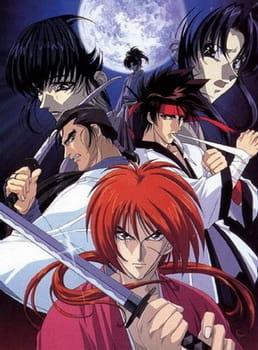
Beneath those rumors, Battousai lives on as Kenshin Himura: a wandering swordsman with an easygoing demeanor and an unshakable resolve to atone. Swearing never to take another life, he travels Japan offering his blade in defense of the vulnerable. His path leads him to Kaoru Kamiya and her kendo dojo, targeted by an impostor using Battousai’s name; after Kenshin steps in, Kaoru invites him to stay, giving the former killer a rare place to rest.
As Kenshin protects those who cannot protect themselves, figures tied to both his past and the changing present begin to surface, testing whether his vow and newfound ideals can endure.
Otaku Consensus
Kazuhiro Furuhashi’s 1996 Rurouni Kenshin earns its classic reputation through character-first direction, clean TV-era sword-action sound design, Noriyuki Asakura’s recognizable score, and a Kyoto Arc that many fans still treat as the adaptation’s peak. The hard caveat is structural: praise usually concentrates on the material through roughly episode 66, while the late run’s filler-heavy stretch is the recurring complaint, alongside modern ethical discomfort around supporting a work tied to original creator Nobuhiro Watsuki.
Why You Should Watch
If you want samurai action that treats pacifism as a tactical and moral constraint rather than a slogan, the 1996 Kenshin is the classic lane to take. It scratches part of the historical-adventure itch of Samurai Champloo, but swaps hip-hop cool for Meiji politics, dojo comedy, romantic tension, and shounen duel logic; it also has the long-form redemption pressure that Fullmetal Alchemist fans often value. The sweet spot is viewers who can handle 90s TV rhythms: episodic stops, broad comic blowups, then sudden knife-edge two-parters and the Kyoto Arc’s sustained escalation. Watch for Mayo Suzukaze’s unusually soft-edged lead performance, Noriyuki Asakura’s instantly identifiable score, and fights where stance, restraint, and reputation matter as much as technique.
Key Characters
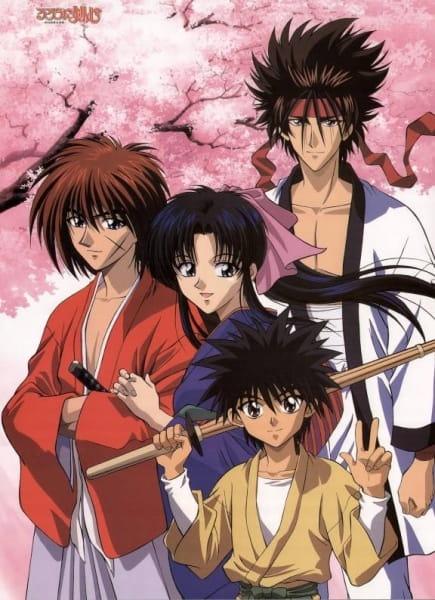
- KKenshin Himura(VA: Mayo Suzukaze)
Mayo Suzukaze’s gentle, airy performance is central to why fans read Kenshin less as a power fantasy and more as a man whose strength is defined by restraint.
- KKaoru Kamiya(VA: Miki Fujitani)
Kaoru gives the series its dojo-centered emotional gravity, balancing tsundere comedy with a sincere belief in swordsmanship as discipline rather than intimidation.
- YYahiko Myoujin(VA: Miina Tominaga)
Yahiko functions as the show’s impatient shounen nerve, letting the series turn mentorship, pride, and training into recurring character texture.
- SSanosuke Sagara(VA: Yuuji Ueda)
Sanosuke is the fan-favorite bruiser whose rough humor and brawler energy keep the ensemble from becoming too solemn.
What Makes It Stand Out
- 1
The Kyoto Arc is the adaptation’s reputation-maker; fan reviews routinely single it out as the stretch where the historical conflict, duels, and character psychology align with the least wasted motion.
- 2
Episode 66 is a visible production and reception fault line: Hideki Hamasu is credited with character design through episodes 1-66, while Fumie Muroi takes over for episodes 67-94, the same late-series range fans most often criticize as filler-heavy.
- 3
Gallop and Studio Deen’s 94-episode TV production favors readable choreography and expressive close-ups over constant spectacle, which suits a series where sword stance, timing, and reputation often carry the drama.
- 4
Noriyuki Asakura’s music is one of the 1996 anime’s strongest identity markers, giving the series a sound distinct from later remakes and helping sell tonal pivots between comedy, romance, and period melodrama.
- 5
The action profile is broader than sword duels alone: AniList’s top tags place Swordplay at 97% and Martial Arts at 90%, reflecting how often the series pairs kenjutsu with hand-to-hand brawling and street-fight energy.
Fun Facts & Trivia
- Fun fact 1
- The anime ran for 94 episodes from January 10, 1996 to September 8, 1998, making it a long-form weekly shounen adaptation rather than a compact seasonal production.
- Fun fact 2
- Its reception remains strong across databases but not identical: it holds an 8.27/10 on MyAnimeList from 248,912 votes, while AniList lists it at 79/100 with 2,732 favorites.
- Fun fact 3
- The late-series visual staff shift is documented in the credits: Fumie Muroi replaced Hideki Hamasu as character designer from episode 67 onward, and Masami Hagiwara is credited as art director for episodes 67-94.
- Fun fact 4
- Ryuuzou Shirakawa and Kenji Shimizu are credited in planning roles, while Mitsuhisa Hida and Kouji Kaneda are listed as producers, placing the anime within a committee-style 1990s TV production structure.
- Fun fact 5
- Source-material context matters for modern viewers: original creator Nobuhiro Watsuki is credited on the anime, and current fandom discussion often includes the ethical issue of his known possession of child sexual abuse material.
Studios
- Gallop
- Studio Deen