The Prince of Tennis
テニスの王子様 (Tennis no Oujisama)
- Sports
- School
- Episodes
- 178
- Duration
- 22 min per ep
- Aired
- Oct 10, 2001 to Mar 23, 2005
- Status
- Finished Airing
Synopsis
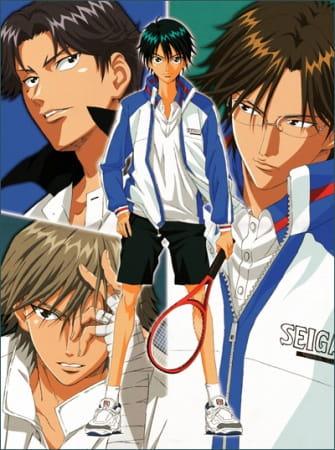
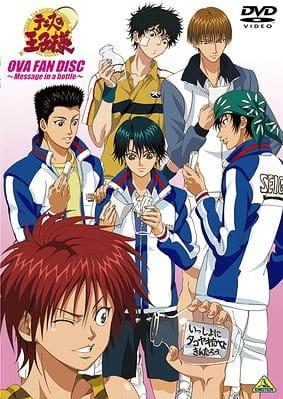
Tennis prodigy Ryouma Echizen returns to Japan from America at his father’s urging, determined to prove himself at the top of the national middle school scene. He enrolls at Seishun Academy, a powerhouse known for its elite boys’ tennis team, and quickly draws attention with his talent and confidence.
Though only a first-year student, Ryouma earns a chance to fight for a starting position through the school’s ranking matches. His age makes some teammates hesitant to accept him at first, but his ability and resolve begin to win them over. With their “super rookie” in the lineup, Seishun aims for the National Tournament, battling through the Tokyo Prefectural and Kanto Regional qualifiers against formidable rival schools—each with its own distinctive approach to the sport—while learning the teamwork needed to chase a championship.
Otaku Consensus
The Prince of Tennis endures because Takayuki Hamana’s direction and Atsuhiro Tomioka’s series structure turn a school-club sports manga into a long-form shounen ladder where rival teams feel distinct rather than interchangeable. Its Kanto Regional stretch is where many viewers report the hook fully setting in, helped by memorable character matchups and tennis scenes that teach just enough terminology to make non-players feel fluent. The recurring criticism is real: Trans Arts’ TV production often looks visibly budget-limited, and the early pacing can take patience before the series’ competitive rhythm pays off.
Why You Should Watch
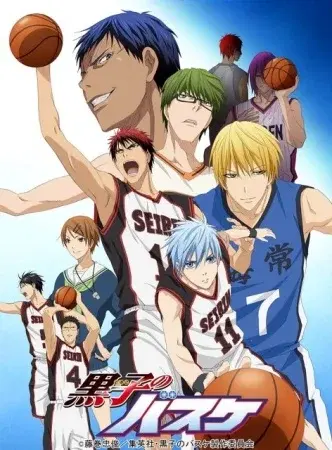
Watch The Prince of Tennis if you want a sports anime that treats a racket like a shounen weapon without abandoning the language of the actual sport. It scratches the same escalation itch as Kuroko’s Basketball, but with an older early-2000s club-anime texture: ranking matches, school rivalries, signature play styles, and a cast built around competitive ego as much as teamwork. It is especially rewarding for viewers who like long tournament structures and want time to learn each team’s identity instead of rushing from highlight to highlight. The 178-episode length is the appeal, not a warning, if you enjoy watching a formula gradually become ritual. Go in for strategic matchups, deadpan bravado, Kimeru-era theme-song energy, and the specific pleasure of a sports series that becomes increasingly theatrical while still talking like it knows tennis.
Key Characters
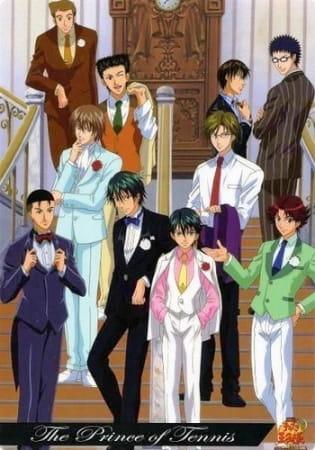
- RRyouma Echizen
Ryouma’s appeal comes from his anti-hero bite: he is not a wide-eyed rookie but a compact bundle of confidence, technique, and provocation who forces older teammates and rivals to recalibrate their pride.
- KKunimitsu Tezuka
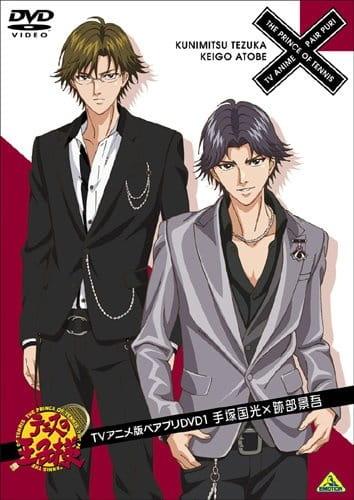
Tezuka functions as the series’ ideal of disciplined captaincy, a character fans remember less for speeches than for the pressure his composure puts on everyone around him.
- SShusuke Fuji
Fuji stands out as the elegant problem-solver of Seishun, the type of fan-favorite who makes matches feel like psychological puzzles rather than simple power contests.
- TTakeshi Momoshiro
Momoshiro gives the team a more openly emotional charge, balancing the cast’s prodigy mystique with a rougher, louder competitive charisma.
What Makes It Stand Out
- 1
The anime ran for 178 episodes from October 10, 2001 to March 23, 2005, giving it the kind of extended tournament and school-club rhythm that shorter sports adaptations rarely have room to build.
- 2
Trans Arts’ production is often criticized for operating on a visibly modest TV budget, but the series remains watchable because its matches lean on shot composition, reaction timing, and clear competitive setups rather than constant fluid animation.
- 3
Atsuhiro Tomioka handled series composition, with Natsuko Takahashi and Fumihiko Shimo among the script staff, which helps explain the show’s durable weekly structure: character focus, opponent identity, and match escalation are treated as repeatable engines.
- 4
Cher Watanabe’s music and Kimeru’s theme-song performances give the show a distinctly early-2000s shounen sports identity, closer to a competitive school anthem than a realistic athletic drama.
- 5
The adaptation preserves Takeshi Konomi’s knack for making tennis vocabulary feel accessible; one reviewer specifically praised the manga for making them feel as if they had years of tennis experience despite having none.
Fun Facts & Trivia
- Fun fact 1
- The original creator is Takeshi Konomi, whose manga is frequently credited by readers for translating tennis technique into readable shounen drama rather than assuming prior sports knowledge.
- Fun fact 2
- Director Takayuki Hamana led the TV anime at Trans Arts, the studio repeatedly singled out in later reviews for a production that was limited in animation resources but still easy to follow across long matches.
- Fun fact 3
- The show’s reception sits in a strong legacy zone rather than a niche-cult one: it holds a 7.85 MAL score from 88,755 votes and a 75/100 AniList score, with 781 AniList favourites.
- Fun fact 4
- Contemporary fan commentary often frames the series as “fun and nonsense mixed with a smattering of sport,” a useful description of how it slides from grounded tennis explanation into shounen exaggeration.
- Fun fact 5
- Several reviews note that the anime can take a while to click, but the same responses commonly describe it as rewarding once the tournament structure and character rivalries become the main attraction.
Studios
- Trans Arts
No community data yet. Be the first to add The Prince of Tennis to your list!