Fighting Spirit
はじめの一歩 THE FIGHTING! (Hajime no Ippo)
- Sports
- Combat Sports
- Episodes
- 75
- Duration
- 23 min per ep
- Aired
- Oct 4, 2000 to Mar 27, 2002
- Status
- Finished Airing
Synopsis
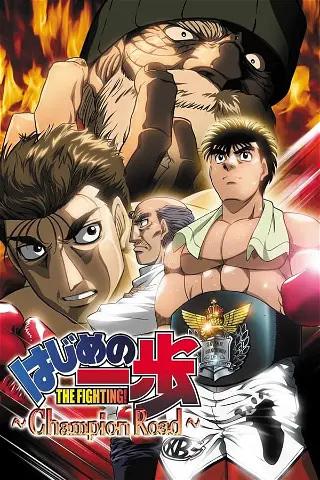
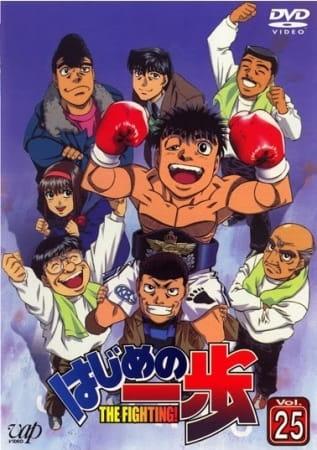
With his father gone, high schooler Ippo Makunouchi spends his days helping his mother keep their fishing boat rental afloat. The long hours, constant fatigue, and lingering scent of the sea make the shy, soft-spoken boy a frequent target for bullies—until rising boxer Mamoru Takamura steps in after a brutal incident and brings him to the Kamogawa Boxing Gym to recover. There, Takamura and the gym’s fighters, Masaru Aoki and Tatsuya Kimura, are startled to discover that Ippo’s years of demanding work have forged a body capable of remarkably heavy punches.
After a short period of training, Ippo tests himself in a sparring match against talented newcomer Ichirou Miyata, earning both a fierce rival and the attention of Genji Kamogawa, the gym’s owner and a former boxer who takes him on as a student. As Ippo begins his official path in the ring, he meets one formidable opponent after another, learning through hard training, wins, and setbacks what it takes to keep moving forward with unshakable determination.
Otaku Consensus
Fighting Spirit earns its elite reputation because Madhouse, director Satoshi Nishimura, and series composer Tatsuhiko Urahata make George Morikawa’s boxing manga feel muscular rather than repetitive: the training cycles, gym comedy, and Rookie King Tournament escalation all pay off through pacing instead of shortcut drama. The recurring caveat is real—the setup is classic shounen and the humor often goes broad slapstick—but that directness becomes part of why its fights and friendships land with such force.
Why You Should Watch
If you want a sports anime that treats improvement as labor, not destiny, Fighting Spirit is the 75-episode grind session to queue up. It scratches the same team-room camaraderie itch as Haikyu!! while keeping the one-on-one pressure and bruised physicality closer to Megalobox, minus the dystopian stylization. The appeal is in repetition with purpose: mitt work, roadwork, technical adjustments, then a match where a tiny habit suddenly matters. It is also much funnier than its reputation as a serious boxing classic suggests; reviews consistently single out the slapstick gym banter as a major reason the long run never feels punishing. Watch it if you want shounen momentum without power systems, tournament spectacle without fantasy rules, and a protagonist whose progress is measured in stamina, timing, and courage.
Key Characters
- IIppo Makunouchi(VA: Kouhei Kiyasu)
Ippo is compelling because his soft-spoken manners never cancel out the heavy, physical danger he brings into the ring, making his growth feel earned rather than preordained.
- MMamoru Takamura(VA: Rikiya Koyama)
Takamura is the gym’s loudest force of nature, a source of both elite boxing credibility and the kind of outrageous comedy fans remember years later.
- GGenji Kamogawa(VA: Kenji Utsumi)
Kamogawa gives the series its old-school backbone, turning coaching into a stern philosophy of repetition, discipline, and emotional accountability.
- MMasaru Aoki(VA: Wataru Takagi)
Aoki helps make the Kamogawa Gym feel like a lived-in ensemble space, carrying much of the slapstick energy that keeps the long training-and-fight structure lively.
What Makes It Stand Out
- 1
Madhouse’s TV adaptation runs 75 episodes from October 2000 to March 2002, giving the series enough room to make training, recovery, and match preparation feel like part of the drama rather than connective tissue.
- 2
The director-series composition pairing of Satoshi Nishimura and Tatsuhiko Urahata keeps the adaptation readable as a sports progression story: the fights matter because the viewer has seen the habits, drills, and emotional pressure that feed into them.
- 3
The comedy is not incidental padding; multiple reviews single out the slapstick gym humor as one of the show’s defining pleasures, especially in the contrast between brutal ring work and juvenile locker-room chaos.
- 4
Its combat-sports identity is unusually concentrated: AniList tags it as Boxing at 98%, Martial Arts at 83%, and Fitness at 73%, reflecting a series more invested in technique and conditioning than in general school-sports atmosphere.
- 5
Its reception has stayed unusually strong across databases, with a MAL score of 8.78 from 346,120 votes, MAL Rank #41, an AniList score of 87/100, and 8,980 AniList favourites.
Fun Facts & Trivia
- Fun fact 1
- The anime is credited directly to original creator George Morikawa, with the TV entry also known by the English synonym The First Step and the Japanese title Hajime no Ippo: The Fighting.
- Fun fact 2
- Kenichi Kawamura served as assistant director under Satoshi Nishimura, while Tatsuhiko Urahata handled series composition, a key role for organizing a long sports adaptation across 75 episodes.
- Fun fact 3
- The visual staff includes Kouji Sugiura on character design, Hidetoshi Kaneko as art director, and Hisao Shirai as director of photography, placing character readability, gym atmosphere, and ring presentation in separate specialist hands.
- Fun fact 4
- The editing credits list both Kashiko Kimura and Satoshi Terauchi, while sound direction was handled by Masafumi Mima, whose role is especially important in a boxing anime built around impacts, crowd noise, and training rhythm.
- Fun fact 5
- The main cast listed for the series is heavily centered on the Kamogawa Gym ensemble: Kouhei Kiyasu as Ippo Makunouchi, Rikiya Koyama as Mamoru Takamura, Kenji Utsumi as Genji Kamogawa, Wataru Takagi as Masaru Aoki, and Keiji Fujiwara as Tatsuya Kimura.
Studios
- Madhouse