Kyou kara Maou!
今日からマ王!
- Adventure
- Comedy
- Fantasy
- Isekai
- Parody
- Episodes
- 78
- Duration
- 25 min per ep
- Aired
- Apr 3, 2004 to Feb 25, 2006
- Status
- Finished Airing
Synopsis
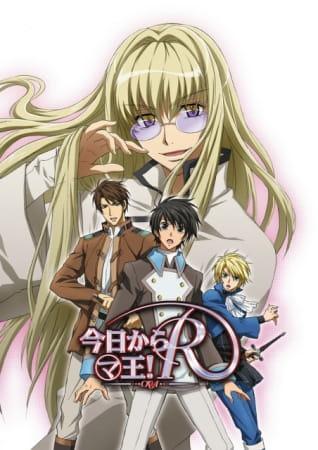
*Kyou kara Maou!* follows Yuri Shibuya, an ordinary Japanese high schooler who steps in when a classmate is being bullied—only to become the next target himself. After having his head shoved into a toilet, Yuri is pulled through a swirling portal and dropped into a world reminiscent of medieval Europe. There, he’s told his black hair and black eyes mark him as the heir to the demon royal bloodline—and the next Demon King.
Not everyone is eager to accept a stranger as their ruler, and Yuri’s arrival is met with doubt from within demon society. When he proves himself in a duel by awakening unexpected magical power, attitudes begin to shift. Thrust into leadership, Yuri must figure out what being a true Demon King entails while trying to maintain peace between demons and humans in an unfamiliar realm.
Otaku Consensus
Otaku Consensus: Kyou kara Maou! endures less as a tightly engineered fantasy epic than as Studio Deen’s long-form showcase for bishounen ensemble comedy, with Junji Nishimura’s light direction and Akemi Omode’s series composition giving the cast room to turn politics, swordplay, and BL-coded court etiquette into running farce. Its 78-episode sprawl is both its charm and its liability: fans praise the memorable male cast and pre-modern-isekai looseness, while detractors consistently point to soft plotting, visible plot holes, and stretches that feel better suited to casual one-episode-a-day viewing than binge-watching.
Why You Should Watch
Watch Kyou kara Maou! if you want an isekai from before the genre hardened into stat screens, dungeon economies, and revenge-power fantasies. It scratches a different itch: closer to Slayers in its fantasy-comedy rhythm and to Ouran High School Host Club in its fondness for elegant men behaving ridiculously around one central boy. The appeal is the ensemble machinery: a primarily male cast, shoujo sensibility, political court business, swordplay, demons, and a steady stream of BL-adjacent jokes that play more like parody than melodrama. At 78 episodes, it is not lean, but that length lets the character dynamics become comfort viewing. If you want adventure comedy with handsome men, ceremonial absurdity, and early-2000s TV-anime pacing without modern isekai self-seriousness, this is its lane.
Key Characters
- YYuuri Shibuya(VA: Takahiro Sakurai)
Yuuri works because he is written less as a power-fantasy avatar than as a decent, impulsive teenager whose pacifist instincts keep colliding with a world that expects royal decisiveness.
- WWolfram von Bielefeld(VA: Mitsuki Saiga)
Wolfram is the cast’s romantic-comedy ignition point, a proud bishounen whose intensity helped make the show’s male-harem and boys-love teasing one of its most discussed hooks.
- GGünter von Christ(VA: Kazuhiko Inoue)
Günter turns loyal-adviser archetypes into high melodrama, giving the series many of its biggest courtly overreactions and fan-favorite comedy beats.
- GGwendal von Voltaire(VA: Akio Ootsuka)
Gwendal’s appeal comes from the contrast between severe military gravitas and the show’s habit of placing that gravitas inside absurd domestic and political comedy.
What Makes It Stand Out
- 1
Studio Deen produced the series as a 78-episode TV run airing from April 2004 to February 2006, giving it the roomy, semi-episodic structure associated with early-2000s fantasy anime rather than today’s compact seasonal isekai model.
- 2
The staff pairing of director Junji Nishimura and series composer Akemi Omode leans into tonal elasticity: palace politics, swordplay, slapstick, and shoujo-flavored relationship comedy are allowed to share the same episode space.
- 3
AniList’s tag profile is unusually specific for an isekai: Male Protagonist at 92%, Primarily Male Cast at 83%, Shoujo at 79%, LGBTQ+ Themes at 73%, Politics at 72%, Male Harem at 72%, and Boys' Love at 60%. That combination explains why the show is often remembered as much for its social and romantic comedy texture as for its adventure framework.
- 4
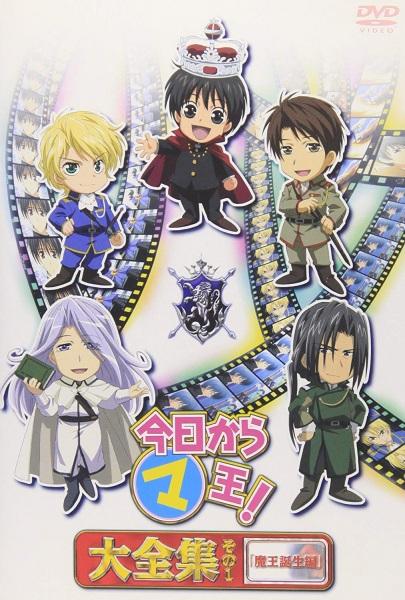
Temari Matsumoto’s original character designs, adapted for animation by Yuka Kudou, are central to the show’s reputation as a bishounen ensemble piece; even skeptical write-ups frequently single out the handsome male cast and character interactions as the reason to keep watching.
- 5
The soundtrack is credited to Youichirou Yoshikawa, with sound direction by Takeshi Takadera and Tooru Nakano, a production setup that supports the series’ frequent swings between ceremonial fantasy, broad comedy, and action-adventure staging.
Fun Facts & Trivia
- Fun fact 1
- Kyou kara Maou! adapts material by original creator Tomo Takabayashi, with original character designs by Temari Matsumoto, before Studio Deen’s TV version reworked those designs through animation character designer Yuka Kudou.
- Fun fact 2
- Its reception numbers show a durable but niche reputation: MyAnimeList lists it at 7.61 from 44,188 votes, while AniList records a 70/100 score and 372 favorites.
- Fun fact 3
- The show’s genre identity has aged strangely well because reviewers frequently contrast it with modern isekai: one positive viewer specifically notes that it does not fall into current isekai tropes, while negative reviews still use its premise as shorthand for early-2000s fantasy absurdity.
- Fun fact 4
- English-language fan discussion often preserves the series through comedy memory rather than plot memory; one Reddit comment calls it a childhood favorite and singles out a recurring tradition as still funny years later.
- Fun fact 5
- Critical blurbs are sharply split on significance: Heroic Cinema frames it as fluffy, light-hearted, silly fun with attractive male characters, while harsher user reviews attack the source and adaptation for plot holes and plainness.
Studios
- Studio Deen