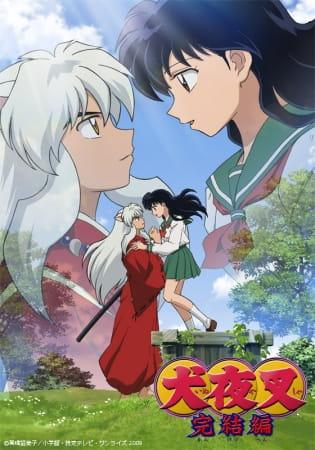
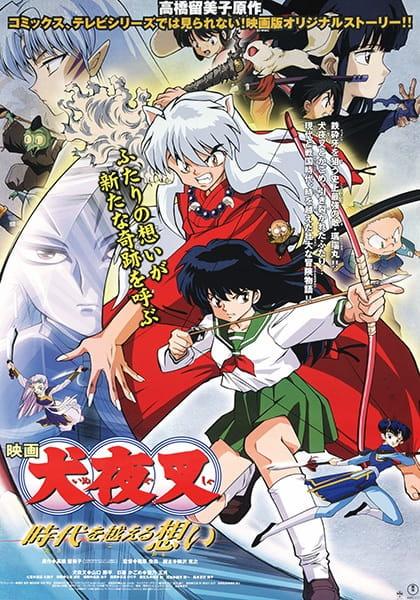
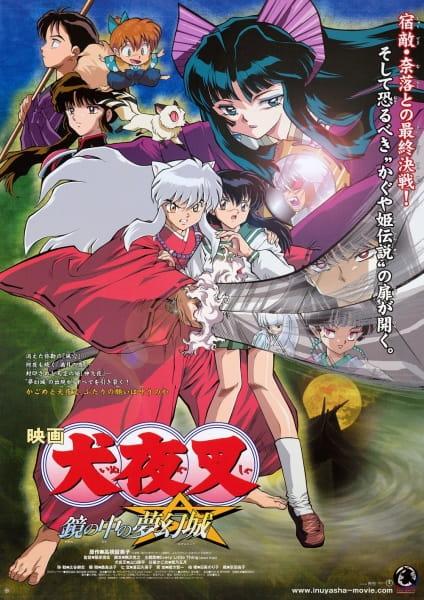
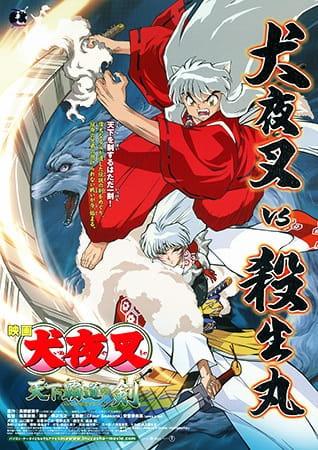
InuYasha
犬夜叉
- Action
- Adventure
- Fantasy
- Romance
- Historical
- Love Polygon
- Mythology
- Time Travel
- Episodes
- 167
- Duration
- 24 min per ep
- Aired
- Oct 16, 2000 to Sep 13, 2004
- Status
- Finished Airing
Synopsis
On her fifteenth birthday, Kagome Higurashi is dragged by a demon into the ancient well at her family’s shrine and tumbles into Japan’s feudal past, where yokai roam openly. Almost immediately, she becomes a target for monsters drawn to the Shikon Jewel—an immensely powerful orb she carries without realizing it.
Kagome’s path crosses with InuYasha, a half-demon who initially mistakes her for Kikyou, a shrine maiden he harbors deep resentment toward. Their rough first meeting gives way to an uneasy partnership, but a battle over the Shikon Jewel ends in disaster when the orb shatters and its fragments scatter across the countryside. With the stakes of those shards falling into the wrong hands, Kagome and InuYasha set off to track them down before the damage becomes irreversible.
Otaku Consensus
InuYasha endures because Sunrise’s long-form TV adaptation gives Rumiko Takahashi’s character chemistry, yokai action, comedy, and romantic friction enough room to become habitual rather than merely episodic. The fan-cited Seven Swordsmen stretch is often treated as a high point, while the most consistent criticism is pacing: many viewers love the cast but find the 167-episode run repetitive, padded, or best approached with patience.
Why You Should Watch
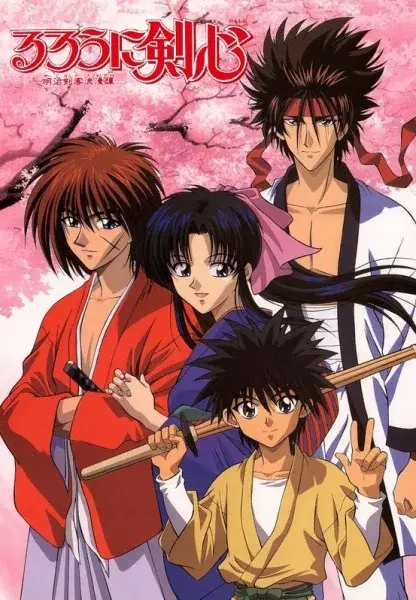
Choose InuYasha if you want a road-trip fantasy romance where the banter matters as much as the swordplay, and you do not need modern seasonal tightness. It scratches the historical-action itch of Rurouni Kenshin while carrying the relationship-comedy instincts associated with Rumiko Takahashi, filtered through yokai folklore, shrine iconography, and early-2000s Sunrise television craft. The appeal is the rhythm: rural monster encounters, prickly trust, comic jealousy, and sudden bloodier fights moving side by side rather than occupying separate shows. Viewers who love slow-burn attachment, love-triangle tension, kemonomimi character appeal, and a heroine with real narrative weight will get the most from it; viewers who demand zero filler or fast adaptation compression should use an episode guide.
Key Characters
- IInuYasha
A brash half-demon whose tsundere volatility, swordplay, and kemonomimi design became central to the show’s identity rather than a simple fantasy gimmick.
- KKagome Higurashi
The series’ female protagonist stands out because the romance, moral choices, and time-travel framing keep treating her as more than a spectator in a male-led adventure.
- KKikyou
Kikyou gives the love-triangle element its sting, functioning less as a stock rival than as the emotional pressure point behind much of the cast’s unresolved tension.
What Makes It Stand Out
- 1
The anime is a 167-episode Sunrise production that aired from October 16, 2000 to September 13, 2004, placing it firmly in the era of long-running weekly shounen fantasy rather than today’s compact seasonal model.
- 2
Rumiko Takahashi’s source material creates an unusually durable mix of shounen swordplay, romantic hesitation, slapstick conflict, and mythological horror; AniList’s high tags for Youkai, Demons, Love Triangle, Swordplay, Tsundere, and Monster Boy reflect how many tonal lanes the series occupies at once.
- 3
Yoshihito Hishinuma handled character design, helping translate Takahashi’s instantly readable silhouettes into TV animation; the continued prominence of AniList’s Kemonomimi and Monster Boy tags shows how strongly the designs shaped the show’s fandom memory.
- 4
The feudal atmosphere was not handled by a single credit: Shigemi Ikeda served as art director, Yukiko Maruyama worked on art board, and Miyuki Satou handled color design, giving the rural historical setting a dedicated visual pipeline.
- 5
The sound side had named specialists as well, with Youta Tsuruoka as sound director and Eiko Morikawa on sound effects, a notable production detail for a series built around sword clashes, demon encounters, comedy hits, and supernatural ambience.
Fun Facts & Trivia
- Fun fact 1
- Its database footprint shows both longevity and selectiveness: MyAnimeList lists a 7.88 score from 417,385 votes, rank #962, and popularity #254, while AniList records a 77/100 score and 7,256 favourites.
- Fun fact 2
- Critical conversation around the show is unusually centered on stamina: one MyAnimeList review praises it for laughs, bloody fights, and sweet romance if the viewer has patience, while another web review claims most of the nearly 200-episode-and-film franchise can be skipped.
- Fun fact 3
- The Seven Swordsmen arc appears in fan discussion as a dividing-line recommendation, with at least one GameFAQs commenter telling newcomers to watch through that stretch before deciding how they feel about the series.
- Fun fact 4
- The staff list includes Tetsuko Takahashi under Literary Arts, Tomoaki Tsurubuchi for editing, and Kumiko Itou for photography, highlighting how many specialized production roles supported the long TV run beyond the more visible creator and studio credits.
- Fun fact 5
- AniList tags quantify the show’s identity with unusual clarity: Youkai at 92%, Demons at 85%, Historical at 85%, Isekai at 71%, and Travel at 70%, marking it as a pre-modern-isekai-boom title that already used many ingredients later associated with the genre.
Studios
- Sunrise