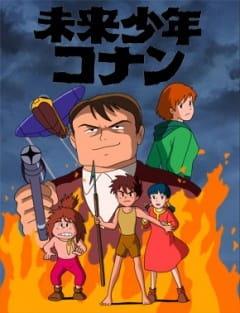
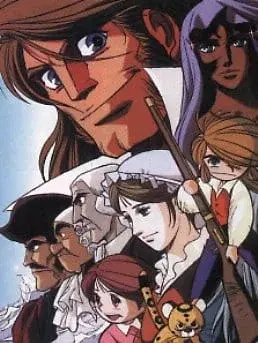
Future Boy Conan
未来少年コナン (Mirai Shounen Conan)
- Adventure
- Drama
- Sci-Fi
- Survival
- Episodes
- 26
- Duration
- 29 min per ep
- Aired
- Apr 4, 1978 to Oct 31, 1978
- Status
- Finished Airing
Synopsis
Conan is the first—and only—child born on Remnant Island, a lonely refuge formed by survivors escaping a devastating barrage of magnetic bombs that nearly erased humanity. Two decades later, the community has dwindled to just Conan and the elderly man who raised him, leaving him to believe their island may be the last place where people still live.
That certainty shatters when a girl named Lana washes ashore. She brings proof that others endured, along with grim news: the nation of Industria is hunting her, intending to use her as leverage to force her grandfather, Dr. Lao, to provide the power behind their machines. When Industria’s ace pilot Monsley arrives and abducts Lana, Conan leaves the island for the first time, setting out in pursuit on a journey tied to the world’s future.
Otaku Consensus
Future Boy Conan remains one of the clearest early blueprints for Hayao Miyazaki’s adventure storytelling: kinetic direction, child-centered survival drama, politics rendered through machines and geography, and a 26-episode pace that lets journeys feel physically earned. Its reputation is stronger than its popularity numbers suggest, with high MAL and AniList scores despite modest modern visibility; the recurring caveat is that its late-1970s children’s-TV slapstick and occasional episodic detours can feel dated next to later Ghibli-polished descendants.
Why You Should Watch
Watch Future Boy Conan if you want the DNA of Castle in the Sky and Nausicaä in a leaner, rougher TV-serial form: kids navigating a broken world of aircraft, ships, salvaged technology, and adult political failure. It is especially rewarding for viewers who like adventure anime where movement matters: climbing, swimming, running, improvising, and physically crossing hostile spaces instead of merely discussing them. The appeal is not nostalgia alone; Miyazaki’s mechanical design and action staging give the series a tactile momentum that many newer post-apocalyptic shows lack. If you want optimistic sci-fi without franchise lore overload, and a child cast treated as active agents rather than mascots, this is a foundational work worth seeing before its better-known spiritual heirs.
Key Characters
- CConan
Conan is compelling because his heroism is expressed through physical problem-solving and fearless motion, making him feel like an early prototype for Miyazaki’s most kinetic young protagonists.
- LLana
Lana gives the adventure its emotional center, balancing vulnerability with a quiet resolve that keeps her from being reduced to a simple rescue objective.
- MMonsley
Monsley stands out as a military antagonist whose authority, competence, and changing perspective make her one of the series’ most discussed adult figures.
- DDr. Lao
Dr. Lao embodies the series’ anxiety over scientific power, linking its lost-civilization imagery to a moral question rather than just background lore.
What Makes It Stand Out
- 1
Hayao Miyazaki served as director, character designer, and mechanical designer, making the series unusually concentrated around his visual and narrative instincts for a TV production.
- 2
Nippon Animation produced the series as a 26-episode adventure serial, giving it room for survival episodes, travel logistics, political conflict, and ship-and-aviation set pieces rather than compressing them into film pacing.
- 3
The show adapts material from Alexander Key, whose post-disaster science-fiction framework becomes a vehicle for Miyazaki’s recurring interests in children, machines, flight, environmental ruin, and authoritarian systems.
- 4
Yasuo Ootsuka shares character design credit, tying the series to a lineage of expressive, motion-driven animation where body language and comic timing carry as much weight as dialogue.
- 5
Nizou Yamamoto’s art direction supports the contrast between coastal survival spaces, industrial environments, and remnants of lost civilization, which is central to the show’s post-apocalyptic atmosphere.
Fun Facts & Trivia
- Fun fact 1
- Future Boy Conan aired from April 4 to October 31, 1978, placing it years before Studio Ghibli and before Miyazaki’s international reputation was established through theatrical films.
- Fun fact 2
- The series is based on work by American author Alexander Key, making it part of a small but notable group of classic anime built from Western children’s and young-adult literature.
- Fun fact 3
- Miyazaki’s triple role as director, character designer, and mechanical designer makes the anime a compact showcase of ideas that would later recur across his film career: aircraft, industrial ruins, capable children, and anti-authoritarian adventure.
- Fun fact 4
- Despite ranking outside the upper tier of mainstream popularity on MAL, its 8.11 score and AniList favorite count show a strong reputation among viewers who seek out older landmark productions.
- Fun fact 5
- The staff list includes specialist credits for photography, editing, sound direction, and sound effects, reflecting how even a 1978 TV anime relied on a clearly divided production pipeline rather than a vague auteur-only process.
Studios
- Nippon Animation
No community data yet. Be the first to add Future Boy Conan to your list!