Fist of the North Star
北斗の拳 (Hokuto no Ken)
- Action
- Drama
- Sci-Fi
- Gore
- Martial Arts
- Episodes
- 109
- Duration
- 25 min per ep
- Aired
- Oct 11, 1984 to Mar 5, 1987
- Status
- Finished Airing
Synopsis
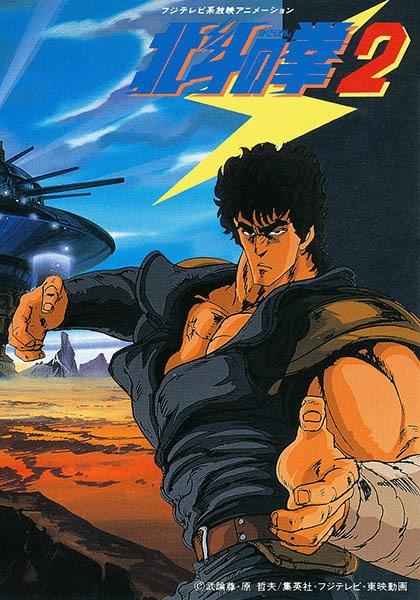
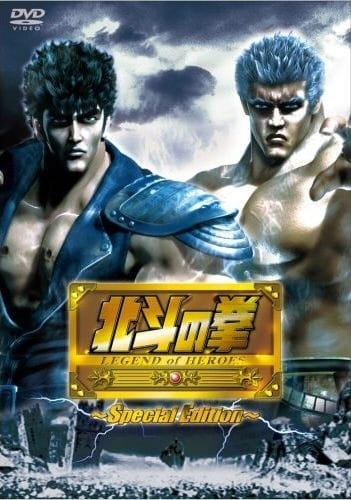
Set in the year 19XX, the world has collapsed into a brutal wasteland where the strong prey on the weak. Betrayed and left for dead, Kenshirou roams the ruins in pursuit of his former rival Shin, who has taken Kenshirou’s fiancée, Yuria. As he travels, Kenshirou uses the lethal martial art Hokuto Shinken to protect ordinary people from violent raiders, leaving a trail of fear and awe in his wake.
His growing reputation soon draws more dangerous attention—warlords, rival fighters, and practitioners tied to the Nanto Seiken tradition. With each confrontation, the successor of Hokuto Shinken is pushed to the limit, fighting not only to reclaim what was stolen from him, but also to stand against the cruelty consuming an irradiated world.
Otaku Consensus
Toyoo Ashida's Toei Animation adaptation remains a cult shounen landmark because it commits completely to operatic martial-arts melodrama, adult wasteland cruelty, and the escalating mythology around Hokuto Shinken and Nanto Seiken. Its 109-episode run gives the material a monumental, road-warrior rhythm, but the same scale produces the most common complaints: uneven pacing, animation that feels stiff by modern standards, and dialogue that can tip from mythic into cheesy.
Why You Should Watch
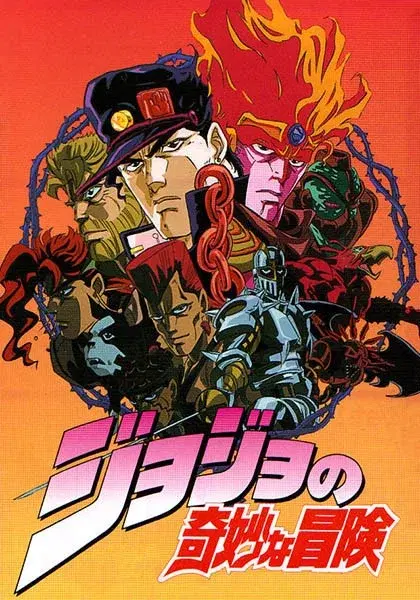
Watch Fist of the North Star if you want martial-arts anime that treats every duel like a moral execution, not a sports match. It scratches the same itch as JoJo's Bizarre Adventure's bodily absurdity and Berserk's doomed masculine tragedy, but with a cleaner old-school shounen engine: named fighting styles, warlord theatrics, and a hero whose presence changes the temperature of a scene before anyone throws a punch. The appeal is not polished modern animation; it is scale, ritual, and impact. If you like post-apocalyptic settings without cozy survivalism, superhuman combat without tournament padding, and gore presented as a grim punchline to tyranny, this is one of the genre's foundational texts.
Key Characters
- KKenshirou
Kenshirou is compelling because fans read him as both executioner and mourner: a nearly invincible martial artist whose restraint matters as much as his lethality.
- SShin
Shin gives the early conflict its sharpness by making Nanto Seiken feel like a rival creed rather than a simple villain gimmick.
- YYuria
Yuria functions as the series' emotional axis, turning its wasteland violence into a story about memory, devotion, and what survives after civilization collapses.
What Makes It Stand Out
- 1
Toei Animation produced the TV series as a long-form 109-episode adaptation that aired from October 11, 1984 to March 5, 1987, giving the anime a scale most modern seasonal action shows never attempt.
- 2
The production pairs Toyoo Ashida's direction with Masami Suda's character designs based on Tetsuo Hara's original designs, which is why the show leans so hard into massive silhouettes, harsh faces, and impact poses over fluid contemporary action choreography.
- 3
The battle system stands out because Hokuto Shinken and Nanto Seiken are treated as inherited martial traditions, so confrontations are framed around lineage, technique, and ideology rather than simply stronger opponents appearing.
- 4
The show's identity is unusually adult-coded for a shounen action title: AniList tags it with a Primarily Adult Cast at 76%, Gore at 70%, and Tragedy at 84%, aligning with its reputation for brutality and melodrama.
- 5
Its audio profile is part of its 1980s texture: Nozomi Aoki is credited for music, Hideyuki Tanaka for music selection, and Michihiro Itou for sound effects, even as later reviews often criticize the rock cues as generic compared with the series' more memorable violence and iconography.
Fun Facts & Trivia
- Fun fact 1
- The anime's source credit lists Yoshiyuki Okamura as original creator and Tetsuo Hara for original character design; Okamura is better known to many manga fans by the pen name Buronson.
- Fun fact 2
- Its reputation is stronger as a cult institution than as a broad modern popularity hit: the data places it at 7.96 on MyAnimeList with 48,270 votes, while AniList lists a 76/100 score and 898 favourites.
- Fun fact 3
- AniList's highest tags quantify what viewers usually remember: Martial Arts at 98%, Post-Apocalyptic at 94%, Super Power at 80%, and Gangs at 70%.
- Fun fact 4
- The staff list separates several old-TV production roles that shaped the viewing experience: Masaaki Hanai handled editing, Mitsuki Nakamura art design, and Yoshinobu Nakao planning.
- Fun fact 5
- Contemporary discussion repeatedly lands on the same tradeoff: the characters and mythology remain iconic, but the animation consistency, pacing, violent content, and sometimes cheesy dialogue are the barriers for new viewers.
Studios
- Toei Animation