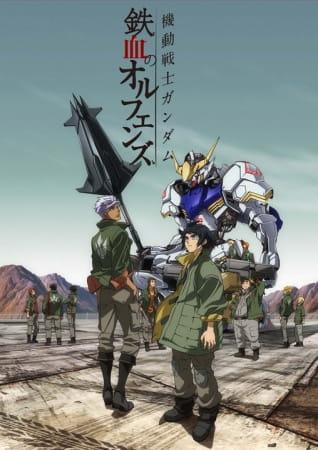
Mobile Suit Gundam: Iron-Blooded Orphans 2nd Season
機動戦士ガンダム 鉄血のオルフェンズ 第2期 (Kidou Senshi Gundam: Tekketsu no Orphans 2nd Season)
- Drama
- Sci-Fi
- Mecha
- Space
- Episodes
- 25
- Duration
- 24 min per ep
- Aired
- Oct 2, 2016 to Apr 2, 2017
- Status
- Finished Airing
Synopsis
Tekkadan’s rise continues as the group becomes a direct affiliate of Teiwaz, bolstered by a new trade agreement with Arbrau. With greater funding and status comes sharper scrutiny, and their expanding influence draws in both new partners and dangerous opposition. At the same time, Gjallarhorn’s internal power struggle escalates, tightening its grip across the system.
Determined to push Mars toward economic independence from Earth, Kudelia Aina Bernstein establishes the Admoss Company and brings Tekkadan on as a key business partner. As their “family” grows and the political stakes climb, Orga, Mikazuki, and the rest of Tekkadan must navigate a world that grows more hostile with every step forward—testing whether Kudelia’s vision can endure.
Otaku Consensus
The second season is received as the bolder, harsher half of Iron-Blooded Orphans: its 8.23 MAL score and 80/100 AniList score reflect strong fan investment in Tatsuyuki Nagai’s severe direction, Mari Okada’s ensemble pressure-cooker writing, and Sunrise’s unusually tactile mobile-suit combat. The most common criticism is the divisive final stretch, where the series’ fatalism and political endgame can feel less like tragedy unfolding than the narrative locking characters into a predetermined fall.
Why You Should Watch
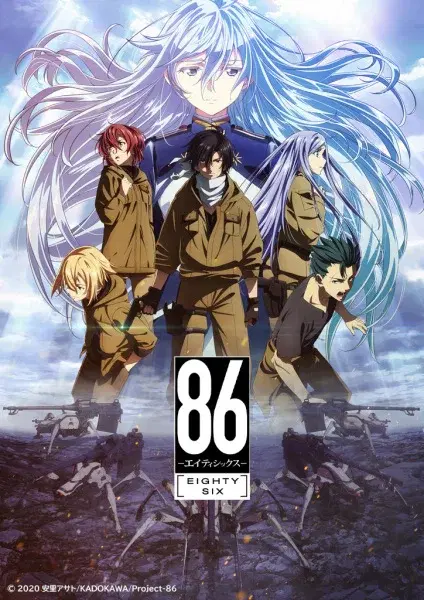
Watch this if you want Gundam stripped of heroic romance and rebuilt as a war-crime, labor, and found-family tragedy. Iron-Blooded Orphans 2nd Season scratches the same itch as 86 for child-soldier anger and institutional cruelty, while its factional maneuvering gives it a harder political edge than most shounen mecha. It is especially rewarding for viewers who care about consequences: promotions create liabilities, bodies retain damage, and victory rarely cleans the blood off anyone’s hands. Sunrise’s action favors weighty melee clashes, ballistic punishment, and machines that look like industrial weapons rather than shining saviors. If you want real-robot warfare without Newtype mysticism or tidy moral comfort, this is one of modern Gundam’s sharpest pressure cookers.
Key Characters
- MMikazuki Augus(VA: Kengo Kawanishi)
Mikazuki fascinates fans because his calm, almost blank devotion turns the usual hot-blooded Gundam protagonist into something colder, more unsettling, and painfully shaped by survival.
- OOrga Itsuka(VA: Yoshimasa Hosoya)
Orga is compelling as a young leader whose charisma is inseparable from the impossible burden of being believed in by people who have nowhere else to go.
- KKudelia Aina Bernstein(VA: Yuka Terasaki)
Kudelia stands out because her idealism is treated less as naïve purity than as political labor that must compete with money, militarism, and reputation.
What Makes It Stand Out
- 1
Sunrise presents this as a 25-episode second season rather than a simple continuation cour, giving the staff room to turn Tekkadan’s earlier victories into institutional pressure, reputational risk, and factional backlash.
- 2
The creative spine is the Tatsuyuki Nagai and Mari Okada pairing, a director-writer combination known for emotionally volatile ensemble drama; here that sensibility is fused to Gundam’s military architecture rather than school or coming-of-age melodrama.
- 3
The mechanical design credits are unusually stacked: Kanetake Ebikawa, Kenji Teraoka, Naohiro Washio, and Ippei Gyoubu all contribute designs, helping the series maintain a broad visual language across mobile suits, military hardware, and faction-specific machines.
- 4
Its genre identity is unusually consistent across fan databases: AniList tags it at 92% for both Military and War, 85% for Real Robot, and 78% for Politics, matching its reputation as one of the least escapist modern Gundam entries.
- 5
The season’s combat aesthetic emphasizes blunt impact, attrition, and physical damage over elegant beam duels, making its mobile-suit battles feel closer to armored brawls than ceremonial ace-pilot showdowns.
Fun Facts & Trivia
- Fun fact 1
- Iron-Blooded Orphans is an anime-original Gundam television entry credited to Hajime Yatate and Yoshiyuki Tomino, not an adaptation of a manga, novel, or game.
- Fun fact 2
- The second season aired from October 2, 2016 to April 2, 2017, completing a 25-episode run across two broadcast cours.
- Fun fact 3
- On MyAnimeList, it holds a notably strong 8.23/10 average from 90,602 votes while sitting at popularity rank #1678, suggesting a smaller audience than many mainstream hits but a highly approving one.
- Fun fact 4
- AniList records 1,305 favourites for the season and tags it with Disability at 53% and Bisexual at 51%, two descriptors that point to how often viewers discuss its character bodies and relationships alongside its warfare.
- Fun fact 5
- Yuu Itou is credited with the original character designs, while Michinori Chiba handled the animation character designs, separating the initial visual concept from the production-ready designs used by the animation team.
Studios
- Sunrise