Pokémon the Series: Sun & Moon
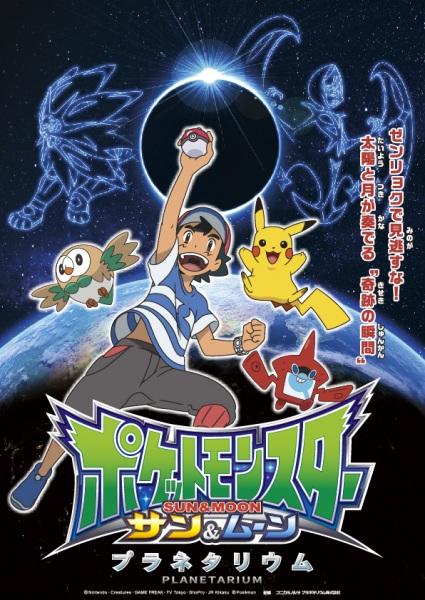
ポケットモンスター サン&ムーン (Pokemon Sun & Moon)
- Action
- Fantasy
- School
- Strategy Game
- Episodes
- 146
- Duration
- 24 min per ep
- Aired
- Nov 17, 2016 to Nov 3, 2019
- Status
- Finished Airing
Synopsis
Satoshi and Pikachu travel to the Alola region after Satoshi’s mother wins a free island getaway, arriving on Melemele Island—a tropical setting full of newly discovered Pokémon and regional variations of familiar ones. Their eagerness to explore quickly gets them lost while chasing a Pokémon, and the detour leads them to the local Pokémon School, where students study and learn alongside their partners.
After a clash involving the troublemaking Team Skull and the straightforward classmate Kaki, Satoshi witnesses the power of Alola’s Z-Moves—special techniques that demand perfect harmony between trainer and Pokémon. That night, an encounter with Melemele’s guardian deity, Kapu Kokeko, leaves Satoshi and Pikachu with a Z-Ring, the key to using those moves. With a new goal in mind, Satoshi decides to remain in Alola, enroll at the Pokémon School, and train to master Z-Moves while taking on the Island Challenge.
Life at school introduces classmates like Lillie, who adores Pokémon but struggles to touch them, along with Kaki and others. Between lessons, the Island Challenge, and constant interruptions from Team Rocket—now in Alola pursuing their own plans—Satoshi and Pikachu settle into a fresh adventure under the Alolan sun.
Otaku Consensus
Daiki Tomiyasu’s Sun & Moon earns its best reputation when it treats Pokémon as an elastic school-comedy adventure: OLM’s looser character designs support unusually fluid slapstick, expressive battles, and charming self-contained episodes across a 146-episode run. Its Alola adaptation works less like a badge-road retread and more like a Gen VII systems showcase, folding regional variants and Z-Moves into a lighter ensemble format. The enduring complaint is the same one that surfaced at launch: the redesigned art style is jarring for viewers attached to the sharper XY-era look, and game-first fans have also objected to adaptation changes.
Why You Should Watch
Watch Sun & Moon if you want Pokémon with the pressure valve opened: less gym-road urgency, more coastal school energy, ensemble banter, physical comedy, and battles that still build around recognizable strategy-game mechanics. It scratches the same creature-partner itch as the rest of the franchise, but its rhythm is closer to a bright kids’ sitcom with action bursts than a continuous tournament climb. Viewers who liked the warmth of Pokémon Journeys or the gag timing of Yo-kai Watch will understand its appeal quickly; viewers who only want the polished shounen intensity of Pokémon XY may bounce off the softer designs. The draw is OLM’s expressive animation, the Alola-specific Z-Move spectacle, and a format that lets side characters feel like classmates rather than temporary route encounters.
Key Characters
- SSatoshi(VA: Rica Matsumoto)
Satoshi is most interesting here as a long-running adventure lead retooled for school-comedy timing, with his competitiveness filtered through daily ensemble interaction rather than constant travel escalation.
- PPikachu
Pikachu benefits from the season’s looser animation language, giving the mascot more physical comedy and reaction acting without reducing its battle presence.
- LLillie
Lillie gives the cast its most immediately distinct emotional hook: she loves Pokémon while struggling with the physical contact that the franchise usually treats as effortless.
- KKaki
Kaki stands out as the classmate who brings a more direct, disciplined battle temperament into a series otherwise leaning heavily into school-life warmth and slapstick.
What Makes It Stand Out
- 1
OLM’s production uses softer, rounder character designs than the preceding TV era, a choice many early viewers found jarring but which enabled smoother motion, broader facial acting, and more elastic slapstick.
- 2
The series runs 146 episodes from November 2016 to November 2019, giving it enough space to operate as an episodic ensemble show rather than a tightly serialized badge quest.
- 3
Daiki Tomiyasu’s direction reframes the franchise around the Pokémon School, a structural shift that makes recurring classmates part of the weekly engine instead of relying primarily on new towns and one-off companions.
- 4
The Alola material foregrounds Gen VII-specific concepts such as regional variants and Z-Moves, with the latter functioning like high-impact synchronization finishers that match the AniList-tagged henshin flavor.
- 5
Fan discussion from the airing period repeatedly singled out the animation itself as a strength, with praise aimed not just at isolated sakuga cuts but at how lively the average episode looked for a weekly long-running production.
Fun Facts & Trivia
- Fun fact 1
- Rica Matsumoto, Satoshi’s long-time Japanese performer, is also credited in the research data for performing the first two opening themes of Sun & Moon.
- Fun fact 2
- The opening-theme lineup changed across the run: ReaL performed the third opening, while Taiiku Okazaki performed the fourth.
- Fun fact 3
- Inuko Inuyama is credited with an insert song performance in episode 21, adding a notable voice-cast-linked musical credit to the season’s staff list.
- Fun fact 4
- Key animation credits in the research data include Shingo Fujii on OP1 version 1 and episode 1, plus Takeshi Maenami on late-run episodes 111, 130, 139, and 144.
- Fun fact 5
- The Latin American Spanish version lists Diana Pérez and Miguel Ángel Leal as ADR directors, reflecting a documented regional dubbing production track beyond the Japanese broadcast staff.
Studios
- OLM