Yo-kai Watch
妖怪ウォッチ (Youkai Watch)
- Comedy
- Supernatural
- Mythology
- Episodes
- 214
- Duration
- 23 min per ep
- Aired
- Jan 8, 2014 to Mar 30, 2018
- Status
- Finished Airing
Synopsis
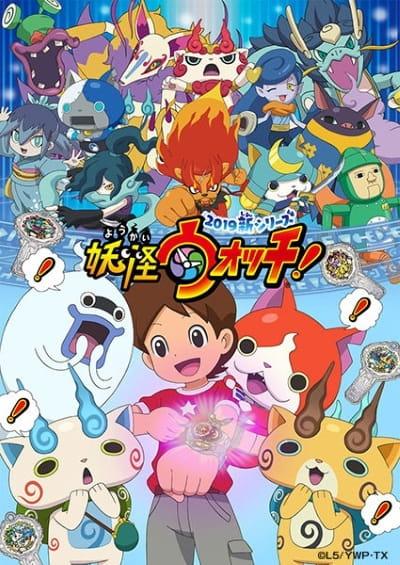
Primary schooler Keita Amano’s curiosity leads him deeper into the woods one day, where he discovers a strange capsule. Inside is Whisper, a ghostlike Yo-kai who has been sealed away for 190 years and eagerly repays Keita’s kindness by becoming his self-appointed guardian. Whisper introduces Keita to the hidden world of Yo-kai and gives him the Yo-kai Watch, a special device that lets him see and communicate with them.
With Whisper and the cat spirit Jibanyan at his side, Keita begins meeting Yo-kai around town—befriending them, sorting out the mischief they cause, and calling on the abilities of allies he’s already met when new problems arise. What starts as an ordinary kid’s chance encounter gradually becomes a string of adventures that teach Keita valuable lessons as he grows.
Otaku Consensus
Yo-kai Watch earns its reputation less through prestige storytelling than through Shinji Ushiro’s durable comic timing: OLM turns a monster-collecting game premise into a brisk, sketch-driven urban-folklore sitcom that could sustain 214 episodes. Its MAL score of 6.76 and AniList score of 65 reflect the split reception clearly: fans value the gag pacing, mascot chemistry, and everyday-youkai concept, while the most common drawback is the deliberately repetitive, child-targeted formula that offers little long-form escalation.
Why You Should Watch
Watch Yo-kai Watch if you want monster-befriending comedy without the tournament grind or power-scaling anxiety. It scratches part of the same itch as Pokémon, but its stronger comparison is Doraemon: a child’s normal life keeps getting disrupted by supernatural gimmicks, wordplay, and social embarrassment rather than villain arcs. The appeal is in the repeatable rhythm: a strange behavior in town, a folkloric culprit, a fast gag payoff, and a small lesson that does not pretend to be grand drama. Viewers interested in Japanese youkai culture will also get a kid-friendly catalogue of mythological creatures filtered through modern habits, school life, and slapstick. At 214 episodes, it is best treated as comfort viewing or a comedy archive, not a binge-dependent serial.
Key Characters
- KKeita Amano
Keita works because he is deliberately ordinary: the comedy depends on him reacting like a normal school kid to supernatural problems that refuse to become heroic epics.
- WWhisper
Whisper’s self-appointed expertise is a running engine of the series, making him funny less as a guide than as a pompous commentator who is often less in control than he sounds.
- JJibanyan
Jibanyan became the franchise’s breakout mascot by mixing cute cat-spirit design with punchline-ready flaws, giving the show a marketable face that still functions as a gag character.
What Makes It Stand Out
- 1
OLM produced the series as a long-running TV comedy from January 2014 to March 2018, and the animation priorities reflect that schedule: clean silhouettes, expressive reaction cuts, and gag readability over showcase action scenes.
- 2
The series uses Japanese youkai as a structure for everyday comedy, aligning with AniList’s very high Youkai tag at 93% while keeping the supernatural material grounded in school, family, and neighborhood routines.
- 3
Unlike many proxy-battle anime, Yo-kai Watch treats summoned allies as a comic device as much as a combat system; AniList’s Proxy Battle tag sits at 60%, which matches the show’s lighter emphasis on battles compared with monster-training rivals.
- 4
Its format leans heavily into sketch comedy and resettable episodes, a structural choice that helped it reach 214 episodes but also explains why viewers looking for a tight serialized arc often bounce off it.
- 5
The franchise’s dance element is not incidental: AniList tags Dancing at 20%, reflecting how choreographed theme-song culture became part of Yo-kai Watch’s identity alongside the gags and creature collecting.
Fun Facts & Trivia
- Fun fact 1
- The anime’s visual identity separates original creature and character conception from TV adaptation work: Miho Tanaka and Takuzou Nagano are credited with original character design, while Masami Suda handled the anime character designs.
- Fun fact 2
- Shinji Ushiro was not only the series director but also one of the credited storyboard artists, giving the show a directorial hand in both overall pacing and individual episode construction.
- Fun fact 3
- The storyboard roster listed for the series includes Risako Yoshida, Akira Shigino, Satomi Nakamura, Shinji Ushiro, and Takayuki Hamana, a spread that reflects the production demands of a four-year, 214-episode broadcast.
- Fun fact 4
- Masafumi Mima served as sound director, an important role for a comedy series built around rapid reactions, mascot voices, catchphrases, and short gag timing.
- Fun fact 5
- Despite becoming a major kids’ franchise, its anime database footprint is relatively modest among older international anime fans: MAL lists it at 6.76 from 17,667 votes, while AniList records a 65/100 score and 304 favourites.
Studios
- OLM