March Comes In Like a Lion 2nd Season
3月のライオン 第2シリーズ (3-gatsu no Lion 2nd Season)
- Drama
- Strategy Game
- Episodes
- 22
- Duration
- 25 min per ep
- Aired
- Oct 14, 2017 to Mar 31, 2018
- Status
- Finished Airing
Synopsis
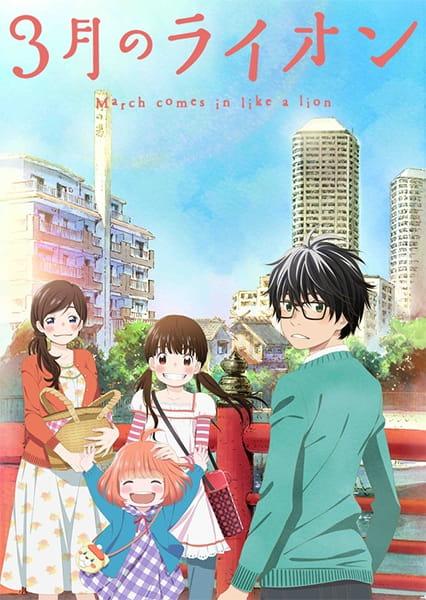
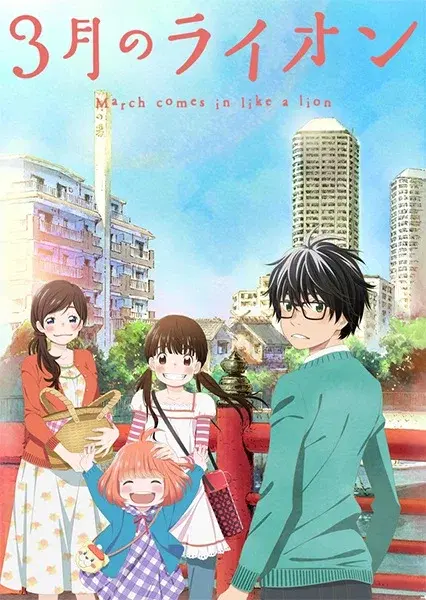
In his second year of high school, Rei Kiriyama keeps moving forward in the demanding world of professional shogi while trying to steady his private life. The people around him—at the shogi hall, the school club, and throughout the neighborhood—gradually draw him out of isolation, little by little. At the heart of that warmth are the Kawamoto sisters, Akari, Hinata, and Momo, whose gentle, family-like closeness gives Rei a place to belong.
As those connections deepen, Rei comes to see that everyone carries their own quiet pain, and he begins learning how to lean on others and offer support in return. But the path of a pro leaves little room to breathe: tournaments, championships, and title matches pile on pressure as he climbs the ranks and faces formidable opponents, all while searching for what the game truly means to him.
Otaku Consensus
March Comes In Like a Lion 2nd Season is widely received as the sequel that turns an already acclaimed character drama into a modern benchmark, reflected in its 8.9 MAL score, top-25 rank, and near-identical AniList approval. Its strongest assets are Shaft’s psychologically expressive direction under Akiyuki Shinbou and Kenjirou Okada, the patient escalation of Rei’s rehabilitation, and the season’s heavily praised bullying arc centered on Hinata. The recurring reservation is not quality but accessibility: its introspective pacing, emotional heaviness, and long stretches of quiet recovery can feel demanding for viewers expecting a tighter sports-tournament rhythm.
Why You Should Watch
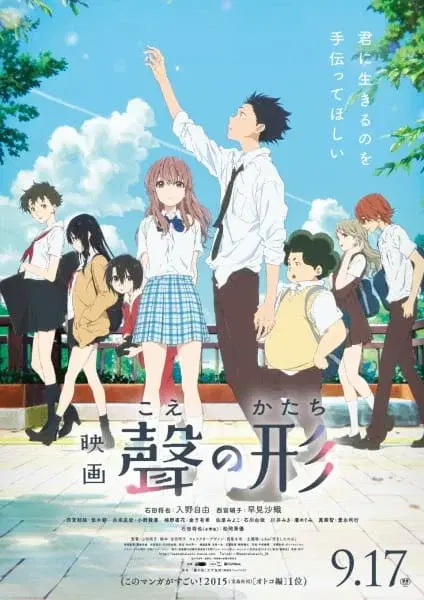
Watch this if you want the competitive focus of Chihayafuru without the usual victory-ladder simplicity, or the emotional bruising of A Silent Voice stretched into a slower, more therapeutic character study. Season 2 is for viewers who care about how people recover, not just whether they win: it treats shogi as pressure, language, self-worth, and professional labor rather than as a gimmick. The adult-heavy cast, domestic food scenes, school-club warmth, and neighborhood routines give the drama a lived-in texture most high-school anime never attempt. It also rewards patience; the season’s best moments come from accumulated gestures, not plot twists. If you prefer sharp interior monologue, visual metaphor, and moral courage over spectacle, this is one of seinen anime’s clearest recent peaks.
Key Characters
- RRei Kiriyama(VA: Kengo Kawanishi)
Rei remains compelling because the series frames his talent less as wish fulfillment than as a burden he has to relearn how to carry around other people.
- HHinata Kawamoto(VA: Kana Hanazawa)
Hinata became one of the season’s emotional anchors for fans because her kindness is tested as moral action rather than presented as simple sweetness.
- AAkari Kawamoto(VA: Ai Kayano)
Akari stands out as a young caretaker figure whose warmth is inseparable from exhaustion, making her one of the show’s most quietly adult presences.
- MMomo Kawamoto(VA: Misaki Kuno)
Momo’s role is small in scale but vital in tone, giving the Kawamoto household its sense of innocence and everyday continuity.
What Makes It Stand Out
- 1
Shaft’s adaptation uses the studio’s signature visual abstraction to externalize mental states, with Akiyuki Shinbou credited as director and series composer and Kenjirou Okada serving as chief director.
- 2
The second season’s bullying material is one of its defining critical talking points, strong enough to be reflected in AniList’s high 81% Bullying tag and frequently singled out as a standout emotional arc.
- 3
Unlike many strategy-game anime, the shogi material is embedded in a seinen character study: the tags emphasize Rehabilitation at 96%, Found Family at 92%, and Philosophy at 79% alongside Shogi at 85%.
- 4
The 22-episode run, airing from October 2017 to March 2018, gives the season enough space to alternate professional matches with school, neighborhood, and family-life material without compressing the emotional fallout.
- 5
The cast balance is unusual for a high-school-adjacent drama, with AniList tagging it as Primarily Adult Cast at 56%, helping the series explore work, caregiving, and mentorship beyond teen romance or club activity.
Fun Facts & Trivia
- Fun fact 1
- Chica Umino is credited as the original creator, and the anime’s soft character surfaces and painful emotional specificity are key parts of how the adaptation preserves her authorial identity.
- Fun fact 2
- Akiyuki Shinbou holds two major credits on the season, serving as both director and part of the series composition team alongside Fuyashi Tou.
- Fun fact 3
- The scripts are credited to Yukito Kizawa, while Nobuhiro Sugiyama handled character design, giving the season a consistent bridge between intimate dialogue scenes and Shaft’s stylized presentation.
- Fun fact 4
- The visual world was split across specialized roles: Seiki Tamura is credited as art director, Yasuhiro Nakura as art design, and Izumi Takizawa as color designer.
- Fun fact 5
- Its database reception is unusually strong across platforms: MAL lists it at 8.9 from over 216,000 votes with a top-25 rank, while AniList records an 89/100 score and 9,990 favourites.
Studios
- Shaft