Land of the Lustrous
宝石の国 (Houseki no Kuni)
- Action
- Drama
- Fantasy
- Mystery
- Anthropomorphic
- Episodes
- 12
- Duration
- 24 min per ep
- Aired
- Oct 7, 2017 to Dec 23, 2017
- Status
- Finished Airing
Synopsis
In a far-off future scarred by six meteor strikes, crystalline beings known as Gems live among the ruins, each assigned a duty to help defend their world. Their greatest threat is the Lunarians, mysterious attackers who descend to fracture Gem bodies and carry the pieces away as ornamentation.
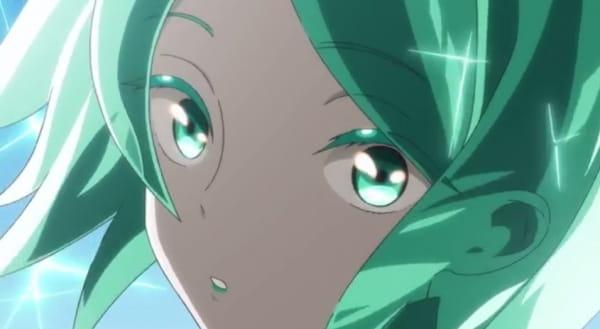
Phosphophyllite—Phos—is young, brittle, and eager to contribute, but their fragility keeps them from the front lines. Given the seemingly modest job of compiling an encyclopedia, Phos’s search for purpose leads to Cinnabar, a sharp-minded Gem confined to solitary night patrols because the poison their body produces is dangerously corrosive. Moved by Cinnabar’s isolation, Phos resolves to find a place where both of them can belong, while striving to protect the other Gems.
Otaku Consensus
Land of the Lustrous stands as the 2017 proof case for Studio Orange’s full-CG anime: Takahiko Kyougoku’s direction, Kenji Fujita’s photography, and Osamu Mikasa’s color design turn the material’s crystalline bodies into a visual language rather than a technical gimmick. Critics and fans consistently single out its presentation, tight 12-episode pacing, and faithful capture of Haruko Ichikawa’s philosophical coming-of-age tone, with the late snowscape stretch often remembered as the point where its drama sharpens. The major complaint is not quality but incompleteness: the anime ends as an opening movement to a much larger manga, leaving the deepest mysteries and character payoffs beyond the season.
Why You Should Watch
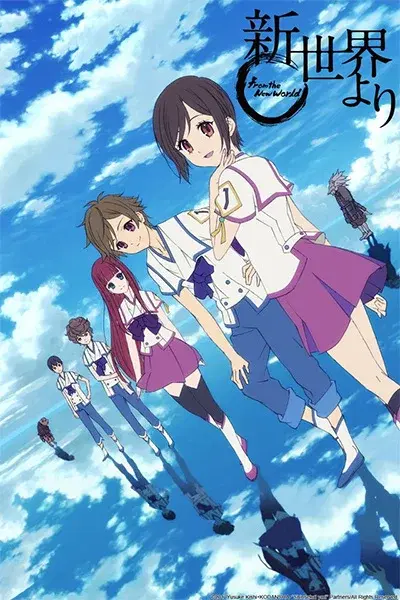
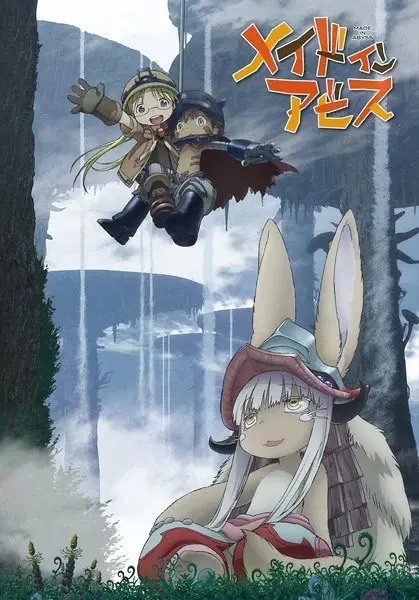
Watch Land of the Lustrous if you want speculative fantasy that feels alien without drowning you in lore, and if you want 3D anime that uses CG for movement, lighting, and physical texture rather than imitation 2D. It scratches the same itch as Made in Abyss for eerie world-building and Shinsekai yori for philosophical discomfort, but its identity is more sculptural: bodies, memory, usefulness, and personhood are treated as fragile materials under pressure. The action has swordplay and battlefield clarity, yet the emotional hook is closer to a character study than a power climb. Viewers drawn to agender casts, survival fantasy, coastal ruins, and mystery-box storytelling will find a series that feels precise, strange, and unusually edited for impact.
Key Characters
- PPhosphophyllite
Phos is compelling because their need to be useful is not framed as simple underdog ambition, but as a volatile identity crisis that keeps changing the emotional temperature of the series.
- CCinnabar
Cinnabar became a fan-favorite contrast to Phos: sharp, lonely, and defined by a dangerous body that turns the idea of belonging into a practical and philosophical problem.
What Makes It Stand Out
- 1
Studio Orange’s full-CG production is central to the show’s reputation, with AniList tags listing CGI at 97% and Full CGI at 90%. The character bodies are not merely animated models; their glasslike hardness, fractures, and reflective surfaces are part of the anime’s visual argument.
- 2
The adaptation compresses its first season into 12 episodes aired from October to December 2017, giving it a clean seasonal shape rather than a long-running manga rhythm. Toshiya Oono’s series composition emphasizes escalation, mood shifts, and unanswered mystery over explanatory world-building.
- 3
The anime’s identity sits at an unusual intersection of tags: Coming of Age at 100%, Philosophy at 90%, Anthropomorphism at 87%, and Agender at 85%. That combination makes its character drama less about romance or conventional adolescence and more about purpose, embodiment, and social function.
- 4
Takahiko Kyougoku’s direction uses the freedom of CG camera movement especially well during swordplay and war scenes, two elements reflected in the AniList tags at 62% and 61%. The fights are staged around distance, weight, and sudden breakage rather than standard impact poses.
- 5
The setting’s coastal and seasonal atmosphere is not background flavor: AniList’s Coastal tag sits at 72% and Snowscape at 46%, and the series uses those environmental shifts to change the tone of its mystery and survival drama.
Fun Facts & Trivia
- Fun fact 1
- Haruko Ichikawa is credited as the original creator, and contemporary commentary often discusses Land of the Lustrous as both an anime and a manga project that had already been developing for roughly a decade by 2022.
- Fun fact 2
- The production credits show a highly specialized visual pipeline: Asako Nishida handled character design, while Nao Ootsu and Komami Yoshida are credited for sub character design, Youichi Nishikawa for concept art, Osamu Mikasa for color design, Kenji Fujita for photography, and Daisuke Imai for editing.
- Fun fact 3
- Its reception numbers are unusually strong for a full-CG TV anime from 2017: the listed MAL score is 8.39 from 221,464 votes, with a MAL rank of #241 and popularity of #495.
- Fun fact 4
- AniList reception closely mirrors the MAL consensus, with an 83/100 score and 9,835 favourites, while fan discussions repeatedly cite the show as a benchmark example of how effective 3D anime can look when designed around CG from the start.
- Fun fact 5
- The show is categorized across Action, Drama, Fantasy, and Mystery, but its database tags reveal a more specific identity: Seinen at 80%, Primarily Female Cast at 79%, Survival at 75%, Mixed Media at 45%, and Shapeshifting at 51%.
Studios
- Orange