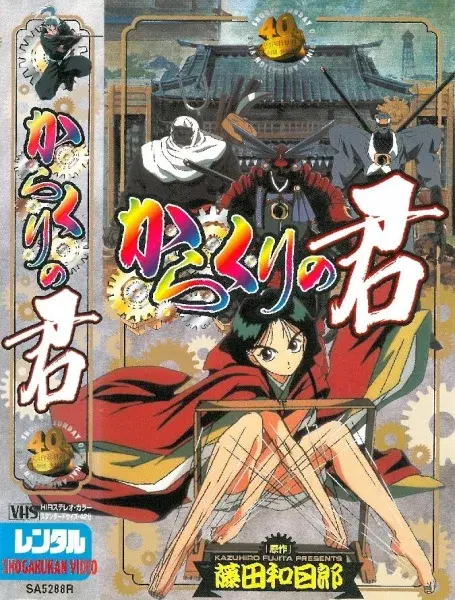
Karakuri Circus
からくりサーカス
- Action
- Adventure
- Drama
- Mystery
- Martial Arts
- Mecha
- Episodes
- 36
- Duration
- 24 min per ep
- Aired
- Oct 11, 2018 to Jun 27, 2019
- Status
- Finished Airing
Synopsis
Narumi Katou is a middle-aged man afflicted with the strange Zonapha Syndrome, a rare condition that triggers violent seizures without warning—eased only by watching someone laugh. During a part-time shift, he crosses paths with Masaru Saiga, a young boy hauling a massive suitcase while fleeing three adults. Masaru reveals he has just become the new head of Saiga Enterprises after his father’s death, and that relatives are now trying to kill him to seize the inheritance.
Narumi chooses to protect Masaru and confronts their pursuers, only to learn they aren’t ordinary attackers but humanoid puppets with inhuman strength. When Narumi is pushed to the brink, a white-haired girl appears, introduces herself as Shirogane, and draws a puppet from Masaru’s suitcase—declaring she is his guardian. Their encounter sets in motion a tangled journey of diverging destinies, as long-buried mysteries surface around an old story of love and betrayal and a centuries-spanning conflict between humans and puppets.
Otaku Consensus
Karakuri Circus is a bruising, eccentric shounen adaptation whose best assets are Satoshi Nishimura’s momentum-driven direction, Studio VOLN’s appetite for puppet-versus-martial-arts spectacle, and Kazuhiro Fujita’s own hand in shaping the series composition. Its 7.18 MAL score and 67/100 AniList score reflect a cult-positive but divided reception: viewers respond to the tragic circus-alchemy mythology and high-stakes escalation, while the dominant criticism is that 36 episodes compress a sprawling source into pacing that can feel violently accelerated.
Why You Should Watch
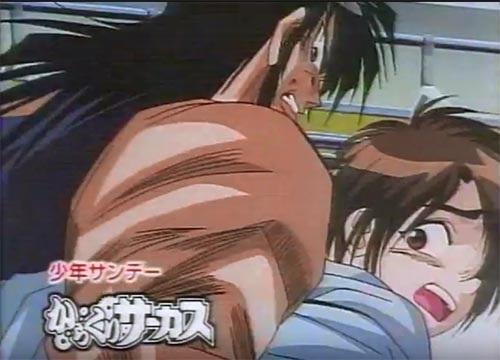
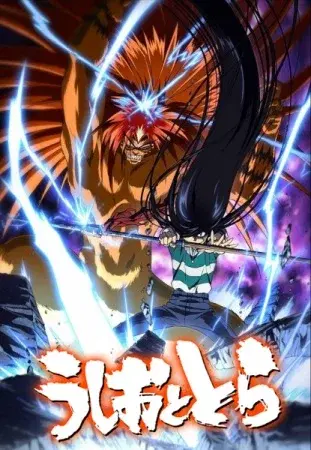
Watch Karakuri Circus if you want old-school shounen excess without the tidy tournament structure or clean power-system bookkeeping. It scratches the same itch as Ushio & Tora’s bruised monster melodrama and JoJo’s multi-generational weirdness, but filters that energy through circus imagery, automata battles, alchemy, conspiracies, and hand-to-hand combat. The appeal is not subtlety; it is the sensation of a manga author throwing tragedy, slapstick, European gothic atmosphere, mecha-adjacent puppet warfare, and fugitive tension into one pressure cooker. Viewers who like anime that swing from absurd to devastating in a single episode will find more texture here than its database tags suggest. Viewers who need patient setup and gradual adaptation rhythms may bounce off its compressed velocity.
Key Characters
- NNarumi Katou
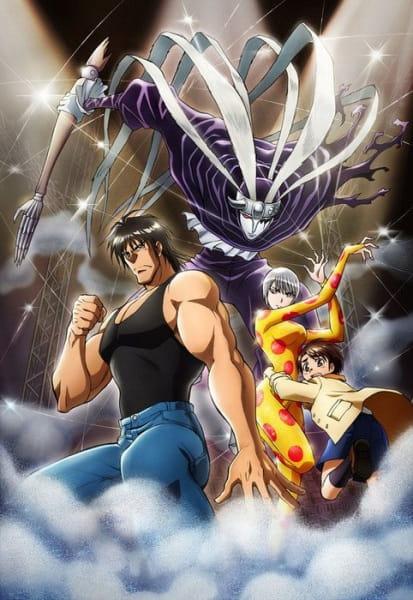
Narumi stands out as an unusually physical shounen lead, defined less by power fantasy than by martial-arts grit, bodily vulnerability, and an almost compulsive need to make others laugh.
- MMasaru Saiga
Masaru is compelling because the series treats his inheritance and fear not as passive backstory but as pressure that forces a child into the brutal logic of adult conspiracies.
- SShirogane
Shirogane is the show’s iconic visual anchor: a white-haired guardian whose poise, puppet mastery, and emotional restraint make her feel closer to tragic stage performer than standard action heroine.
What Makes It Stand Out
- 1
The anime is a 36-episode Studio VOLN adaptation of Kazuhiro Fujita’s famously dense shounen material, which gives it a rare three-cour scale while also creating the adaptation’s most debated trait: aggressive condensation.
- 2
Original creator Kazuhiro Fujita is credited not only for the source but also for series composition alongside Toshiki Inoue, making the anime unusually author-supervised for a TV adaptation.
- 3
The production’s action identity is built around puppet mechanics rather than conventional mecha piloting; AniList’s Robots, Proxy Battle, Circus, Acrobatics, and Martial Arts tags all point to how specific its combat vocabulary is.
- 4
Satoshi Nishimura’s direction favors forward drive over atmospheric lingering, matching the show’s conspiracy structure and helping explain why the series feels closer to a relentless serialized cliffhanger than a weekly adventure format.
- 5
The visual staff includes character designer Takahiro Yoshimatsu, art director Tomoyuki Shimizu, and art designer Shinji Sugiyama, a combination that supports the series’ contrast between exaggerated shounen faces, ornate circus staging, and old-world foreign settings.
Fun Facts & Trivia
- Fun fact 1
- Karakuri Circus aired from October 11, 2018 to June 27, 2019, spanning 36 episodes across the Fall 2018, Winter 2019, and Spring 2019 anime seasons.
- Fun fact 2
- Its database reception is notably split between visibility and enthusiasm: MAL lists it at 7.18 from 41,107 votes with popularity rank #1864, while AniList records a 67/100 score and 577 favourites.
- Fun fact 3
- The staff credits list three main animators: Yoshihiro Kanno, Toshiyuki Kanno, and Takaaki Hirayama, an acknowledgement that fits a series built around repeated physical set pieces and mechanical puppet motion.
- Fun fact 4
- Kazuhiro Fujita’s double credit as original creator and co-series-composition writer is especially important because the anime’s biggest creative challenge was not inventing material, but deciding what to preserve from a large, twist-heavy manga.
- Fun fact 5
- The AniList tag mix is unusually specific for an action-adventure drama: Shounen at 89%, Circus at 84%, Conspiracy at 80%, Robots at 77%, Martial Arts at 64%, and Alchemy at 60%, signaling how far it sits from a standard battle-anime template.
Studios
- Studio VOLN