Iroduku: The World in Colors
色づく世界の明日から (Irozuku Sekai no Ashita kara)
- Drama
- Fantasy
- Romance
- Love Polygon
- School
- Time Travel
- Urban Fantasy
- Visual Arts
- Episodes
- 13
- Duration
- 24 min per ep
- Aired
- Oct 6, 2018 to Dec 29, 2018
- Status
- Finished Airing
Synopsis
In a city where magic quietly threads through everyday life, Hitomi Tsukishiro sees the world in shades of gray, cut off from the emotions that color everyone else’s lives. One night beneath bursting fireworks, her grandmother Kohaku—after a spell prepared with moonlight gathered over 60 years—sends Hitomi back to 2018, to the time when Kohaku herself was a high schooler.
The reason for the journey isn’t explained; Kohaku only promises that Hitomi will understand once she arrives. After traveling through time on a train guided by a peculiar yellow creature, Hitomi awakens in the room of Yuito Aoi, a quiet artist whose drawings suddenly spill vivid color into her once-muted vision. As she adjusts to the past, questions linger: why she was sent there, and what it means that Yuito’s art can restore what her world has lost.
Otaku Consensus
P.A. Works' original one-cour drama lands best as a mood-driven coming-of-age piece: Toshiya Shinohara's direction, Kurumi Suzuki's art direction, and Yuuko Kakihara's measured episode flow turn school-club visual arts into emotional rehabilitation rather than lore delivery. Its 7.52 MAL score and 73 AniList score reflect the split in reception: admirers praise the balanced pacing and luminous presentation, while the most common criticism is that the supporting cast and magic-time-travel mechanics feel thinner than the visual craft around them.
Why You Should Watch
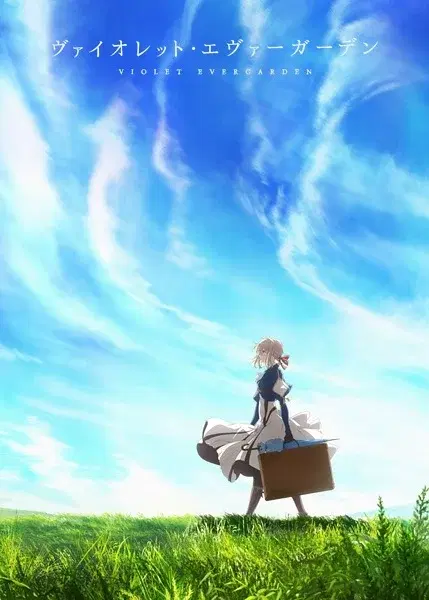
Watch Iroduku if you want a P.A. Works original that treats fantasy as therapy rather than spectacle. It scratches the same itch as Violet Evergarden's emotional rehabilitation, but in a tighter 13-episode school-club frame built around drawing, photography, and hesitant teenage intimacy. The romance is present, including love-triangle tension, yet the real pleasure is watching small acts of looking at sketches, photos, light, and classmates become character work. Viewers who like urban fantasy rules explained only as much as the mood requires will be better served than lore-hunters; so will anyone who prefers ache, restraint, and painterly atmosphere over big twists. It is especially rewarding as a weekend watch when you want closure without a two-cour commitment.
Key Characters
- HHitomi Tsukishiro
Hitomi is discussed less as a fantasy heroine than as a rehabilitation protagonist, with her emotional distance making tiny social and artistic breakthroughs carry the weight of major plot turns.
- YYuito Aoi
Yuito gives the series its quietest romantic pull, functioning as the point where the show's drawing motif, introverted temperament, and soft-spoken intimacy converge.
- KKohaku Tsukishiro
Kohaku adds mischievous momentum to an otherwise restrained drama, keeping the magic side playful instead of letting the series become purely melancholic.
What Makes It Stand Out
- 1
It is an anime-original P.A. Works production credited to original creator Natsuka Yashio, so its 13-episode structure is not shaped by manga-volume stopping points or light-novel advertising needs.
- 2
The show makes visual arts structural rather than decorative: AniList tags photography at 77% and drawing at 76%, and the school-club material uses framing, composition, and color as part of the character drama.
- 3
Its fantasy profile is deliberately low-key despite high tag weights for magic at 92% and time manipulation at 87%; the supernatural element sits inside ordinary school and city routines instead of turning into action spectacle.
- 4
The ensemble approach is built into the series' identity, with AniList marking ensemble cast at 80% and school club at 78%, so romance competes with group dynamics rather than swallowing the entire show.
- 5
The most favorable reviews highlight its balance, noting that episodes keep moving without breaking the gentle tone; the same restraint is also the source of criticism from viewers who wanted sharper character conflict or heavier plot consequences.
Fun Facts & Trivia
- Fun fact 1
- Original character design is credited to Fly, while Yuki Akiyama handled the animation character designs, separating the initial illustration identity from the practical designs used for production.
- Fun fact 2
- Mayumi Miyaoka has two separate design credits on the project, art design and prop design, with Takahiro Ishimoto also credited for prop design; that staffing emphasis matches a series where cameras, drawings, and crafted objects matter visually.
- Fun fact 3
- Tomoyuki Uchikoga is specifically credited for title logo design, a production role that often goes unnoticed on database pages but contributes to the show's polished visual branding.
- Fun fact 4
- The series aired as a Fall 2018 one-cour broadcast from October 6 to December 29, ending at the close of the calendar year rather than spilling into the next season.
- Fun fact 5
- Its database footprint is larger than its rank alone suggests: MAL lists it with 142,238 votes and popularity rank #756, while AniList records 2,022 favourites.
Studios
- P.A. Works