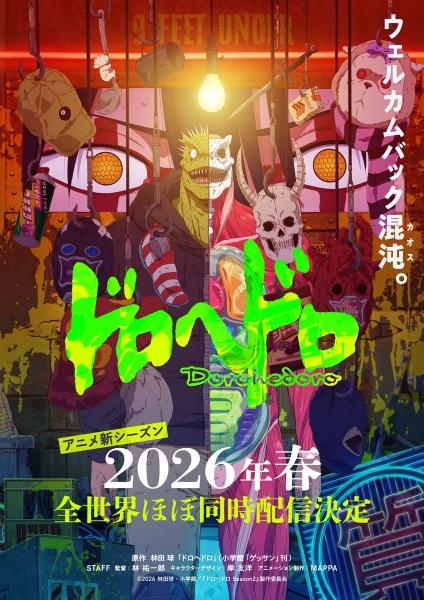
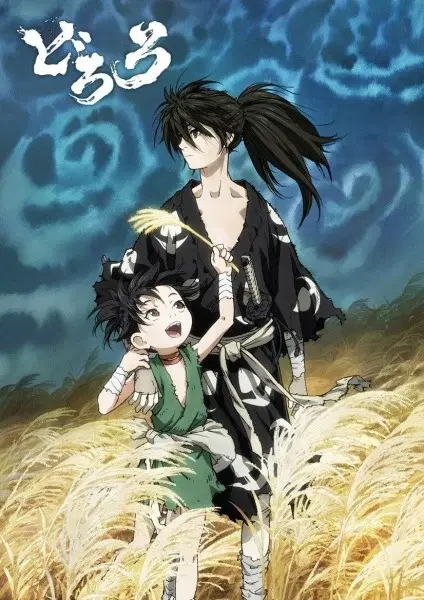
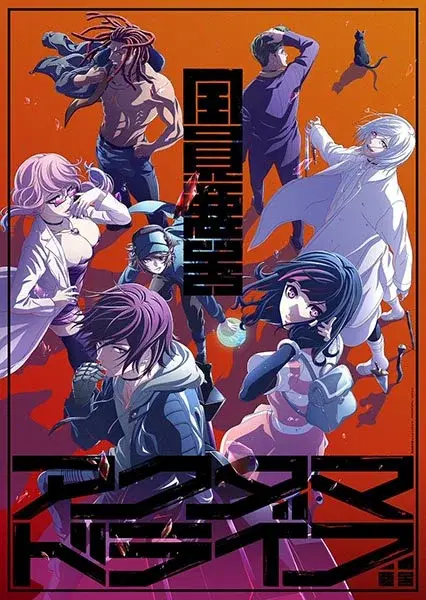
Dorohedoro
ドロヘドロ
- Action
- Comedy
- Fantasy
- Horror
- Gore
- Episodes
- 12
- Duration
- 23 min per ep
- Aired
- Jan 13, 2020 to Mar 30, 2020
- Status
- Finished Airing
Synopsis
Hole is a grim, decaying district where violence is routine and the powerful treat the weak as disposable. Cut off from law and morality, it serves as a proving ground for magic users, who freely come and go while using the residents as targets for cruelty and experimentation—leaving the hospital crowded with the aftermath.
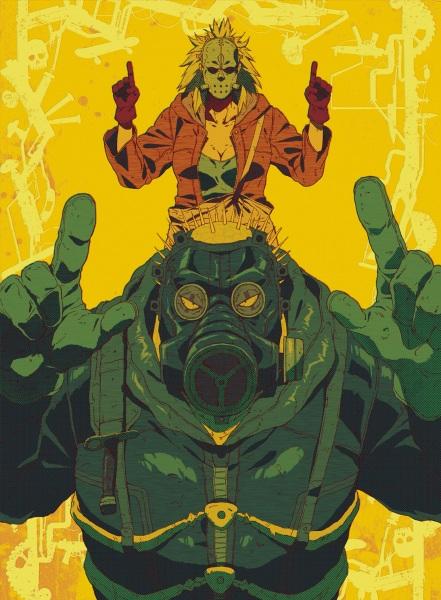
Among the few who push back is Caiman, a man with a reptilian head and an unusual immunity to magic. Armed with bayonets and driven by unsettling nightmares, he hunts magic users for the one lead that might undo his curse and return his life to something normal. By his side is Nikaidou, the capable owner of the Hungry Bug restaurant, whose support proves vital—especially when Caiman’s appetite threatens to derail the search.
Otaku Consensus
Dorohedoro is a rare splatter-comedy adaptation that turns Q Hayashida’s grime, jokes, and body horror into a coherent television rhythm, with Yuuichirou Hayashi’s direction and Hiroshi Seko’s series composition making the chaos feel intentionally pressurized rather than random. Critics and fans most often praise its filthy visual identity, ensemble energy, soundtrack, and willingness to let MAPPA’s CGI models carry the physical comedy; the recurring barrier is that the pace, violence, and grotesque imagery can feel abrasive before the viewer locks into its logic.
Why You Should Watch
Watch Dorohedoro if you want the nasty, funny, meat-grinder side of seinen fantasy without clean moral teams, lore lectures, or polished heroism. It scratches a similar itch to Chainsaw Man’s splatter-punk irreverence and Golden Kamuy’s tonal whiplash, but its flavor is more industrial: masks, restaurants, surgical aftermath, deadpan jokes, and sudden bursts of body horror all sharing the same frame. The appeal is not simply that it is violent; it is that the violence is part of a lived-in ecosystem where villains get domestic routines, comic relief can be maimed, and the soundtrack keeps the whole thing bouncing instead of brooding. If you usually bounce off full-CGI anime, this is one of the better tests of whether strong art direction and character acting can win you over.
Key Characters
- CCaiman(VA: Wataru Takagi)
Caiman works because Wataru Takagi plays him less like a brooding monster and more like a loud, hungry brawler whose comic timing makes the horror around him feel even stranger.
- NNikaidou(VA: Reina Kondou)
Nikaidou is a fan favorite because her competence is quiet rather than showy, grounding the series’ chaos with warmth, muscle, and a practical sense of loyalty.
- EEn(VA: Kenyuu Horiuchi)
En stands out as the kind of antagonist Dorohedoro loves: theatrical, businesslike, oddly domestic, and charismatic enough to make the enemy side feel like its own workplace comedy.
- EEbisu(VA: Miyu Tomita)
Ebisu turns damage and absurdity into a running performance, with Miyu Tomita’s delivery helping make her both grotesque comic relief and a genuine piece of the ensemble.
What Makes It Stand Out
- 1
MAPPA leaned heavily into CGI character models, a choice reflected in AniList’s CGI and Full CGI tags at 88% and 87%. The result became one of the show’s defining talking points: divisive on first contact, but frequently praised for fitting the rubbery violence and bulky character designs better than expected.
- 2
The adaptation is built around ensemble momentum rather than a simple hero-versus-villain track. Caiman, Nikaidou, En, Fujita, and Ebisu are all treated as main characters, which lets the sorcerer side develop its own comic rhythms instead of functioning as disposable opposition.
- 3
Hiroshi Seko’s series composition compresses a dense seinen manga into 12 episodes without smoothing out its abrasive edges. Reviews repeatedly point to the pacing as dizzying, but that speed is also what keeps the gore, surreal comedy, and mystery elements from settling into predictable beats.
- 4
Shinji Kimura’s art direction and Tomoko Washida’s color design are central to the show’s identity, giving its ruined urban spaces and magic-side locations a stained, lived-in quality rather than a clean fantasy sheen. The visual approach is a major reason the series is remembered as dingy and tactile despite its digital production.
- 5
The soundtrack is one of the most consistently singled-out strengths in fan discussion, with viewers often naming it as a concrete production element that works even when the story’s weirdness is polarizing. Its punchy, off-kilter energy helps the series sell abrupt turns from slapstick to gore.
Fun Facts & Trivia
- Fun fact 1
- Dorohedoro aired as a 12-episode winter 2020 series from January 13 to March 30, 2020, and was widely discussed as part of Netflix’s anime lineup. Contemporary reviews framed it as one of the more distinctive Netflix-era acquisitions because it did not sand down the manga’s ugliness.
- Fun fact 2
- The anime adapts the manga by Q Hayashida, with Yuuichirou Hayashi directing and Hiroshi Seko handling series composition. That staff pairing is a major reason the adaptation feels aggressive and fast rather than explanatory.
- Fun fact 3
- Character design was not handled by a single designer alone: Tomohiro Kishi is credited for character design, while Komami Yoshida and Minami Yamashita are credited for sub-character design. That division makes sense for a series with dense crowds, masks, monster features, and frequent physical distortions.
- Fun fact 4
- AniList’s tag distribution captures how specific the show’s identity is: Dystopian at 96%, Monster Boy at 92%, Anthropomorphism at 90%, Magic at 89%, Amnesia at 88%, Gore at 85%, Surreal Comedy at 82%, and Body Horror at 81%. Few TV anime wear that many niche labels so prominently at once.
- Fun fact 5
- Its reception numbers show a strong cult-mainstream overlap: MyAnimeList lists it at 8.05 from 325,878 votes with popularity rank #377, while AniList records a 79/100 score and 8,122 favorites. That places it in the unusual zone of being widely watched yet still discussed as an acquired taste.
Studios
- MAPPA