Love Me, Love Me Not
思い、思われ、ふり、ふられ (Omoi, Omoware, Furi, Furare)
- Drama
- Romance
- Love Polygon
- School
- Episodes
- 1
- Duration
- 1 hr 42 min
- Aired
- Sep 18, 2020
- Status
- Finished Airing
Synopsis
Yuna Ichihara’s spring break gets off to a lonely start after she sees her best friend Sacchan move away. On her way home, the shy, dreamy girl is startled—and cheered—by meeting a handsome boy who reminds her of the “prince” she once admired in shoujo manga. Not long after, Yuna’s life shifts again when she crosses paths with Akari Yamamoto, a poised new neighbor who quickly draws close to her.
As they begin attending the same high school, Yuna finds herself drawn to Akari’s brother Rio—the same enigmatic boy from that day. At the same time, Akari’s feelings turn toward Yuna’s easygoing childhood friend, Kazuomi Inui. With four very different personalities pulled into a tangled set of crushes, their relationships stall under misunderstandings, personal baggage, and secrets they’ll have to face if they want to move forward.
Otaku Consensus
Love Me, Love Me Not lands as a polished, middle-upper-tier shoujo film rather than a genre landmark, reflected in its steady MAL 7.26 and AniList 71 scores. Toshimasa Kuroyanagi’s restrained direction and A-1 Pictures’ clean character acting give the ensemble romance a mature, emotionally legible finish, while the most persistent criticism is the feature-film compression: a love-polygon story that often feels as if it needed more room to let every turn breathe.
Why You Should Watch
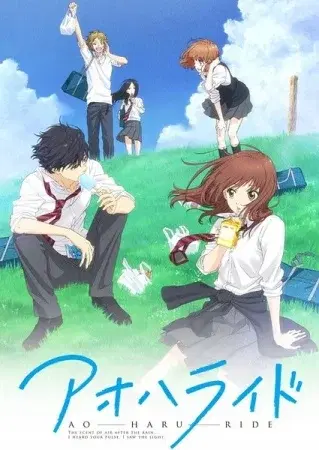
Watch Love Me, Love Me Not if you want shoujo romance built around emotional timing rather than comedy noise: glances, pauses, delayed confessions, and the social awkwardness of liking the wrong person at the wrong time. It scratches the same itch as Ao Haru Ride, not coincidentally another Io Sakisaka work, but in a single-film format that favors clean dramatic escalation over the slower sprawl of a TV series. Viewers who like Kimi ni Todoke’s sensitivity but want a denser ensemble and a more symmetrical love-polygon structure will get the most from it. The appeal is not surprise plotting; it is watching four teenagers with very different romantic instincts slowly learn that sincerity is not the same thing as simplicity.
Key Characters
- YYuna Ichihara
Yuna is compelling because the film treats her shoujo-manga idealism not as a joke, but as a worldview that has to be tested against real emotional ambiguity.
- AAkari Yamamoto
Akari gives the ensemble its adult-seeming surface, and her appeal comes from the gap between her polished social confidence and the insecurities she keeps edited out of view.
- RRio
Rio functions as the film’s most guarded romantic figure, drawing attention less through dramatic speeches than through the discomfort of feelings he cannot neatly categorize.
- KKazuomi Inui
Kazuomi stands out as the easygoing counterweight to the heavier romantic tension, the kind of character whose casual honesty changes the temperature of a scene.
What Makes It Stand Out
- 1
The adaptation is a single finished film entry rather than a TV series, which makes its structure unusually compressed for a school love-polygon story and explains both its accessibility and its most common pacing complaint.
- 2
A-1 Pictures handles the material with a clean, restrained visual style suited to grounded shoujo drama, putting emphasis on posture, eye contact, and small shifts in expression rather than heightened comic exaggeration.
- 3
The creative team is built around specialized visual departments: Yuu Yamashita on character design, Tomoko Sudou on prop design, Yuka Hirama as art director, Mamio Ogawa on art design, and Nagisa Abe on color design.
- 4
AniList’s tag profile is unusually specific for a mainstream romance film, with Shoujo at 88%, Love Triangle at 87%, Coming of Age at 73%, Ensemble Cast at 60%, and even Rotoscoping at 46%.
- 5
The film’s reputation sits in the solid-but-not-canonical range: MAL lists it at 7.26 from over 26,000 votes, while AniList records a 71/100 score and 401 favourites.
Fun Facts & Trivia
- Fun fact 1
- Love Me, Love Me Not premiered on September 18, 2020 and is catalogued as a one-episode completed anime entry, reflecting its theatrical-film format rather than a seasonal broadcast run.
- Fun fact 2
- The original creator is Io Sakisaka, a major modern shoujo manga author also widely associated with youth-romance works such as Ao Haru Ride and Strobe Edge.
- Fun fact 3
- The film was produced by A-1 Pictures, a studio better known to many anime viewers for large-scale TV productions, making its reserved school-romance approach a notable change of register.
- Fun fact 4
- Its production credits separate art direction, art design, color design, photography, CG direction, and editing, with Masaharu Okazaki as director of photography, Yuusuke Noma as CG director, and Akinori Mishima handling editing.
- Fun fact 5
- On MAL, the film’s popularity ranking of #2607 is much higher than its overall rank of #3364, suggesting a title that reached a healthy audience without becoming a consensus top-tier romance classic.
Studios
- A-1 Pictures