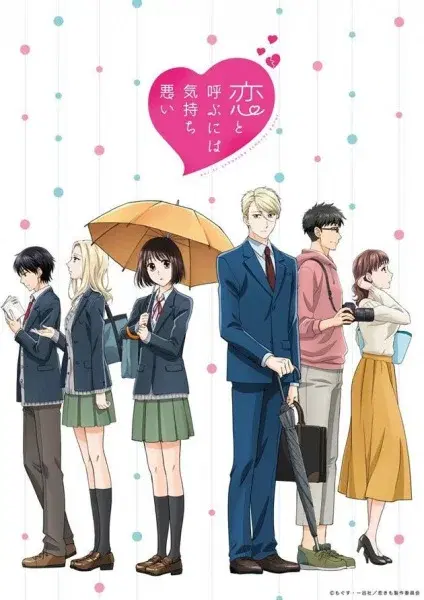
Sing "Yesterday" for Me
イエスタデイをうたって (Yesterday wo Utatte)
- Drama
- Romance
- Adult Cast
- Love Polygon
- Episodes
- 12
- Duration
- 23 min per ep
- Aired
- Apr 5, 2020 to Jun 21, 2020
- Status
- Finished Airing
Synopsis
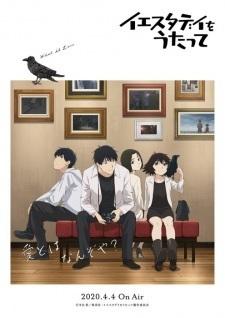
After college, Rikuo Uozumi drifts through Tokyo with little sense of direction, spending his days working at a convenience store and expecting nothing to change. That routine is shaken when Haru Nonaka—an unusual, energetic regular—keeps turning up to talk with him, gradually carving out a place in his quiet life.
Rikuo’s attention also turns to Shinako Morinome, an old friend from university and the person he once admired from afar, now back in town. As he tries to grow closer to her, Shinako’s unresolved pain from the past makes it difficult for her to respond to what he feels. Caught between lingering memories and the uncertainty ahead, Rikuo, Shinako, and Haru each confront what it takes to leave “yesterday” behind and move toward a different tomorrow.
Otaku Consensus
Sing "Yesterday" for Me lands as a respected but divisive adult romance: its strongest advocates point to Yoshiyuki Fujiwara’s restrained direction, Doga Kobo’s unusually muted urban presentation, and the early episodes’ patience with workday stagnation and unspoken attraction. The common criticism is not the premise but the adaptation’s compression, with a 12-episode run making the later emotional turns feel abrupt for many viewers; its 6.87 MAL score and 67/100 AniList score reflect a series admired for texture more than universally embraced for payoff.
Why You Should Watch
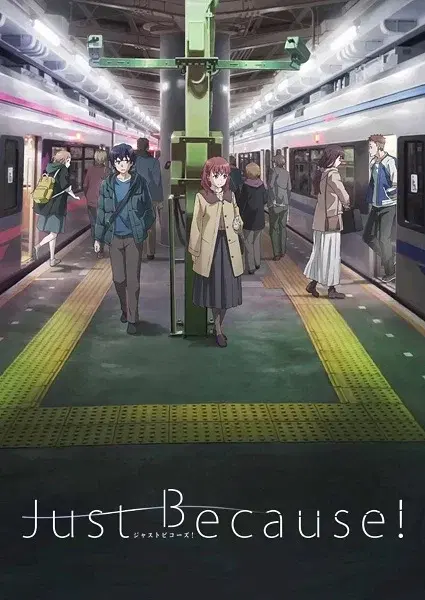
Watch Sing "Yesterday" for Me if you want a romance about adult inertia without the usual school-festival scaffolding, confession-game escalation, or melodramatic villainy. It scratches a similar itch to Honey and Clover’s post-youth uncertainty and Just Because!’s quiet emotional deadlock, but relocates that mood into convenience-store shifts, teaching work, photography, and the awkward social rhythms of people already past college. Doga Kobo’s restraint is the hook: pauses, ordinary rooms, clothes, props, and city corners do as much character work as declarations. Viewers who like clean resolutions may bounce off its compressed final stretch, but anyone drawn to unrequited love, emotional avoidance, and seinen relationship messiness will find a more grown-up texture than most TV romance anime attempt.
Key Characters
- RRikuo Uozumi
Rikuo stands out as a rare romance lead defined less by dramatic ambition than by post-college drift, making his smallest choices feel like moral tests rather than genre obligations.
- HHaru Nonaka
Haru is the series’ most immediately recognizable figure, often remembered by fans for cutting through the show’s emotional stagnation with a sharper, stranger energy than the adults around her expect.
- SShinako Morinome
Shinako gives the love polygon its ache because her warmth and hesitation are inseparable, turning unresolved grief into a lived-in obstacle rather than a simple romantic inconvenience.
What Makes It Stand Out
- 1
Doga Kobo, a studio more widely associated with polished character comedy and slice-of-life work, takes a subdued approach here: muted interiors, modest gestures, and everyday Tokyo locations carry the emotional weight instead of expressive exaggeration.
- 2
Yoshiyuki Fujiwara is credited with both direction and series composition, giving the anime a notably unified tone even when viewers criticize the late-series pacing.
- 3
The show’s identity is strongly seinen-coded: AniList tags it as Seinen at 82%, Primarily Adult Cast at 86%, Konbini at 85%, and Unrequited Love at 79%, which explains why its conflicts feel closer to adult paralysis than teen romance momentum.
- 4
Its structure foregrounds work and routine as relationship pressure points, using convenience-store labor, teaching, office spaces, and photography as social environments rather than decorative background.
- 5
The adaptation’s biggest talking point is its compression into 12 TV episodes, a choice that makes the intimate early pacing stand out while also feeding the common complaint that the final emotional movement arrives too quickly.
Fun Facts & Trivia
- Fun fact 1
- The anime is based on a manga by Kei Toume, whose original Sing "Yesterday" for Me ran for many years before the 2020 television adaptation, making the 12-episode format an unusually tight condensation of long-form seinen material.
- Fun fact 2
- Yoshiyuki Fujiwara served as both director and series composition writer, while Ryouta Itou is credited as assistant director, indicating a production structure with Fujiwara’s authorial control close to the center.
- Fun fact 3
- Junichirou Taniguchi handled character design, supported by a notably detailed design team: Kyouko Nagata and Asami Gouda on prop design, and Jun Fuji, Keigo Nagao, and Natsuko Fujiwara on costume design.
- Fun fact 4
- Its popularity outpaces its score: on MyAnimeList it sits at #849 in popularity but only #5567 in rank, a useful snapshot of a widely sampled romance that split viewers on execution.
- Fun fact 5
- The series aired from April 5 to June 21, 2020, placing it in the Spring 2020 season and giving it a complete single-cour broadcast run of 12 episodes.
Studios
- Doga Kobo