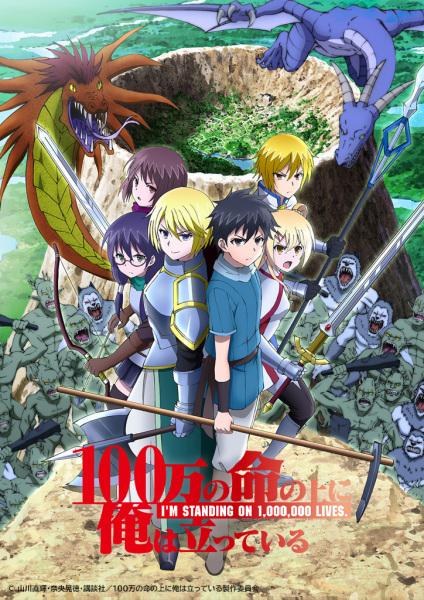
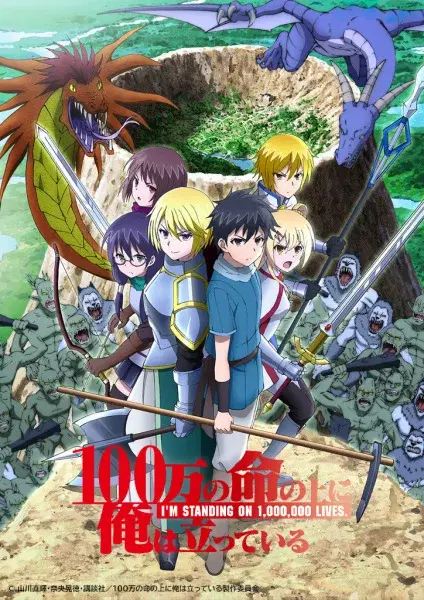
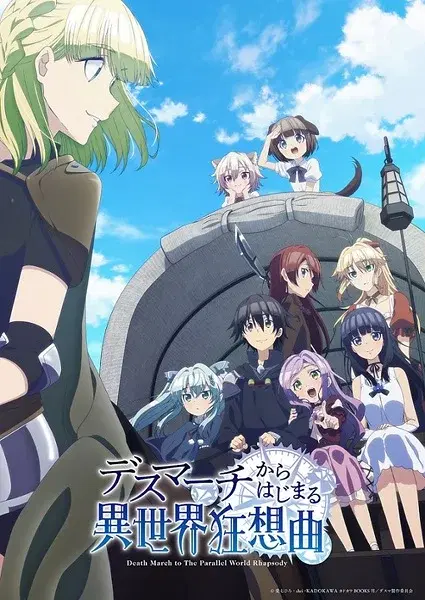
I'm Standing on a Million Lives
100万の命の上に俺は立っている (100-man no Inochi no Ue ni Ore wa Tatteiru)
- Action
- Adventure
- Drama
- Fantasy
- Isekai
- Survival
- Episodes
- 12
- Duration
- 23 min per ep
- Aired
- Oct 2, 2020 to Dec 18, 2020
- Status
- Finished Airing
Synopsis
Yuusuke Yotsuya can’t stand Tokyo—especially the people in it—and would rather lose himself in a game than deal with everyday social life. After school one day, he notices the popular athlete Iu Shindou speaking with Kusue Hakozaki, a classmate who’s often absent due to illness. When he glances away and looks back, both girls are suddenly gone.
Almost immediately, Yotsuya is plunged into free fall as reality shifts around him, and he awakens in a strange world teeming with gigantic monsters. He learns that Shindou and Hakozaki have drawn him into a game-like realm where the three of them must clear a quest within 14 days. Death works differently there: as long as at least one party member survives, anyone who falls is revived 30 seconds later. With missions that grow more dangerous over time, the trio pushes forward while searching for answers about the unsettling rules and purpose of the world they’ve been trapped in.
Otaku Consensus
Otaku Consensus: I’m Standing on a Million Lives lands as a divisive but recognizable isekai experiment: Kumiko Habara and Takao Yoshioka’s mission-by-mission structure gives the season a sharper mystery hook and more psychological coming-of-age friction than its MAL 6.52 reputation suggests. Its best asset is the anti-power-fantasy survival design, especially Yotsuya being saddled with hilariously poor roles, while the recurring complaint is that Maho Film’s standard visuals and uneven character writing keep the trauma and philosophy from hitting with top-tier force.
Why You Should Watch
Watch this if you want isekai survival without wish-fulfillment dominance. I’m Standing on a Million Lives scratches a neighboring itch to Re:Zero and Grimgar: the tension comes less from cool powers than from limited tools, bad matchups, and teenagers making pragmatic choices before they have the maturity to process them. The appeal is its cold game logic rubbing against real adolescent insecurity; fans who read isekai for systems, moral pressure, and long-game mystery will get more out of it than viewers looking for spectacle. Its rougher production values are part of the bargain, but the season’s mission structure, death-game anxiety, and unusually cynical male lead give it a sharper identity than many 2020 fantasy imports.
Key Characters
- YYuusuke Yotsuya(VA: Yuuto Uemura)
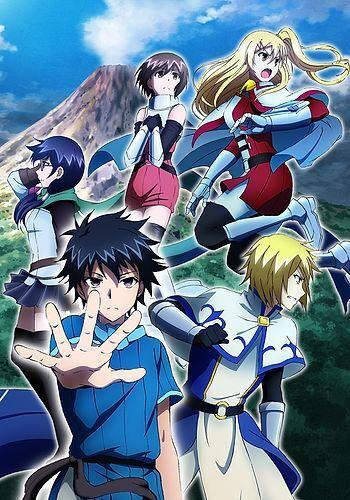
Yotsuya is the show’s divisive engine: a socially alienated, hyper-pragmatic lead whose edgelord surface becomes more interesting when treated as teenage survival logic rather than adult competence.
- IIu Shindou(VA: Risa Hoshina)
Iu Shindou brings the popular-athlete archetype into a harsher framework, where social confidence is useful but never a substitute for judgment under pressure.
- KKusue Hakozaki(VA: Azumi Waki)
Kusue Hakozaki stands out because her physical frailty and frequent absence from normal school life make the series’ survival theme feel personal rather than purely mechanical.
- YYuka Tokitate(VA: Makoto Koichi)
Yuka Tokitate adds otaku-culture self-awareness to the main group, giving the show a character who understands genre logic while still being trapped by its consequences.
What Makes It Stand Out
- 1
The series rejects the usual isekai power curve by making early class assignments comically inconvenient rather than heroic, a detail frequently singled out by viewers as the source of both tension and dark humor.
- 2
Its structure is closer to a tabletop campaign than a free-roaming fantasy adventure: discrete missions, rule-bound survival, and escalating objectives create a campaign-log rhythm that fans and critics have specifically noted.
- 3
AniList’s tag spread points to a darker shounen blend than the genre label alone suggests, with high-weight tags for Survival, Body Horror, Tragedy, Philosophy, and Death Game alongside Isekai and Magic.
- 4
Maho Film’s adaptation is not remembered as a visual showcase; critics repeatedly cite standard visuals and weak animation, making the show’s reputation depend more on premise, pacing, and moral problem-solving than action spectacle.
- 5
The first season’s 12-episode run aired in the crowded Fall 2020 window, which helps explain its split profile: strong popularity metrics for a mid-scored title, but little consensus that it reached top-tier isekai status.
Fun Facts & Trivia
- Fun fact 1
- The anime adapts a manga credited to Naoki Yamakawa for original story and Nao Akinari for original character design, with the TV version reinterpreting those designs through Toshihide Masudate, Eri Kojima, and Yuuko Ooba.
- Fun fact 2
- Kumiko Habara directed the series, while Takao Yoshioka handled series composition, a key pairing for a show whose reception hinges heavily on how its mission format and overarching mystery are paced.
- Fun fact 3
- Satoshi Shibata is credited for both art direction and art design, while Aki Watanabe handled color design, placing much of the show’s fantasy-world presentation under a compact visual leadership team.
- Fun fact 4
- The reception split is unusually clear in the available user commentary: positive reviewers praise the mystery, underpowered survival, and coming-of-age trauma, while negative reviewers attack the animation, familiar isekai scaffolding, and thin characterization.
- Fun fact 5
- Despite a modest MAL score of 6.52 and an AniList score of 63, the title remained highly visible for its tier, with MAL popularity listed at #843 and AniList favourites at 1,361.
Studios
- Maho Film