Don't Toy with Me, Miss Nagatoro
イジらないで、長瀞さん (Ijiranaide, Nagatoro-san)
- Comedy
- Romance
- Love Status Quo
- School
- Episodes
- 12
- Duration
- 23 min per ep
- Aired
- Apr 11, 2021 to Jun 27, 2021
- Status
- Finished Airing
Synopsis
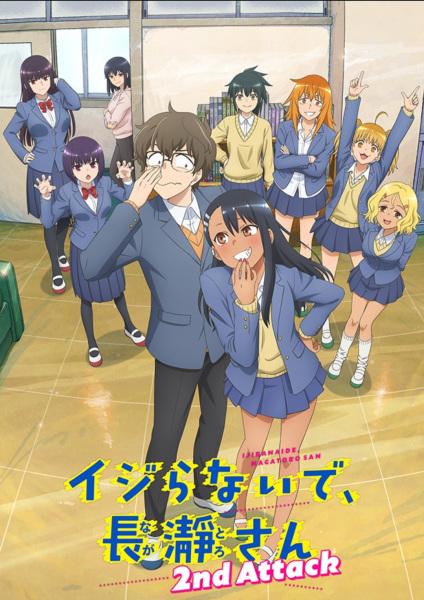
Naoto Hachiouji’s quiet routine of drawing manga in the school library is thrown off when Hayase Nagatoro, a bold first-year, stumbles upon his work and zeroes in on his shy, awkward reactions. Taking to calling him “Senpai” instead of using his name, she makes a habit of teasing him at every opportunity.
What starts as constant embarrassment and unwanted attention gradually shifts as the two keep crossing paths. Over time, their daily back-and-forth settles into an unusual kind of companionship, and Naoto begins to realize that being around Nagatoro isn’t always so unpleasant—just never predictable.
Otaku Consensus
Don't Toy with Me, Miss Nagatoro lands as a deliberately abrasive rom-com: Hirokazu Hanai's direction, Telecom Animation Film's reaction-heavy comedy, and Taku Kishimoto's episodic structure turn discomfort into a repeatable gag engine with visible romantic drift. Its defenders point to the way the 12-episode season softens the dynamic without abandoning the teasing premise, while the central criticism remains genuine and persistent: the early bullying register is sharp enough that many viewers read the comedy as mean-spirited before the chemistry has time to develop.
Why You Should Watch
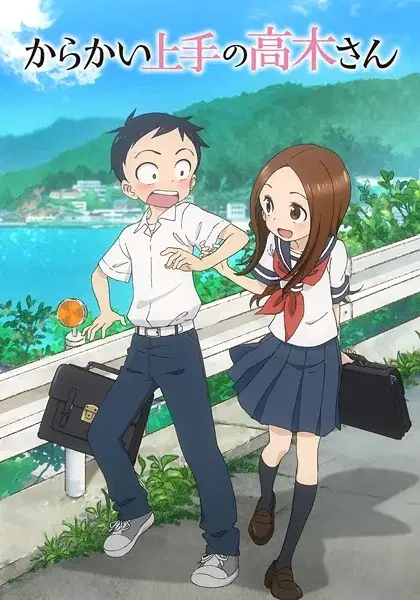
Watch Don't Toy with Me, Miss Nagatoro if you want a school rom-com built around flustered body language, status-quo tension, and social power games rather than confession countdowns. It scratches part of the same itch as Teasing Master Takagi-san, but with a rougher gyaru edge, more slapstick humiliation, and a male lead whose drawing hobby gives the comedy a specific creative-anxiety texture. Viewers who like romance where micro-progress matters will get more from it than viewers looking for immediate emotional payoff. The 12-episode run is compact, gag-forward, and easy to sample, but the first stretch is the filter: if teasing-as-affection is a hard no, the show will not try to meet you halfway.
Key Characters
- HHayase Nagatoro
Nagatoro is discussed by fans as the series' volatility switch: a tanned gyaru-coded tsundere whose appeal depends on whether her teasing reads as comic pressure-testing or hostile overreach.
- NNaoto Hachiouji
Naoto stands out among rom-com leads because the show ties his awkwardness to drawing, self-exposure, and artistic insecurity rather than treating shyness as a generic personality setting.
- SSakura
Sakura functions as part of Nagatoro's social orbit, widening the comedy beyond a two-person routine and giving the school setting a more performative audience dynamic.
- GGamo
Gamo is one of the friend-group presences that keeps the teasing from feeling private, turning many scenes into social sparring rather than simple one-on-one banter.
What Makes It Stand Out
- 1
Telecom Animation Film produced the first season as a 12-episode TV anime airing from April 11 to June 27, 2021, keeping the adaptation compact and heavily segmented around episodic comedy beats.
- 2
AniList's highest-weighted tags are Male Protagonist at 93%, Slapstick at 92%, Bullying at 88%, School at 87%, and Tsundere at 85%, which accurately signals why the show is more confrontational than many softer teasing romances.
- 3
The official theme classification includes Love Status Quo, and the season leans into that structure: the appeal is not rapid romantic resolution but watching tiny shifts accumulate while the surface routine stays unstable.
- 4
The production credits separate character design, prop design, and title logo design between Misaki Suzuki, Kenji Masuda, and Manami Tashiro, reflecting how much of the show's identity depends on instantly readable expressions, art-room objects, and branding.
- 5
The adaptation keeps Naoto's drawing hobby central enough that AniList tags Drawing at 71% and School Club at 77%, giving the comedy a recurring creative-space framework rather than using school only as background.
Fun Facts & Trivia
- Fun fact 1
- The anime is based on Nanashi's manga, with Hirotoshi Kurita, Shoutarou Kinutani, and Bin Hiratsuka credited for Original Work Assistance in the production data.
- Fun fact 2
- Its reception numbers show a sharp popularity-versus-score split: on MyAnimeList it holds a 7.17/10 from 486,879 votes, ranks #3886 by score, yet sits much higher at #237 in popularity.
- Fun fact 3
- AniList records a 69/100 score and 5,880 favourites, matching the broader pattern of a series that inspires strong niche attachment despite mixed critical reactions.
- Fun fact 4
- The show was visible enough outside anime-fan spaces to receive a Common Sense Media parents' guide, where the central issue is not fantasy violence but whether the teen teasing dynamic is appropriate or troubling.
- Fun fact 5
- The staff lineup pairs director Hirokazu Hanai with series composer Taku Kishimoto, while the studio credit goes to Telecom Animation Film, the studio responsible for shaping the manga's short-form teasing rhythm into television pacing.
Studios
- Telecom Animation Film