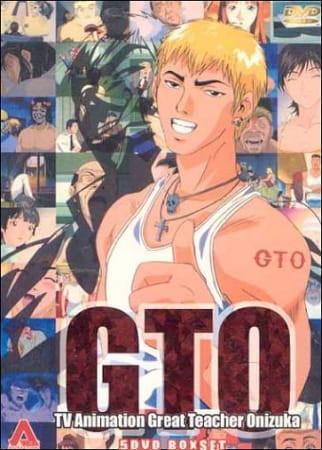
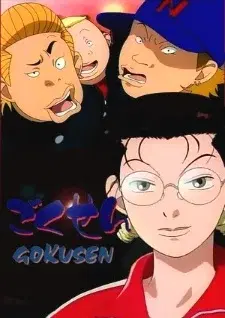
Great Teacher Onizuka
グレート・ティーチャー・オニヅカ
- Comedy
- Delinquents
- School
- Workplace
- Episodes
- 43
- Duration
- 25 min per ep
- Aired
- Jun 30, 1999 to Sep 17, 2000
- Status
- Finished Airing
Synopsis
Twenty-two-year-old Eikichi Onizuka, a former biker gang leader known around Shonan and still a virgin, sets his sights on an unlikely ambition: becoming Japan’s greatest high school teacher. His motivation isn’t exactly noble—he imagines landing a sweet teenage wife by the time he’s old—but beneath the crude, lazy, and opportunistic exterior is someone far more capable than he first appears. That potential gets put to the test when he’s hired as homeroom teacher for Class 3-4 at the elite Holy Forest Academy, even after making a disastrous first impression on the vice principal.
Class 3-4 is notorious for driving teachers out through relentless psychological traps, and their contempt for adults runs deep. Onizuka, however, refuses to back down. Confronting problems like bullying, suicide, and sexual harassment head-on, he throws himself into his students’ lives with reckless, unorthodox tactics—sometimes risking his own safety to pull them back from the edge. Little by little, his blunt sincerity and unpredictable approach begin to change the atmosphere of the classroom, showing 3-4 that school doesn’t have to be a place they endure alone.
Otaku Consensus
Great Teacher Onizuka endures because Noriyuki Abe’s direction and Masashi Sogo’s episodic structure turn classroom conflict into a rhythm of provocation, slapstick release, and character payoff, with the Kanzaki-focused material standing out as the show’s sharpest test of its comedy-drama balance. Critics and fans consistently praise its sheer fun value and unusually strong character development for a late-’90s TV comedy, while the two recurring knocks are equally consistent: it is not one of Studio Pierrot’s best-looking productions, and the 43-episode anime adapts only part of Tooru Fujisawa’s manga.
Why You Should Watch
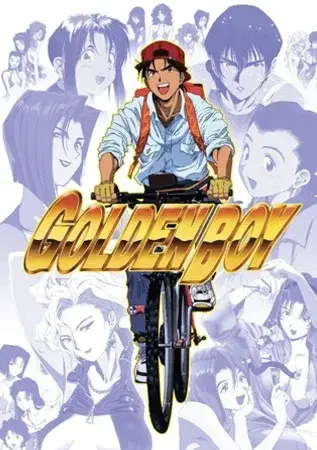
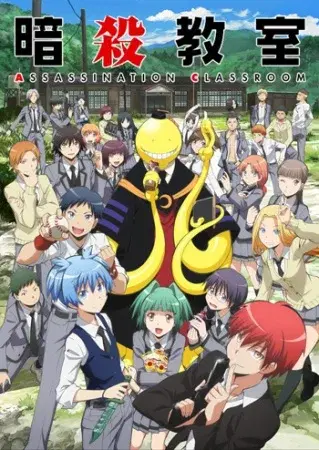
Watch GTO if you want a school comedy that treats bad behavior as a symptom rather than a punchline, without sanding off its trashy late-night energy. It scratches the same itch as Assassination Classroom’s teacher-vs-class dynamic, but swaps sci-fi spectacle for workplace satire, adult hypocrisy, and delinquent-era bravado; it also has the shameless physical comedy of Golden Boy with much stronger ensemble payoff. The hook is rhythm: a setup that looks like a prank episode can pivot into bullying, humiliation, or institutional cowardice, then snap back to a face-fault before the mood curdles. Viewers who like redemption stories, classroom power games, and flawed adults being useful in spite of themselves will get the most out of it. Viewers chasing modern polish should know the appeal is writing and performance, not pristine animation.
Key Characters
- EEikichi Onizuka
Onizuka’s fan appeal comes from the contradiction between his crude delinquent instincts and his almost allergic reaction to adult phoniness, making him less a model educator than an anti-institutional stress test.
- AAzusa Fuyutsuki(VA: Fumiko Orikasa)
Fuyutsuki gives the staff-room side of the series a grounded counterweight, contrasting Onizuka’s chaos with the anxieties of someone trying to survive teaching by the rules.
- UUrumi Kanzaki(VA: Kotono Mitsuishi)
Kanzaki is the character fans often point to when arguing that GTO is more than delinquent comedy, because her intelligence turns classroom rebellion into something colder and more psychologically loaded.
- MMiyabi Aizawa(VA: Junko Noda)
Miyabi’s presence gives Class 3-4 a social architecture rather than a generic mob, making the student side of the series feel organized, personal, and dangerous.
What Makes It Stand Out
- 1
Studio Pierrot produced a 43-episode TV adaptation that aired from June 30, 1999 to September 17, 2000, giving the series far more room for recurring classroom fallout than a modern one-cour comedy would usually get.
- 2
The show’s structure is deliberately semi-episodic: AniList tags it as Episodic at 59%, but the best-regarded material accumulates through changing student relationships rather than resetting the class dynamic every week.
- 3
Its genre labeling undersells its range: MAL lists Comedy, while AniList’s strongest tags include Teacher at 96%, School at 91%, Work at 85%, Delinquents at 85%, Educational at 80%, Satire at 71%, and Bullying at 70%.
- 4
The production is remembered more for timing, expressions, and voice performance than visual luxury; even positive viewer discussions commonly note that it is not among the best-looking anime of its era.
- 5
The anime’s incomplete adaptation is central to its modern reputation: many fans rate the series highly as a self-contained ride while still naming the manga cutoff as the main reason they want a remake.
Fun Facts & Trivia
- Fun fact 1
- Great Teacher Onizuka is based on Tooru Fujisawa’s original manga, but the anime ends only partway through the source material, a frequent complaint even among viewers who strongly recommend the show.
- Fun fact 2
- The core production lineup paired director Noriyuki Abe with series composer Masashi Sogo, literary arts credit Hideko Ikeda, character designer Kouichi Usami, sub-character designer Mari Kitayama, and art director Yuuji Ikeda.
- Fun fact 3
- Its cross-platform reputation is unusually stable for a 1999 comedy: the data lists a MAL score of 8.68 from 452,546 votes, MAL rank #77, AniList score 84/100, and 8,999 AniList favourites.
- Fun fact 4
- Despite being filed primarily as Comedy, its database footprint leans heavily into institutional and social themes, with Work, Educational, Satire, Bullying, and Gangs all appearing as notable AniList tags.
- Fun fact 5
- Reviewers split less on whether it is entertaining than on how far to elevate it: praise commonly centers on character depth and fun value, while more skeptical takes call it worthwhile but short of all-time-best status.
Studios
- Studio Pierrot