Call of the Night
よふかしのうた (Yofukashi no Uta)
- Romance
- Supernatural
- Vampire
- Episodes
- 13
- Duration
- 22 min per ep
- Aired
- Jul 8, 2022 to Sep 30, 2022
- Status
- Finished Airing
Synopsis
Kou Yamori is a seemingly ordinary middle schooler who can’t quite make sense of love or the expectations wrapped up in everyday life. Disillusioned, he stops going to school, and the aimless days leave him unable to sleep. With insomnia setting the rhythm of his life, Kou starts wandering the quiet streets long after everyone else has gone home.
During one of these late-night walks, he meets the enigmatic Nazuna Nanakusa, who suggests that people stay awake because they can’t settle their minds until they loosen their inhibitions. She offers to help Kou with his sleeplessness and brings him back to her place, where an awkward attempt at rest turns into a startling revelation: Nazuna bites his neck—and she’s a vampire.
Kou assumes the bite will change him, but becoming a vampire isn’t so straightforward. The transformation requires being bitten by someone he truly loves, and Kou sets his sights on a new purpose: to fall in love with Nazuna and leave his human life behind.
Otaku Consensus
Call of the Night earns its reputation through mood-first direction: LIDENFILMS, chief director Tetsuya Miyanishi, and director Tomoyuki Itamura turn empty city blocks, neon color, awkward intimacy, and vampire rules into the real engine of the series. Critics and fans consistently single out the adaptation’s atmosphere, music, and character chemistry, especially the early nocturnal-hangout stretch where the show feels less like horror and more like a stylish coming-of-age drift. Its main limitation is also its signature: the languid, low-stakes pacing can feel too vibe-driven for viewers expecting a sharper supernatural plot or traditional vampire danger.
Why You Should Watch
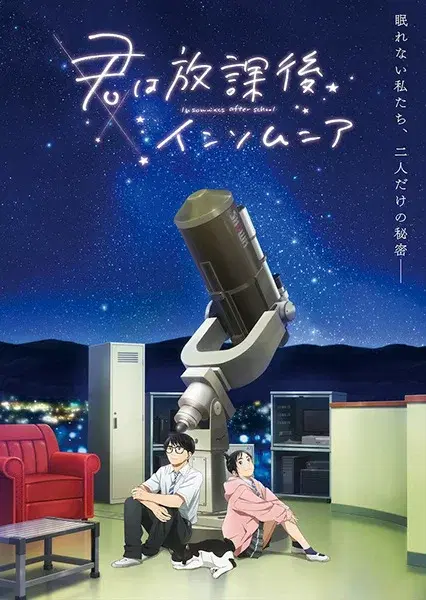
Watch Call of the Night if you want vampire romance without gothic melodrama: it is urban, flirtatious, funny, and charged with the emotional confusion of adolescence. It scratches a similar itch to Bakemonogatari’s stylized conversations and Insomniacs After School’s nocturnal intimacy, but filters both through a neon shounen sensibility and a more overtly psychosexual vampire setup. The appeal is not in jump scares or lore dumps; it is in how late-night freedom becomes a visual and emotional language. Viewers who enjoy slow-burn chemistry, direction that treats city lighting as character psychology, and supernatural rules that complicate romance rather than replace it will get the most from it. If you want action-heavy vampire hunting, look elsewhere; if you want midnight mood, this is precision-built.
Key Characters
- KKou Yamori
Kou is compelling because his blankness is not generic protagonist passivity but a recognizable adolescent failure to understand romance, social performance, and what he actually wants from freedom.
- NNazuna Nanakusa
Nazuna became the show’s fan magnet because she mixes supernatural confidence, teasing dominance, and conspicuous emotional immaturity, making her less an all-knowing vampire and more a chaotic nightlife companion.
What Makes It Stand Out
- 1
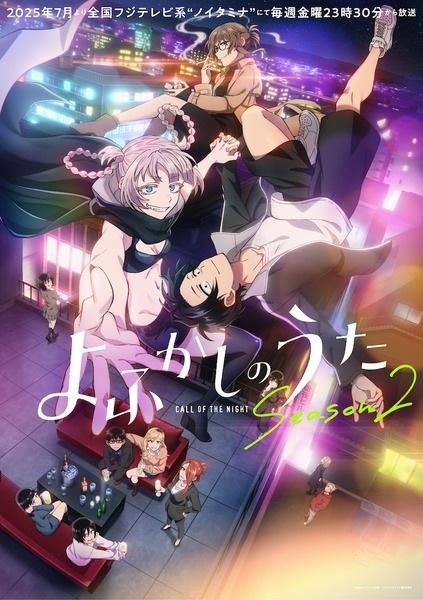
LIDENFILMS gives the series a highly identifiable night-world look, leaning on saturated purples, blues, and city-light contrast rather than the muted palette common to school romance anime.
- 2
The creative lineup pairs chief director Tetsuya Miyanishi with director Tomoyuki Itamura and series composer Michiko Yokote, producing an adaptation that often prioritizes rhythm, pauses, and conversational tension over plot acceleration.
- 3
Its vampire material is closer to a low-fi urban fantasy social drama than a monster-horror framework; one critical comparison described it as a kind of 'Low-Fi Vampire the Masquerade' because the appeal lies in vampire society and rules of intimacy.
- 4
The anime’s identity is unusually tied to its music culture: the opening and ending were repeatedly highlighted by viewers as major strengths, with fan reviews singling out the OP and ED as central to the show’s appeal.
- 5
AniList’s tag profile captures how specific its tonal cocktail is: Vampire at 98%, Urban Fantasy at 94%, Coming of Age at 80%, and Psychosexual at 68%, which is a more precise signal than the broader Romance and Supernatural genre labels.
Fun Facts & Trivia
- Fun fact 1
- Call of the Night aired as a 13-episode Summer 2022 TV anime, running from July 8 to September 30, 2022, and finished with strong cross-platform interest: a 7.94 MAL score from over 361,000 votes and 10,691 AniList favourites.
- Fun fact 2
- The original creator is Kotoyama, while the anime credits Shunsuke Hara and Kazunori Ooshima for original work assistance, a production detail that points to close handling of the manga-to-anime transition.
- Fun fact 3
- The character designs were handled by Haruka Sagawa, with Shuuhei Fukuda, Yuusaku Nagahama, and Yuuta Shinohara credited as main animators, helping explain why fans often discuss the series through movement, posing, and atmosphere rather than only story beats.
- Fun fact 4
- The Japanese title, Yofukashi no Uta, is strongly associated with Creepy Nuts’ song of the same name; the anime further cemented that connection by making music a major part of its public reception.
- Fun fact 5
- Despite its shounen source identity, AniList users also tag it as Femdom, Psychosexual, Hikikomori, and Primarily Female Cast, which helps explain why its audience discourse often focuses on power dynamics and adolescent psychology as much as vampire lore.
Studios
- LIDENFILMS