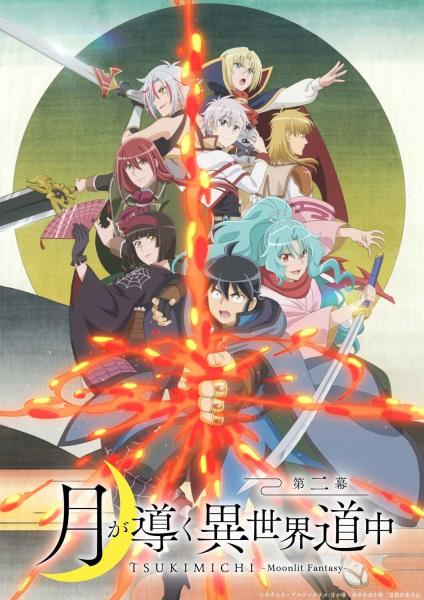
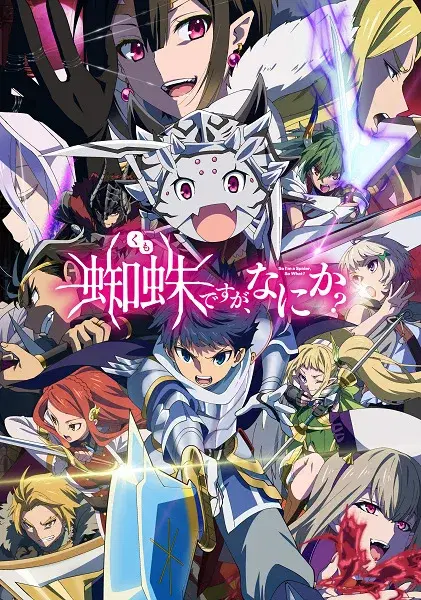
Tsukimichi: Moonlit Fantasy
月が導く異世界道中 (Tsuki ga Michibiku Isekai Douchuu)
- Action
- Adventure
- Comedy
- Fantasy
- Isekai
- Anthropomorphic
- Samurai
- Episodes
- 12
- Duration
- 23 min per ep
- Aired
- Jul 7, 2021 to Sep 22, 2021
- Status
- Finished Airing
Synopsis
Makoto Misumi is summoned to a fantasy world under an old agreement between his parents and a goddess, expecting to be welcomed as its hero. Instead, the goddess rejects him on sight, strips away his role, and casts him to the outer reaches of a desolate wasteland far from human settlements. As a meager “compensation,” Makoto is granted the ability to understand every language—except the one spoken by humans.
In the harsh frontier, the gap between Earth and his new home awakens Makoto’s latent strength, leaving him unusually formidable in both body and magic. Crossing paths with demihumans and legendary beings, he gradually gathers allies and begins shaping a community where different races can live together in peace. Yet even as his new life takes root, Makoto still longs to connect with humans—something the goddess herself seems determined to deny—pushing him and his companions toward a path that may challenge the world’s order.
Otaku Consensus
Tsukimichi: Moonlit Fantasy succeeds by treating isekai familiarity as a playground rather than pretending the genre has never been done: Shinji Ishihira’s brisk direction and Kenta Ihara’s series composition keep the 12-episode season moving between comedy, action, and settlement-building with a payoff reviewers repeatedly described as satisfying. Its strongest identity comes from the human-language exclusion, non-human alliances, and light economic worldbuilding, while the most common criticism is that it still leans on overpowered-protagonist and harem-adjacent comfort-food tropes instead of fully breaking from them.
Why You Should Watch
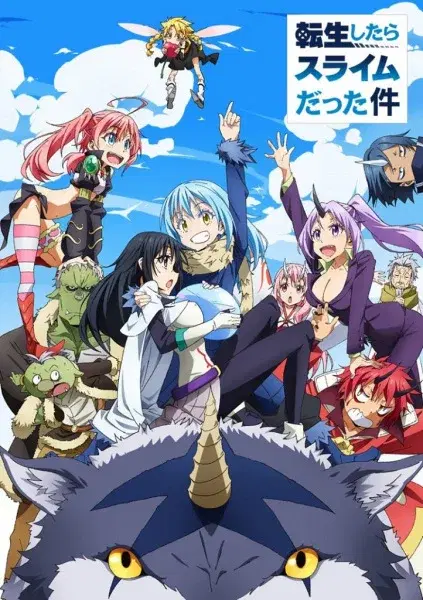
Watch Tsukimichi if you want an isekai power fantasy that spends as much time on social systems as on smackdowns. It scratches the same itch as That Time I Got Reincarnated as a Slime with community-building, monster allies, and practical governance, but adds more divine pettiness and a sharper outsider gag. Viewers who like KonoSuba’s willingness to puncture fantasy dignity, but still want a competent lead and actual progression, will click with its rhythm. The appeal is the mix: C2C keeps the season compact at 12 episodes, the comedy lands through status reversals rather than parody alone, and the world’s language rules make “talking to humans” a mechanical problem instead of automatic diplomacy. If you want comfort-food isekai without a blank-slate fantasy world, this is the efficient pick.
Key Characters
- MMakoto Misumi(VA: Natsuki Hanae)
Makoto is compelling because fans read him less as a chosen savior and more as a deadpan logistics problem-solver whose absurd strength keeps colliding with basic social obstacles.
- TTomoe(VA: Ayane Sakura)
Tomoe gives the series one of its signature tonal swings, mixing legendary-being presence with samurai-flavored enthusiasm and a taste for turning fantasy hierarchy into comedy.
- MMio(VA: Akari Kito)
Mio embodies the show’s monster-girl appeal: intimidating, intensely devoted, and funny because her loyalty often feels more dangerous than the enemies.
- SShiki(VA: Kenjiro Tsuda)
Shiki adds a cooler, more scholarly texture to Makoto’s circle, balancing the louder personalities with a tactician’s poise and magical expertise.
What Makes It Stand Out
- 1
The language barrier is not just a gag: Makoto can understand nearly everyone except humans, which flips the usual isekai assumption that human society is the natural center of the world.
- 2
C2C’s first season is a compact 12-episode adaptation, and its pacing reflects that format by rotating quickly between combat, comedy, and community logistics instead of lingering on a single tutorial arc.
- 3
The AniList tag profile is unusually specific for a modern isekai: alongside Isekai at 96% and Magic at 92%, it registers Economics at 58% and Language Barrier at 57%, signaling a show more interested in systems than a simple hero route.
- 4
The production credits separate action direction from general direction, with Yuuji Suzuki listed as Action Director under Shinji Ishihira’s overall direction, a useful clue to why the season treats set-piece impact as its own craft lane.
- 5
Its non-human cast emphasis is measurable in the metadata: Monster Girl at 76%, Anthropomorphism at 75%, and Creature Taming at 60% frame the series closer to a monster-society isekai than a standard adventurer-party fantasy.
Fun Facts & Trivia
- Fun fact 1
- The anime aired from July 7, 2021 to September 22, 2021, completing its first season in a single 12-episode cour from studio C2C.
- Fun fact 2
- The core adaptation team pairs director Shinji Ishihira with series composer Kenta Ihara, while Kazunobu Shimizu is credited as assistant director and Yuuji Suzuki as action director.
- Fun fact 3
- The anime credits Kei Azumi for the original story and Mitsuaki Matsumoto for the original character designs, with Yukie Suzuki adapting the character designs for animation.
- Fun fact 4
- Its popularity is not just a niche isekai bubble: the listed MAL data gives it a 7.71 score from 303,131 votes, a #445 popularity rank, and AniList records 5,319 favourites.
- Fun fact 5
- The prop-design workload is split among Akane Imada, Youko Tanabe, and Kouji Nagatomi, a notable detail for a fantasy series that leans on settlements, tools, goods, and worldbuilding texture rather than only character costumes.
Studios
- C2C