Princess Tutu
プリンセスチュチュ
- Drama
- Mystery
- Romance
- Anthropomorphic
- Love Polygon
- Mahou Shoujo
- Performing Arts
- Episodes
- 38
- Duration
- 16 min per ep
- Aired
- Aug 16, 2002 to May 23, 2003
- Status
- Finished Airing
Synopsis
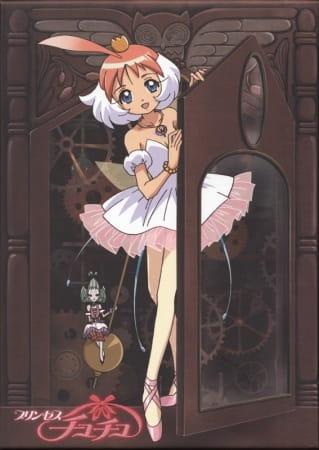
In a storybook town where animals speak and fairy-tale logic holds sway, Ahiru is an awkward but kindhearted girl with a secret even stranger than her surroundings: she was once a duck. Changed into human form by the enigmatic Drosselmeyer, Ahiru discovers she has a purpose—and a way to fulfill it. With an egg-shaped pendant, she can become Princess Tutu, a graceful ballet dancer whose performances soothe the unrest in people’s hearts.
As Princess Tutu, Ahiru takes on a delicate mission: gather the scattered pieces of a prince’s shattered heart, broken long ago to imprison a sinister raven. Woven through romance, mystery, and the stagecraft of ballet, the tale follows its heroes as they push against destiny itself, searching for a path to a true happily ever after.
Otaku Consensus
Princess Tutu earns its cult-classic standing as an original TV anime by making ballet its directorial language rather than decorative theme, with Junichi Satou’s stage-like framing, Michiko Yokote’s series structure, and Kaoru Wada’s music repeatedly singled out as the reasons its fairy-tale meta-fiction lands. Critics and fans praise how its seemingly delicate mahou shoujo shell develops into tragedy-conscious storytelling with real emotional architecture. The recurring reservation is that the gentle early pacing and childlike presentation can make the series look lighter than it is, delaying the payoff for viewers expecting immediate genre subversion.
Why You Should Watch
Watch Princess Tutu if you want the symbolic density of Revolutionary Girl Utena filtered through classical ballet rather than sword duels, or if you like magical-girl transformation stories that treat performance as emotional argument instead of combat spectacle. Its appeal is not “dark mahou shoujo” shock value; it is the precision with which dance, fairy-tale rules, school life, animal absurdity, and romantic tension are made to operate as one theatrical system. Viewers who want meta storytelling without smugness will find it especially rewarding: the series knows it is a story about stories, but it stays sincere about love, fear, failure, and grace. It also suits fans who care about music direction, because Kaoru Wada’s score and Ritsuko Okazaki’s theme performances give the show a distinct stage-production identity.
Key Characters
- AAhiru
Ahiru is remembered less as a conventional magical-girl heroine than as a deliberately ungainly performer whose sincerity turns awkwardness into the show’s emotional method.
- PPrincess Tutu
Princess Tutu reframes transformation-sequence power as ballet poise, using choreography and presence where most mahou shoujo series would use attacks.
- DDrosselmeyer
Drosselmeyer gives the series its sharp meta-fictional edge, functioning as the kind of authorial figure who makes the audience question who is allowed to control a fairy tale.
What Makes It Stand Out
- 1
The series is an original anime credited to Ikuko Itou, not an adaptation, which matters because its storybook structure, character designs, and performance motifs were built for animation from the start.
- 2
Ikuko Itou held three major creative roles on the production: original creator, character designer, and chief animation director. That concentration of authorship helps explain the unusually unified look of its ballet-inspired character movement and fairy-tale visual language.
- 3
Junichi Satou served as chief director while Michiko Yokote handled series composition, a pairing that supports the show’s balance between gentle episodic rhythm and long-form meta-narrative escalation.
- 4
Kaoru Wada’s music is central to the viewing experience, with the soundtrack treated by reviewers as one of the series’ defining strengths rather than background support.
- 5
Its AniList tag profile is unusually specific: Fairy Tale at 96%, Ballet at 96%, Dancing at 95%, and Henshin at 85%, accurately signaling that the show’s identity comes from the fusion of performance art and magical-girl form.
Fun Facts & Trivia
- Fun fact 1
- Princess Tutu was produced by HAL Film Maker and aired from August 16, 2002 to May 23, 2003, placing it in the early-2000s wave of experimental TV anime that played with genre boundaries.
- Fun fact 2
- The series runs 38 episodes, an uncommon count compared with the standard 12, 13, 24, or 26-episode TV formats more familiar to modern seasonal anime viewers.
- Fun fact 3
- Ritsuko Okazaki performed both the opening and ending themes, giving the series a consistent vocal signature across its broadcast presentation.
- Fun fact 4
- On MyAnimeList, it holds an 8.15 score from 70,704 votes while sitting at popularity rank #1502, a profile that marks it as more critically beloved than broadly mainstream.
- Fun fact 5
- AniList lists 3,054 favourites for the series and an 81/100 score, reinforcing its reputation as a durable cult title rather than a nostalgia-only recommendation.
Studios
- HAL Film Maker