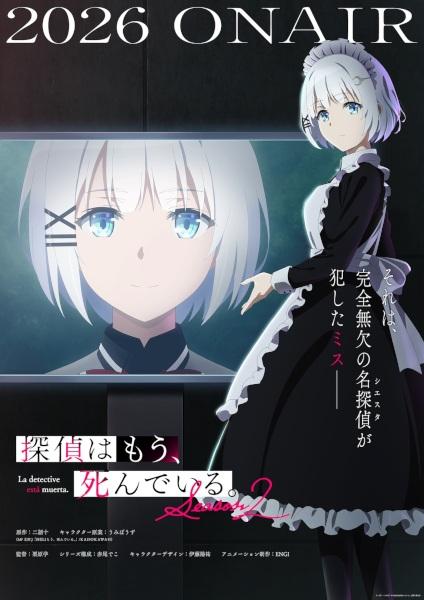
The Detective Is Already Dead
探偵はもう、死んでいる。 (Tantei wa Mou, Shindeiru.)
- Comedy
- Mystery
- Romance
- Detective
- Episodes
- 12
- Duration
- 25 min per ep
- Aired
- Jul 4, 2021 to Sep 19, 2021
- Status
- Finished Airing
Synopsis
Kimihiko Kimizuka has a knack for getting pulled into incidents, to the point that he calls himself a trouble magnet. During an unexpected abduction that lands him on a plane in the middle of a hijacking, he crosses paths with a silver-haired girl known as Siesta. Introducing herself as a famed detective, she swiftly takes control of the situation—and leaves a lasting impression on him.
Siesta insists on making Kimizuka her assistant, and after resisting, he’s drawn into her orbit. What follows is a three-year partnership that takes them across the globe as they confront dangerous cases and looming threats. But when Siesta suddenly dies, Kimizuka tries to move on, only to find that her presence continues to shape his life as new encounters pull him back toward the mysteries she left behind.
Otaku Consensus
The Detective Is Already Dead is remembered less as a sturdy mystery than as a flashy, romantic urban-fantasy detective hybrid whose extended opening and early Siesta/Kimizuka material show ENGI’s cleanest character polish and Manabu Kurihara’s briskest incident direction. Its genuine hook is the melancholic partner chemistry and rapid-fire genre escalation, but the consensus fault is equally clear: the 12-episode run overpacks twists, monsters, identities, and conspiracies until the detective writing feels secondary and the later character drama loses force.
Why You Should Watch
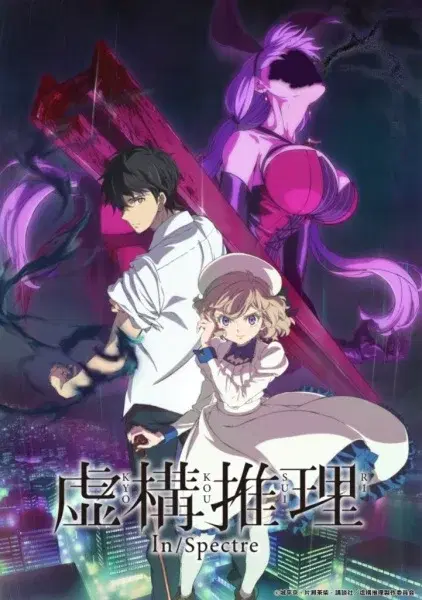
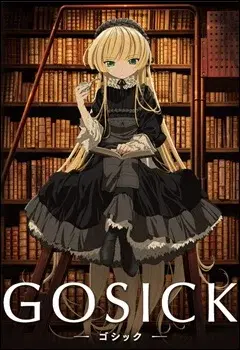
Watch The Detective Is Already Dead if you want a mystery-flavored romance with guns, idols, terrorism, superhuman threats, and bittersweet partner banter, not a locked-room puzzle that plays fair with clues. It scratches some of the same itch as Gosick or In/Spectre when they lean into eccentric deductive couples, but it trades slow-burn logic games for light-novel velocity and urban-fantasy spectacle. The appeal is in the tonal collision: a sharp-dressed “great detective” aura, harem-adjacent character entrances, pop-idol danger, artificial-intelligence and dissociative-identity ideas, and an achronological structure that keeps Siesta’s shadow present even when the story changes gears. Viewers who enjoy romantic comedy as the emotional engine of a detective premise will get more from it than viewers demanding procedural rigor.
Key Characters
- KKimihiko Kimizuka
Fans tend to read Kimihiko less as a master sleuth than as the weary narrative anchor whose deadpan reactions let the show pivot between romantic comedy, trauma, and action-mystery absurdity.
- SSiesta
Siesta is the series’ defining icon: a silver-haired detective whose cool competence, teasing rapport, and lingering narrative influence are the main reasons the anime stayed visible despite its divisive reception.
- YYui
Yui’s stadium-performance material gives the anime one of its clearest idol-thriller turns, shifting the detective setup into celebrity protection and hidden-assailant tension.
- NNatsunagi
Natsunagi is central to the show’s post-Siesta emotional architecture, giving the series a second female focal point rather than leaving it as a simple assistant-and-detective memory piece.
What Makes It Stand Out
- 1
The anime uses achronological order, a major part of its identity on AniList, cutting between the aftermath of Siesta’s absence and earlier partnership material instead of presenting the three-year relationship as a straight timeline.
- 2
Its mystery label is deliberately unstable: the show folds in terrorism, crime, super powers, urban fantasy, artificial intelligence, guns, and police-adjacent material, which is why many critics judged it stronger as a romantic comedy/genre mashup than as a pure detective story.
- 3
ENGI’s production is most often praised for its early visual polish, especially the character art and action-forward opening stretch, before later criticism focused more on writing density and dramatic payoff than on the basic drawing quality.
- 4
The Yui stadium-show material is a concrete example of the series’ case-of-the-moment variety, moving from detective banter into idol-event security and an unseen-assailant setup within the same 12-episode span.
- 5
The soundtrack branding leans heavily into Vocaloid-adjacent pop credentials: jon-YAKITORY performs the opening with Mary and also writes its lyrics, while Kagura Nana performs the ending with lyrics by 40mP.
Fun Facts & Trivia
- Fun fact 1
- The anime credits Nigojuu for the original story and Umibouzu for the original character design, with Yousuke Itou adapting those designs for animation under director Manabu Kurihara at ENGI.
- Fun fact 2
- Series composition was handled by Hitomi Mieno, a key credit given how much of the anime’s reception centered on structure, compression, and the balance between romance, comedy, and mystery plotting.
- Fun fact 3
- The opening theme is unusually staff-visible in the credits: jon-YAKITORY is listed for both performance and lyrics, with Mary also performing the OP.
- Fun fact 4
- The ending theme pairs Kagura Nana as performer with 40mP on lyrics, giving the series a recognizable internet-music footprint beyond the anime staff itself.
- Fun fact 5
- Its audience profile is notably split across databases: MAL lists it with a large voter base and mid-6 score, while AniList records a similar 61/100 score alongside 1,820 favorites, reflecting a show with passionate character-driven fans despite broad critical frustration.
Studios
- ENGI

![[Oshi No Ko]](/_next/image?url=https%3A%2F%2Fd111jwrw4u3bt.cloudfront.net%2Fanime-posters%2Fposter-52034.webp&w=1920&q=75)