Metropolis
メトロポリス
- Adventure
- Drama
- Romance
- Sci-Fi
- Detective
- Mecha
- Episodes
- 1
- Duration
- 1 hr 47 min
- Aired
- May 26, 2001
- Status
- Finished Airing
Synopsis
Private detective Shunsaku Ban and his nephew Kenichi journey from Japan to Metropolis while pursuing Dr. Laughton, a scientist suspected of trafficking in human organs. They arrive in a tense, gleaming metropolis where robots are harshly oppressed and an authoritarian power is rapidly consolidating control. Hidden within the city, Laughton has created Tima, an advanced female android commissioned by Metropolis’s most influential figure, Duke Red.
After an unexpected disaster leaves Laughton’s lab in ruins, Shunsaku and Kenichi are separated in the chaos. Kenichi comes to the aid of the confused Tima and, believing her to be human, forms a bond with her while trying to keep her out of the hands of Duke Red’s merciless adopted son, Rock. As Shunsaku searches for his nephew, he begins to uncover the darker machinations at work—and how Tima fits into Duke Red’s designs for absolute rule.
Otaku Consensus
Rintarou’s Metropolis earns its reputation as a visually extravagant, politically loaded Tezuka adaptation, with Madhouse’s retro-futurist city work and Katsuhiro Ootomo’s script giving the film more bite than its rounded character designs initially suggest. Critics and fans most consistently praise its direction, animation layering, and rewatchable density, while the main complaint is that its feature-length pacing can feel draggy or emotionally distant between its major set pieces.
Why You Should Watch
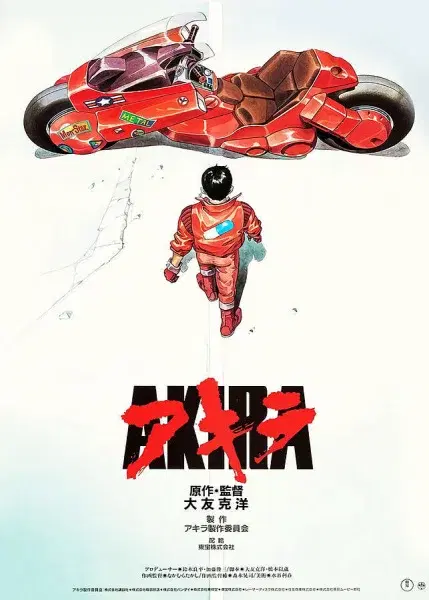
Watch Metropolis if you want political sci-fi with the scale of Akira but filtered through Osamu Tezuka’s softer, rounder character language instead of pure cyberpunk abrasion. It is especially rewarding for viewers who like detective fiction, robot ethics, class allegory, and cities that feel engineered as arguments rather than backdrops. Madhouse turns the setting into a vertical maze of privilege, policing, machinery, and old-world spectacle, while Toshiyuki Honda’s score gives the film a tonal identity far stranger than standard dystopian orchestration. If Memories left you wanting another prestige anime film where hand-drawn expressiveness collides with early digital machinery, this scratches that itch with more romance, more political melodrama, and a clearer Tezuka lineage.
Key Characters
- HHige Oyaji(VA: Kousei Tomita)
Tezuka’s familiar hard-nosed detective type gives the film its pulp-investigation spine, balancing the city’s grand political machinery with a stubbornly human scale.
- RRock Holmes(VA: Kouki Okada)
Rock is the film’s sharpest human antagonist figure, remembered by fans for turning anti-robot ideology into something personal, theatrical, and volatile.
- KKenichi Shikishima(VA: Kei Kobayashi)
Kenichi functions as the film’s emotional access point, making its debates about artificial life feel intimate rather than purely philosophical.
- TTima(VA: Yuka Imoto)
Tima’s appeal comes from the contrast between Tezuka-like innocence and the immense political weight projected onto her by everyone around her.
What Makes It Stand Out
- 1
Madhouse’s production combines Yasuhiro Nakura’s rounded Tezuka-style character designs with dense retro-futurist backgrounds, creating a deliberate clash between cartoon innocence and industrial oppression.
- 2
The script is by Katsuhiro Ootomo, bringing the civic paranoia and systems-level thinking associated with Akira into a film rooted in Osamu Tezuka’s manga legacy and the shadow of Fritz Lang’s 1927 Metropolis.
- 3
Rintarou’s direction favors spectacle, symbolic architecture, and accumulating mood over constant plot velocity, which is why the film is often praised for rewatch value and criticized for mid-film drag.
- 4
Early CG is used most visibly for futuristic mechanical equipment and city infrastructure, a choice fans often note because it contrasts with the hand-drawn character animation rather than trying to disappear into it.
- 5
Toshiyuki Honda’s music and Masafumi Mima’s sound direction give the film a brassy, idiosyncratic sonic profile that many viewers find distinctive precisely because it cuts against the expected sound of dystopian anime.
Fun Facts & Trivia
- Fun fact 1
- Metropolis is a rare meeting point for three major anime and manga lineages: Osamu Tezuka as original creator, Rintarou as director, and Katsuhiro Ootomo as screenwriter.
- Fun fact 2
- The film is connected to both Tezuka’s manga and Fritz Lang’s landmark 1927 silent film, but its anime identity comes from recombining those influences through early-2000s Madhouse craftsmanship.
- Fun fact 3
- Naoko Kusumi is credited in two key visual roles, serving as both assistant director and director of photography, which helps explain the film’s unusually controlled sense of scale and lighting.
- Fun fact 4
- The ending theme is performed by mooki, while the broader score is credited to Toshiyuki Honda, making the film’s soundscape as specifically authored as its visual design.
- Fun fact 5
- Despite being a single theatrical feature from 2001, it still holds a solid database footprint, with a 7.53 MyAnimeList score from 49,450 votes and 812 AniList favourites in the provided data.
Studios
- Madhouse