My Neighbor Totoro
となりのトトロ (Tonari no Totoro)
- Adventure
- Award Winning
- Supernatural
- Urban Fantasy
- Episodes
- 1
- Duration
- 1 hr 26 min
- Aired
- Apr 16, 1988
- Status
- Finished Airing
Synopsis
Set in 1950s Japan, Tatsuo Kusakabe moves with his daughters, Satsuki and Mei, to a quiet rural home so they can be nearer to their mother as she remains in the hospital with a long-term illness. As the sisters settle into country life, their days are shaped by new surroundings, open fields, and the hush of the nearby woods.
When Mei spots a small, rabbit-like creature in the yard and follows it into the forest, she comes face to face with Totoro, a towering, mysterious spirit of the trees. Soon Satsuki also encounters Totoro, and the girls’ ordinary routines begin to intertwine with gentle wonders—strange woodland beings, secret paths, and moments of the supernatural hidden in nature.
Otaku Consensus
My Neighbor Totoro endures because Hayao Miyazaki directs it with unusual confidence in quiet observation: the pacing, child-perspective framing, and Kazuo Oga’s rural art direction turn ordinary movement through space into the film’s real drama. Critics and fans consistently praise its grounded “everyday fantasy” and Joe Hisaishi’s music, while the most common complaint is also its defining choice: viewers wanting a conventional conflict-driven adventure may find its simplicity too slight.
Why You Should Watch
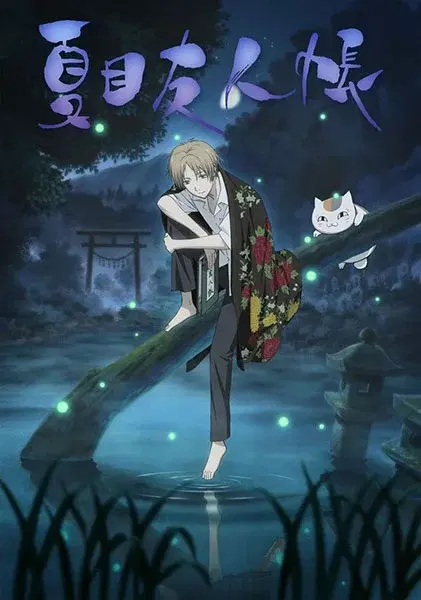
Watch My Neighbor Totoro if you want Studio Ghibli at its most elemental: fantasy without lore dumps, childhood without forced sentimentality, and nature treated as something felt before it is explained. It scratches a similar itch to Non Non Biyori’s rural calm and Natsume’s Book of Friends’ gentle supernatural encounters, but in a tighter, more image-driven form. The film is especially rewarding for viewers who notice craft: background art that makes fields and old houses feel lived in, editing that lets small gestures breathe, and a score that can shift from nursery-rhyme playfulness to hush without overselling emotion. If you prefer anime where atmosphere is the main event and the supernatural feels like an extension of everyday life, this is the Ghibli cornerstone.
Key Characters
- SSatsuki Kusakabe(VA: Noriko Hidaka)
Satsuki is memorable because the film lets her oscillate between responsible older sister and impulsive child without turning either side into a lesson.
- MMei Kusakabe(VA: Chika Sakamoto)
Mei’s appeal comes from how specifically she is animated as a small child: fearless, stubborn, physically expressive, and never written as a miniature adult.
- TTatsuo Kusakabe
Tatsuo stands out among anime parents for treating his daughters’ imagination with curiosity rather than correction, which gives the film much of its emotional safety.
- TTotoro
Totoro became iconic because he is less a mascot with dialogue than a presence: funny, unknowable, and tied to the film’s sense of nature as something alive beside human routines.
What Makes It Stand Out
- 1
The film is an original Hayao Miyazaki work, not an adaptation, which helps explain its unusually loose, observational structure compared with plot-forward fantasy anime.
- 2
Kazuo Oga’s art direction is central to the film’s reputation: the rural setting is built from dense, specific background detail rather than treated as a generic countryside backdrop.
- 3
Michiyo Yasuda’s color design gives the film much of its soft seasonal identity, keeping the supernatural elements visually integrated with fields, wood, dust, rain, and household interiors.
- 4
Joe Hisaishi’s score avoids heroic fantasy bombast and instead uses memorable, childlike melodic patterns that reinforce the film’s sense of wonder without turning it into spectacle.
- 5
The film’s fantasy is deliberately everyday and localized; critical writing often highlights how its supernatural moments emerge from a realistic domestic world rather than replacing it.
Fun Facts & Trivia
- Fun fact 1
- My Neighbor Totoro aired in Japan on April 16, 1988, and is cataloged as a single completed film rather than a TV series or OVA.
- Fun fact 2
- Hayao Miyazaki is credited as original creator and director, making the movie one of Studio Ghibli’s defining non-adaptation works.
- Fun fact 3
- The production’s craft team includes Kazuo Oga as art director, Michiyo Yasuda on color design, Hisao Shirai as director of photography, and Takeshi Seyama as editor.
- Fun fact 4
- The sound team was split across specialized roles: Shigeharu Shiba handled sound direction, while Kazutoshi Satou worked on sound effects with assistance from Hironori Ono.
- Fun fact 5
- Its database standing reflects unusually broad staying power for a 1988 film: MAL lists it at 8.25 from over 761,000 votes, with popularity at #145, while AniList records an 81/100 score and 8,763 favourites.
Studios
- Studio Ghibli