The Qwaser of Stigmata
聖痕のクェイサー (Seikon no Qwaser)
- Action
- Ecchi
- Fantasy
- Harem
- School
- Urban Fantasy
- Episodes
- 24
- Duration
- 24 min per ep
- Aired
- Jan 10, 2010 to Jun 20, 2010
- Status
- Finished Airing
Synopsis
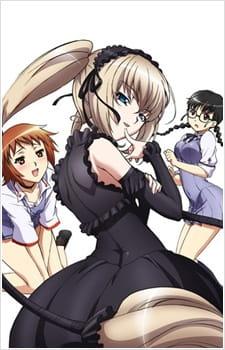
After her father—the former headmaster of Saint Mikhailov Academy—vanishes without explanation, Tomo Yamanobe is left with only a single clue: a religious artwork known as the “icon.” Not long afterward, unsettling rumors ripple through the school about a serial killer targeting female students.
On the way home from another day of harassment, Tomo and her friend Mafuyu Oribe come across an injured, silver-haired boy who disappears as suddenly as he appeared. Mafuyu’s search leads her to the church that houses the icon—now engulfed in flames—where she’s attacked by the suspected killer wielding an eerie power over magnesium. The same silver-haired boy returns to save her, revealing his own ability to command iron.
Mafuyu soon learns his name is Alexander Nikolaevich “Sasha” Hell, a “qwaser” who draws strength from “soma,” obtained through breastfeeding. Shaken but unable to escape the situation, she finds Sasha transferring into her class the very next day, pulling her and Tomo into a school life shadowed by other qwasers and the threat closing in around them.
Otaku Consensus
The Qwaser of Stigmata earns its notoriety honestly: Hiraku Kaneko’s direction and Makoto Uezu’s series composition treat the ecchi material as the engine of the fantasy-action system rather than a removable garnish. Its most persuasive defenders point to that fusion of fan service, elemental combat, religious imagery, and school melodrama as a rare case where the outrageous premise has an actual genre framework around it. The recurring criticism is equally clear: the nudity, lactation, masochism, and psychosexual framing are so dominant that viewers looking for clean action-fantasy pacing may find the story constantly competing with its own provocation.
Why You Should Watch
Watch The Qwaser of Stigmata if you want occult-school action that refuses to separate its power system from its fetishes. It scratches a similar itch to High School DxD’s supernatural ecchi battles, but with a harsher anti-hero edge, heavier religious/cult iconography, and a more confrontational psychosexual tone. The appeal is not “safe” fan service; it is the spectacle of a 2010 TV anime building elemental superpowers, revenge, harem tension, femdom, and school persecution into one aggressively specific identity. If you want fantasy combat without the usual coyness, and you can handle nudity and lactation being central rather than incidental, this is one of the more infamous full-length examples of ecchi as worldbuilding.
Key Characters
- AAlexander Nikolaevich Hell
Sasha is the series’ severe anti-hero center, remembered less as a conventional protector than as the iron-wielding figure who makes the show’s combat, cruelty, and fetish logic impossible to separate.
- MMafuyu Oribe
Mafuyu functions as the grounded emotional entry point into a school setting that rapidly turns hostile, giving the series a human counterweight to its more sensational power mechanics.
- TTomo Yamanobe
Tomo’s connection to the missing former headmaster and the icon gives her more narrative weight than a typical ecchi-school supporting girl, placing her at the intersection of family mystery and religious conspiracy.
What Makes It Stand Out
- 1
Hoods Entertainment produced the 24-episode first season during the winter and spring 2010 broadcast window, giving the material a longer runway than the 12-episode format common to many ecchi-action titles.
- 2
The show’s elemental combat is unusually explicit in its rules: qwasers command specific substances, with iron and magnesium established early as distinct fighting styles rather than generic magic blasts.
- 3
Director Hiraku Kaneko and series composer Makoto Uezu structure the anime around an unapologetic fusion of action and erotic mechanism, which is why reviews often discuss the fan service as inseparable from the story rather than as simple interruption.
- 4
AniList’s tag profile captures its extreme niche with unusually high signals for Large Breasts, Nudity, Lactation, Psychosexual, Masochism, Religion, Cult, and Femdom, making it one of the more clearly labeled “know what you are entering” ecchi fantasies.
- 5
Tatsuya Katou handles the music while Jin Aketagawa serves as sound director, pairing a fantasy-action score with a production that leans heavily into mood shifts between school tension, ritual atmosphere, and combat escalation.
Fun Facts & Trivia
- Fun fact 1
- The anime credits Hiroyuki Yoshino as original creator and Kenetsu Satou for original character design, while Makoto Uno adapted the characters for animation.
- Fun fact 2
- Minori Chihara is credited for theme song performance, adding a notable anisong presence to a series more often discussed for its content rating boundaries than its music credits.
- Fun fact 3
- A web review specifically evaluated 37 total episodes across the franchise: the 24-episode first season, the 12-episode The Qwaser of Stigmata II, and an OVA.
- Fun fact 4
- Despite a modest MAL score of 6.31 and AniList score of 55/100, its MAL popularity ranking of #788 and 138,570 votes show that the series achieved far wider visibility than its critical reputation suggests.
- Fun fact 5
- The show’s reputation in viewer commentary is split between those who praise its “balanced story and fan service” and those who remember it primarily as an unusually pervy seinen-style school ecchi production.
Studios
- Hoods Entertainment