Girl Meets Girl
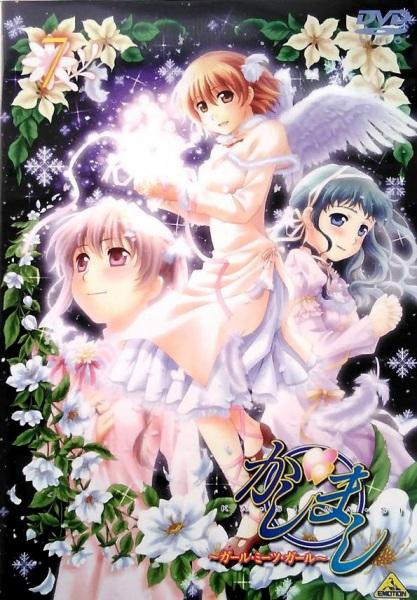
かしまし〜ガール・ミーツ・ガール〜 (Kashimashi: Girl Meets Girl)
- Comedy
- Drama
- Girls Love
- Love Polygon
- Magical Sex Shift
- School
- Episodes
- 12
- Duration
- 24 min per ep
- Aired
- Jan 12, 2006 to Mar 30, 2006
- Status
- Finished Airing
Synopsis
Hazumu is a quiet, gentle boy who prefers gardening, gathering herbs, and solitary hikes in the mountains to standing out at school. After finally mustering the nerve to confess to Yasuna, he’s turned down, leaving him shaken and unsure of where to go from there.
Drawn back to Mt. Kashimayama—the spot where they first met—Hazumu wanders off alone to sort through his feelings. After getting lost, a wish made on a passing shooting star leads to an unexpected turn: Hazumu wakes up as a girl, and returning to everyday life means navigating friendships and romance in a world that suddenly feels completely different.
Otaku Consensus
Girl Meets Girl remains a divisive but important mid-2000s yuri title: its best notices single out Jukki Hanada’s emotionally direct series composition, Nobuaki Nakanishi’s patient handling of the central love polygon, and the unusually fraught chemistry among Hazumu, Yasuna, and Tomari. The modest Studio Hibari production is generally viewed as pretty and effective rather than technically impressive, while its 6.64 MAL score and 62/100 AniList score reflect the split between viewers who admire its sincere melodrama and viewers put off by its dated, sometimes ecchi gender framing. The most durable criticism is that the magical sex-shift device can feel less like nuanced gender inquiry than a romance engine, especially for non-binary or trans-adjacent viewers.
Why You Should Watch
Watch Girl Meets Girl if you want a compact 2000s yuri melodrama built around indecision, jealousy, and emotional damage rather than a simple “which girl wins?” shipping contest. It scratches a similar itch to Strawberry Panic’s romantic turbulence, but in a shorter, more intimate 12-episode form with a softer Studio Hibari TV look. The appeal is in the triangle’s pressure: Kana Ueda, Yui Horie, and Yukari Tamura give the leads distinct emotional temperatures, from fragile hesitation to guarded restraint to prickly urgency. It is best for viewers curious about older LGBTQ+ anime history who can tolerate dated gender politics and some fanservice; it is not the ideal pick if you want a contemporary trans reading handled with modern sensitivity.
Key Characters
- YYasuna Kamiizumi(VA: Yui Horie)
Yasuna is the elegant, emotionally opaque corner of the triangle, and Yui Horie’s performance makes her restraint feel as important as any direct romantic declaration.
- TTomari Kurusu(VA: Yukari Tamura)
Tomari is often treated by fans as the series’ volatile heart, bringing the tomboyish, tsundere-coded energy that turns the romance into a clash of loyalties rather than a polite dilemma.
- HHazumu Osaragi(VA: Kana Ueda)
Hazumu stands out less as a forceful protagonist than as a gentle emotional catalyst whose softness shapes the show’s unusually vulnerable approach to romantic rivalry.
What Makes It Stand Out
- 1
The series uses a focused 12-episode structure for its love polygon, with Jukki Hanada’s series composition keeping the relationship fallout at the center instead of treating the premise as a one-joke comedy setup.
- 2
Studio Hibari’s production, led visually by character designer and chief animation director Tomoko Iwasa, is remembered more for a pretty, readable TV-anime look than for technical spectacle; contemporary reviews specifically called the animation effective but not showy.
- 3
The main voice trio is unusually recognizable for a mid-2000s romance: Kana Ueda as Hazumu, Yui Horie as Yasuna, and Yukari Tamura as Tomari give the triangle much of its fan-discussed identity.
- 4
Its AniList tag profile shows how unusually hybrid the series is: Gender Bending at 88%, Transgender at 80%, Love Triangle at 80%, LGBTQ+ Themes at 75%, and Aliens at 51%, placing it at a very specific intersection of yuri melodrama and transformation fiction.
- 5
The critical conversation around the series is unusually polarized for a short school romance: web reviews praise its emotional depth and love-triangle dynamics, while user reviews flag the gender framing and ecchi elements as major barriers.
Fun Facts & Trivia
- Fun fact 1
- Girl Meets Girl aired as a complete 12-episode TV series from January 12 to March 30, 2006, produced by Studio Hibari.
- Fun fact 2
- The anime credits Satoru Akahori as original creator and Yukimaru Katsura for original character design, while Tomoko Iwasa handled the anime’s character design and served as chief animation director.
- Fun fact 3
- Yui Horie pulls double duty in the production: she voices Yasuna Kamiizumi and is also credited with performing the fifth ending theme.
- Fun fact 4
- The opening theme is performed by eufonius, with Hitoshi Fujima credited for the music and Jin Aketagawa credited as sound director.
- Fun fact 5
- Its database footprint reflects cult-interest status rather than broad consensus: it has 24,788 MAL votes with a 6.64 score, an AniList score of 62/100, and 109 AniList favourites.
Studios
- Studio Hibari