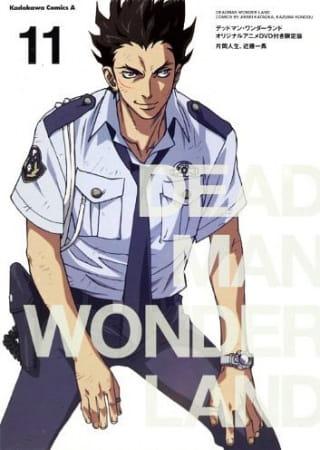
Deadman Wonderland
デッドマン・ワンダーランド
- Action
- Sci-Fi
- Supernatural
- Suspense
- Gore
- High Stakes Game
- Survival
- Episodes
- 12
- Duration
- 24 min per ep
- Aired
- Apr 17, 2011 to Jul 3, 2011
- Status
- Finished Airing
Synopsis
Ganta Igarashi expects an ordinary school day as his class prepares for a field trip to Deadman Wonderland, a prison-themed amusement park where inmates stage perilous performances for spectators. The routine shatters when a mysterious figure in red massacres his classmates, leaving Ganta alive only to be blamed for the crime. Sentenced to death, he’s shipped to the very facility he was meant to tour.
Inside Deadman Wonderland, Ganta is forced into a brutal routine of survival among violent prisoners and unsettling, unexplained abilities. A lethal collar around his neck keeps him under constant threat, and staying alive means taking part in deadly games while navigating shifting alliances. With danger on all sides, Ganta searches for the “Red Man” and a way to prove he isn’t the killer.
Otaku Consensus
Deadman Wonderland earns its enduring popularity by letting Manglobe’s sharp-edged production and Kouichi Hatsumi’s fast, confrontational direction turn a prison-survival setup into a blood-soaked shounen thriller with real momentum. Reviews tend to praise the premise, violent atmosphere, animation, and slowly emerging character psychology, with individual critic reactions often landing higher than its 7.13 MAL aggregate. The consistent caveat is adaptation frustration: the 12-episode anime is gripping in the moment, but it feels visibly truncated next to the manga and demands a strong tolerance for gore.
Why You Should Watch
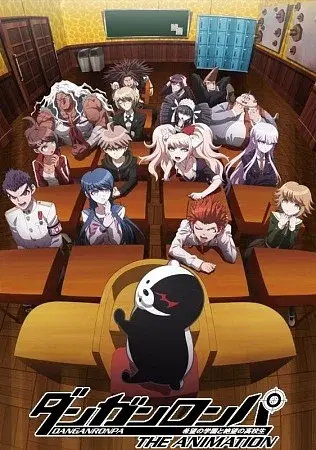
Watch Deadman Wonderland if you want a death-game anime that treats superpowers less like heroism and more like bodily violation. It scratches the same itch as Future Diary’s paranoia and Danganronpa’s spectacle-driven cruelty, but with a harsher prison-industrial texture and far less comic relief. The appeal is the pressure cooker: every alliance feels temporary, every fight has a cost, and the series moves with the impatience of a thriller rather than the sprawl of a long-running battle shounen. It is especially strong for viewers who want urban-fantasy powers, survival stakes, and gore-forward action without a clean moral comfort zone. If you need a fully resolved adaptation, read the manga afterward; if you want 12 episodes of nasty momentum, the anime still lands.
Key Characters
- GGanta Igarashi
Ganta stands out because his role as a shounen lead is constantly undercut by panic, trauma, and inexperience rather than instant battle-ready confidence.
- RRed Man
The Red Man functions less as a conventional villain than as the series’ visualized wound: a masked trigger for its violence, conspiracy, and psychological dread.
What Makes It Stand Out
- 1
Manglobe’s production gives the series a harsher, more abrasive identity than many 2011 TV action anime, emphasizing impact cuts, blood effects, and prison-amusement-park machinery over polished heroic spectacle.
- 2
The series’ genre mix is unusually blunt: AniList tags it at Prison 100%, Survival 96%, Super Power 95%, Gore 84%, and Death Game 83%, which accurately captures how it fuses confinement thriller, body-horror combat, and shounen escalation.
- 3
Its 12-episode structure creates relentless pacing, with little downtime between institutional cruelty, power reveals, and survival scenarios; that same compression is also the adaptation’s most discussed weakness.
- 4
The anime’s reputation differs sharply from its source-material discourse: the manga is often singled out as excellent, while the TV version is remembered as exciting, violent, and incomplete.
- 5
Despite a moderate MAL score of 7.13 and AniList score of 67/100, Deadman Wonderland remains massively visible, sitting at MAL Popularity #120 with over 720,000 votes and 3,470 AniList favorites.
Fun Facts & Trivia
- Fun fact 1
- Deadman Wonderland was created by Jinsei Kataoka and Kazuma Kondou, with Kondou also credited for the anime’s original character design, keeping the TV version visually tied to the manga’s identity.
- Fun fact 2
- The anime aired as a compact Spring 2011 run from April 17 to July 3, finishing at 12 episodes rather than attempting a long-form manga adaptation.
- Fun fact 3
- Kouichi Hatsumi directed the series, while Masaki Yamada handled character design, Michie Watanabe served as art director, and Takeshi Katsurayama oversaw photography.
- Fun fact 4
- The production credits include both mechanical design by Takayuki Yanase and prop design by Daisuke Niitsuma, fitting a show built around prison apparatus, restraints, staged hazards, and weaponized spectacle.
- Fun fact 5
- Review discussions frequently warn about the violence before recommending the show; one recurring critical line is that it is worth watching specifically if the viewer can handle the gore.
Studios
- Manglobe