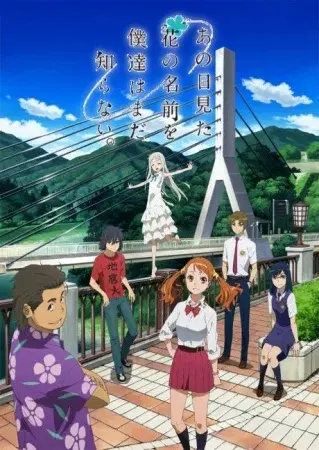
Beyond the Boundary
境界の彼方 (Kyoukai no Kanata)
- Action
- Supernatural
- School
- Episodes
- 12
- Duration
- 24 min per ep
- Aired
- Oct 3, 2013 to Dec 19, 2013
- Status
- Finished Airing
Synopsis
Mirai Kuriyama, the last survivor of a Spirit World warrior clan, can turn her own blood into weapons. Burdened with the duty of slaying youmu—beings said to arise from negative human emotions—she crosses paths with Akihito Kanbara on the school rooftop: a rare youmu–human hybrid. Acting on instinct, Mirai drives a blood-forged blade into him, only to discover he can’t die.
An uneasy bond forms as Mirai repeatedly targets Akihito in an attempt to steady her shaken confidence, while he draws her into the school’s Literary Club alongside fellow Spirit World warriors Hiroomi and Mitsuki Nase. As their connection deepens, the youmu around them grow increasingly relentless, and what began as odd, dangerous encounters edges toward a struggle for survival with the looming emergence of the powerful youmu known as Beyond the Boundary.
Otaku Consensus
Otaku Consensus: Beyond the Boundary remains a mixed-positive Kyoto Animation showcase: Taichi Ishidate’s direction, Mikiko Watanabe’s art direction, and Ryuuta Nakagami’s photography give its urban-fantasy school setting a visual identity sharper than most supernatural action TV anime of its era. Its best asset is the contrast between blood-slick swordplay, club-room comedy, and Masumi Itou’s melancholy scoring; its most persistent weakness is script discipline, with viewers repeatedly criticizing thin motivations, recycled gags, tonal whiplash, and incest-adjacent fanservice that undercuts the tragedy.
Why You Should Watch
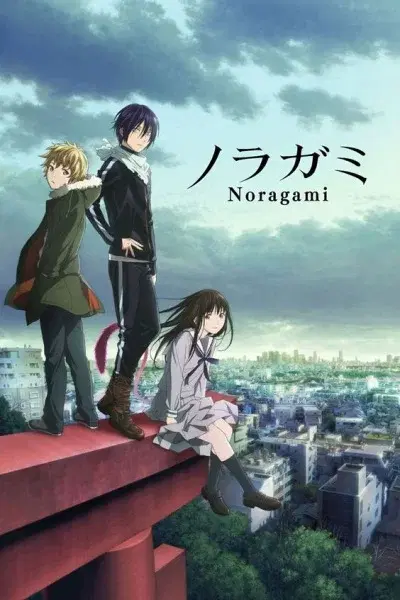
Watch Beyond the Boundary if you want supernatural shonen drama filtered through Kyoto Animation’s character animation rather than pure battle-series escalation. It scratches a similar urban-exorcist itch as Noragami or early Jujutsu Kaisen, but trades long-form power systems for glassy color design, anxious teen intimacy, and quick tonal pivots between school-club banter and fatalistic melodrama. The appeal is not airtight plotting; it is seeing KyoAni apply its usual precision with gesture, lighting, and comic timing to blood-sword duels, demons born from negativity, and a kuudere-heavy ensemble. Viewers who need clean lore and restrained humor may bounce off it, but anyone who likes polished 12-episode supernatural tragedy with romance tension and a memorable OP/ED package will understand why it stayed so popular.
Key Characters
- AAkihito Kanbara(VA: KENN)
Akihito is the show’s deadpan emotional anchor, remembered by fans as much for his glasses obsession and teasing rapport with the cast as for the instability he brings to the supernatural side of the story.
- MMirai Kuriyama(VA: Risa Taneda)
Mirai’s appeal comes from the clash between lethal competence and crippling awkwardness, making her one of Kyoto Animation’s more visually iconic supernatural heroines.
- HHiroomi Nase(VA: Tatsuhisa Suzuki)
Hiroomi functions as both polished Spirit World warrior and running-joke machine, a combination that fuels some of the show’s funniest moments and some of its most divisive sibling-comedy material.
- MMitsuki Nase(VA: Minori Chihara)
Mitsuki is the ensemble’s cool-headed kuudere presence, cutting through the boys’ nonsense with a dry delivery that made her a fan-favorite counterweight to the louder personalities.
What Makes It Stand Out
- 1
Kyoto Animation treats the action as character acting, not only choreography: Mirai’s blood-based swordplay is staged with the same attention to posture, hesitation, and facial timing that the studio uses in its school-life productions.
- 2
The TV run is a compact 12 episodes aired from October to December 2013, which gives the series a compressed structure: comedy episodes, school-club dynamics, and supernatural escalation compete for space in a way that drives both its momentum and its criticism.
- 3
Series composition by Jukki Hanada is one of the show’s most debated creative choices, because the writing leans hard into abrupt tonal switching between gag-heavy club scenes, romantic tension, urban-fantasy lore, and tragedy.
- 4
The music package is unusually staff-visible: Masumi Itou handles the score, Minori Chihara performs the opening theme while also voicing Mitsuki, and STEREO DIVE FOUNDATION performs the ending theme.
- 5
Its reception profile is unusually split between popularity and critique: it sits at a 7.71 MAL score from over 582,000 votes with top-tier popularity at #134, while user reviews often praise the animation and initial hook but attack character motivation and late-series plotting.
Fun Facts & Trivia
- Fun fact 1
- Beyond the Boundary is credited to original creator Nagomu Torii, with original character design by Tomoyo Kamoi, before Kyoto Animation’s TV version gave the series its widely recognized polished visual style.
- Fun fact 2
- Minori Chihara has a dual presence in the production: she voices Mitsuki Nase and also performs the opening theme, tying one of the main cast members directly to the show’s musical identity.
- Fun fact 3
- The production’s audiovisual leads are unusually stacked for a 2013 school-supernatural series: Mikiko Watanabe served as art director, Ryuuta Nakagami as director of photography, Youta Tsuruoka as sound director, and Masumi Itou as composer.
- Fun fact 4
- The franchise is not limited to the 12-episode broadcast; commonly cited viewing material also includes Daybreak, I’ll Be Here - Past, I’ll Be Here - Future, Idol Trial!, and Mini G.
- Fun fact 5
- Across major anime databases, the show’s numbers point to lasting visibility rather than universal acclaim: AniList lists it at 74/100 with 6,623 favourites, while MAL places it far higher in popularity than in rank.
Studios
- Kyoto Animation