Full Metal Panic!
フルメタル・パニック!
- Comedy
- Mecha
- Military
- Episodes
- 24
- Duration
- 24 min per ep
- Aired
- Jan 8, 2002 to Jun 18, 2002
- Status
- Finished Airing
Synopsis
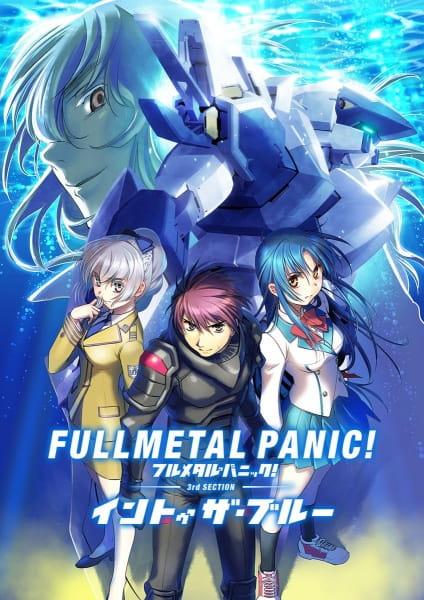
Mithril, a clandestine military organization armed with cutting-edge technology, dispatches a small unit on a high-stakes protection detail. Led by the capable Melissa Mao, sergeants Sousuke Sagara and Kurz Weber are tasked with guarding Kaname Chidori, a high school girl known as a “Whispered” who unknowingly carries revolutionary scientific knowledge—making her a target for intelligence services and other groups eager to exploit her.
To keep her safe at close range, Sousuke goes undercover as a student at Kaname’s school while Melissa and Kurz provide support from afar. His rigid combat training and lack of everyday social experience quickly clash with ordinary teenage life, drawing attention he can’t afford and leaving Kaname increasingly wary of the new classmate shadowing her. When a terrorist attack escalates the danger, Sousuke’s recognition of the culprit pushes him to defy orders in order to protect Kaname at any cost.
Otaku Consensus
Gonzo’s Full Metal Panic! works because Kouichi Chigira treats the clash between military procedure and school comedy as a pacing engine, not a gimmick, while Shouji Gatou’s series-composition credit gives the adaptation unusually direct source-author involvement. Its strongest reputation is as the franchise’s balanced season: real-robot operations, gunplay, romcom friction, and deadpan farce all coexist before later entries separate those tones more aggressively. The most common criticism is consistency: fans frequently note that the 2002 Gonzo production is less smooth and less tonally polished than the later Kyoto Animation installments.
Why You Should Watch
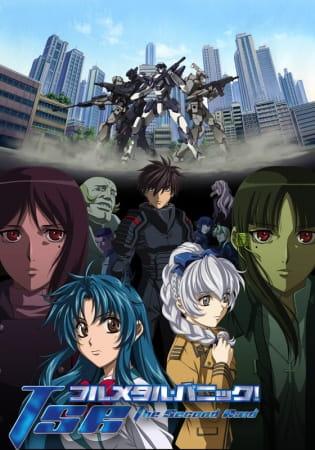
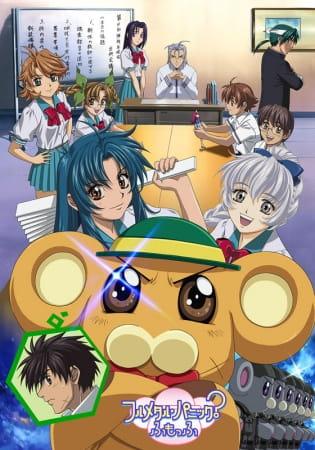
Watch Full Metal Panic! if you want real-robot military hardware and barracks humor without giving up the dopamine of a sharp school romcom. It scratches the Patlabor itch for professionals dealing with absurd situations, but pushes harder into teen-comedy timing; it also offers more straight-faced tactical texture than many harem-era action comedies. The selling point is contrast: Sousuke’s trained threat assessment colliding with ordinary classrooms, Kaname’s tsundere snap keeping him honest, and a support team that makes the military side feel operational rather than decorative. Because season one still contains both modes, it is the best entry point before the franchise’s later split into Fumoffu’s pure comedy and The Second Raid’s heavier drama. Come for mecha and guns; stay for precision awkwardness.
Key Characters
- SSousuke Sagara
The series’ signature comic weapon is Sousuke’s total sincerity: every civilian inconvenience is processed through military logic, making him credible in combat and catastrophically conspicuous in daily life.
- KKaname Chidori
Kaname stands out because she is not written as a passive guarded asset; her tsundere impatience gives the comedy a hard counterpunch to Sousuke’s deadpan discipline.
- MMelissa Mao
Melissa anchors the squad as the capable adult in the room, balancing command authority with the weary practicality of managing two very different sergeants.
- KKurz Weber
Kurz provides the looser, more socially fluent military energy, sharpening the contrast with Sousuke while keeping the unit from feeling like a one-note chain of command.
What Makes It Stand Out
- 1
The 24-episode 2002 Gonzo season is structurally unusual within its own franchise: it keeps military action, real-robot hardware, and school comedy in the same run, while later fan discussion often separates Fumoffu as pure comedy and The Second Raid as pure drama.
- 2
Original creator Shouji Gatou is credited on series composition alongside Fumihiko Shimo and director Kouichi Chigira, giving the anime a direct authorial bridge to the source material rather than functioning as a detached studio-only interpretation.
- 3
Kanetake Ebikawa’s mechanical design credit aligns with the show’s reputation as a real-robot title rather than a super-robot spectacle; AniList’s strongest tags emphasize Military, Guns, and Real Robot over generic action labeling.
- 4
Kouichi Chigira handled both direction and series composition duties, which helps explain why the season’s comedy and combat beats are organized as recurring tonal systems rather than isolated episode-by-episode experiments.
- 5
Its database footprint is unusually durable for an early-2000s TV mecha comedy: MyAnimeList lists over 252,000 votes with a 7.59 score and #479 popularity, while AniList records a 72/100 score and 1,364 favorites.
Fun Facts & Trivia
- Fun fact 1
- Full Metal Panic! aired from January 8 to June 18, 2002, completing a 24-episode broadcast run rather than the shorter one-cour format common to many later light novel adaptations.
- Fun fact 2
- Shouji Gatou appears twice in the core credits: as original creator and as one of the series composition writers, a production detail that helps explain the anime’s close association with the franchise’s intended tonal mixture.
- Fun fact 3
- The visual pipeline credits distinguish between Douji Shiki’s original character designs and Osamu Horiuchi’s anime character design work, marking the adaptation step from source illustration identity to TV-ready animation models.
- Fun fact 4
- Masaru Oota served as art director and Akihiro Hirasawa is credited for art design, separating overall background supervision from the design work that defines the setting’s visual architecture.
- Fun fact 5
- A recurring fan comparison places Gonzo’s first season below the later Kyoto Animation entries for smoothness and consistency, but also credits it as the installment that preserves the franchise’s full action-comedy-romance blend in one package.
Studios
- Gonzo