The Secret World of Arrietty
借りぐらしのアリエッティ (Karigurashi no Arrietty)
- Award Winning
- Supernatural
- Iyashikei
- Survival
- Urban Fantasy
- Episodes
- 1
- Duration
- 1 hr 34 min
- Aired
- Jul 17, 2010
- Status
- Finished Airing
Synopsis
Spending the summer at his aunt’s home, the frail young Shou stumbles on an astonishing sight: a tiny girl no bigger than his finger, glimpsed after he follows the family cat into the garden. She calls herself Arrietty, one of the “Borrowers,” a hidden people who survive by taking minuscule odds and ends from human households. Before long, Shou learns Arrietty lives beneath the house with her parents, Pod and Homily, and he can’t help but be captivated by the idea of such secret neighbors.
For Arrietty’s family, staying unseen is a matter of survival. Their days are shaped by the constant need for secrecy and risky trips into human spaces—inside the house and beyond—to gather what they need. Against her parents’ cautions, Arrietty forms a friendship with Shou, setting in motion events that threaten to upend both of their worlds.
Otaku Consensus
The Secret World of Arrietty lands as a lower-key but highly polished Ghibli entry: Hiromasa Yonebayashi’s controlled direction, Noboru Yoshida and Youji Takeshige’s dense environmental art, and Cécile Corbel’s atypically airy score give Mary Norton’s classic material a distinct texture rather than a museum-piece adaptation. Fans and critics consistently praise its miniature-scale visual imagination and calm emotional register, while the recurring complaint is that its modest dramatic scope and gentle pacing can feel slight beside Ghibli’s most monumental films.
Why You Should Watch
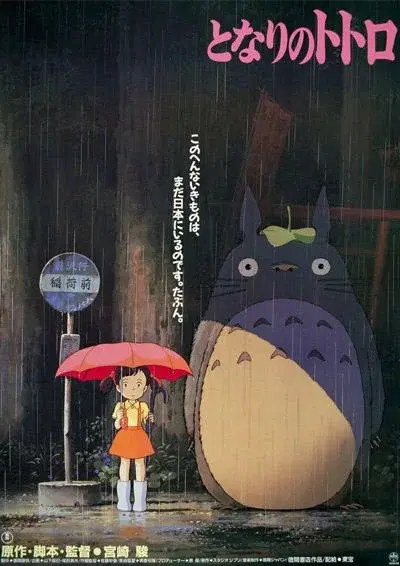
Watch The Secret World of Arrietty if you want Ghibli’s craft applied to tiny, tactile world-building rather than mythic spectacle. It scratches the same domestic-wonder itch as My Neighbor Totoro, but with more survival anxiety under the softness; it also has the spatial pleasure of Spirited Away, scaled down to floorboards, gardens, cupboards, and household objects. Viewers who enjoy iyashikei without total weightlessness will get the most from it: the film is soothing, but not empty, and its tension comes from logistics, trust, and the cost of being seen. It is especially rewarding for fans who notice art direction, sound texture, and adaptation choices more than plot twists.
Key Characters
- AArrietty(VA: Mirai Shida)
Arrietty stands out as a Ghibli heroine whose coming-of-age is expressed through competence, curiosity, and the physical discipline of navigating a world built at the wrong scale.
- SShou(VA: Ryunosuke Kamiki)
Shou gives the film its quiet counterpoint: a fragile, observant presence whose fascination with Arrietty turns the story into a study of distance rather than a simple friendship fantasy.
What Makes It Stand Out
- 1
Studio Ghibli’s animation turns scale into a formal device: ordinary domestic spaces are staged with the weight, danger, and geography of wilderness rather than used as cute background dressing.
- 2
Cécile Corbel’s music gives the film a different flavor from the Joe Hisaishi-associated Ghibli sound many viewers expect, leaning into a delicate, folk-inflected atmosphere that reviewers repeatedly connect with the film’s calm mood.
- 3
Hiromasa Yonebayashi served as both director and storyboard artist, which helps explain the film’s unusually consistent pace and visual viewpoint; critics note that it carries Miyazaki-like fingerprints while still finding its own tone.
- 4
The adaptation draws from Mary Norton’s The Borrowers, specifically the opening volume of a five-book series, so the film’s restrained ending has a literary-source context rather than simply feeling like a conventional franchise setup.
- 5
Its genre mix is unusually precise: AniList’s strongest tags emphasize Rural, Family Life, Classic Literature, Female Protagonist, and Coming of Age, while its official genre and theme labels place it between supernatural urban fantasy, survival, and iyashikei.
Fun Facts & Trivia
- Fun fact 1
- Mary Norton is credited as the original creator, and user reviewers specifically point out that the film adapts the first book of The Borrowers, a five-book series for anyone curious about the broader source-material path.
- Fun fact 2
- Hiromasa Yonebayashi is credited not only as director but also for storyboard work, making the film a particularly clear showcase for his staging and pacing sensibility within Studio Ghibli.
- Fun fact 3
- The art direction was shared by Noboru Yoshida and Youji Takeshige, while animation direction was handled by Megumi Kagawa and Akihiko Yamashita, underscoring how much of the film’s identity comes from craft departments beyond the headline studio name.
- Fun fact 4
- The score is credited to Cécile Corbel, a notable choice for a Ghibli feature because her musical identity sits outside the studio’s most familiar composer associations.
- Fun fact 5
- The Japanese leads are Mirai Shida as Arrietty and Ryunosuke Kamiki as Shou; Kamiki is especially familiar to anime film audiences through later high-profile voice roles, which makes his restrained performance here interesting in retrospect.
Studios
- Studio Ghibli