Honey and Clover
ハチミツとクローバー (Hachimitsu to Clover)
- Comedy
- Drama
- Romance
- Adult Cast
- Love Polygon
- Visual Arts
- Episodes
- 24
- Duration
- 23 min per ep
- Aired
- Apr 15, 2005 to Sep 27, 2005
- Status
- Finished Airing
Synopsis
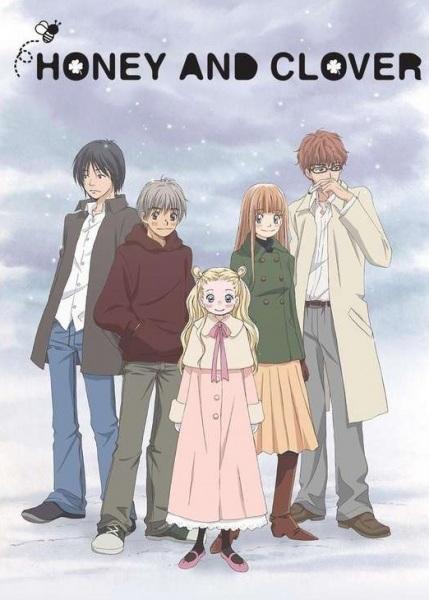
Yuuta Takemoto is a second-year student at an arts college, living in a run-down apartment with two older classmates: the unpredictable Shinobu Morita, who keeps putting off graduation by skipping out, and the dependable Takumi Mayama, a steady presence who often looks after Takemoto like a proper senior.
Takemoto’s quiet routine shifts in spring when he meets Hagumi Hanamoto and is struck by love at first sight. Exceptionally talented, Hagumi joins the same university and quickly becomes friends with Ayumi Yamada, a well-liked ceramics student who already knows the three roommates—and carries unspoken feelings for one of them. Set amid studios and uncertain plans, Honey and Clover follows five friends as their affection, ambitions, and growing pains intertwine into a gentle coming-of-age love polygon.
Otaku Consensus
Honey and Clover earns its reputation as a josei-leaning college drama because Kenichi Kasai’s direction and Yousuke Kuroda’s scripting let comedy, romantic frustration, and post-university dread accumulate instead of resetting episodically. J.C.Staff’s adaptation preserves the gentle eccentricity associated with Chica Umino’s painterly manga sensibility, while Yuuzou Hayashi’s music and insert songs by Spitz and Shikao Suga give the series a distinctly mid-2000s emotional texture. The most persistent barrier is the opening stretch: viewers often need time to adjust to the tonal swings, chibi comedy, and initially tangled relationship dynamics before the character writing clicks.
Why You Should Watch
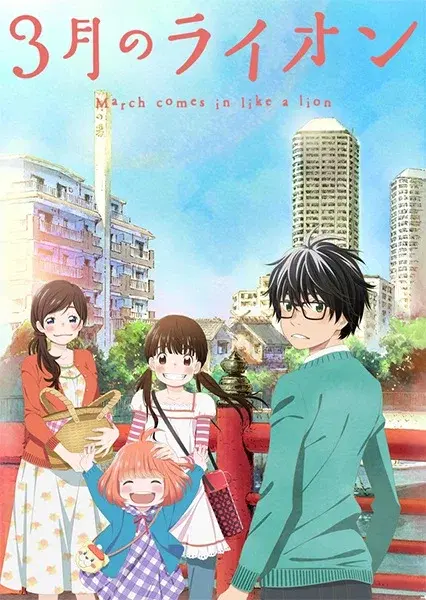
Watch Honey and Clover if you want a romance drama about young adulthood that treats uncertainty as seriously as confession scenes. It scratches a similar itch to Nana in its interest in messy affection and early-adult identity, but with a softer campus rhythm; it also has clear DNA with Chica Umino’s later March Comes in Like a Lion in how it turns private insecurity into character drama. The appeal is not wish fulfillment or tidy pairing wars, but the way friendship, creative ambition, and unrequited love keep colliding in small rooms, studios, and conversations that feel half-comic until they suddenly sting. If high-school romance feels too insulated and workplace drama feels too settled, this sits in the volatile space between them.
Key Characters
- YYuuta Takemoto
Takemoto is the emotional entry point for viewers who remember the specific panic of approaching graduation without a clean answer for who they are becoming.
- SShinobu Morita
Morita is the series’ comic destabilizer, the kind of brilliant chaos agent whose absurd behavior keeps the ensemble from hardening into pure melancholy.
- TTakumi Mayama
Mayama gives the show one of its more adult shades: responsible on the surface, but defined by romantic fixation and the limits of being the dependable one.
- HHagumi Hanamoto
Hagumi stands out because the story treats artistic talent less as a magical gift than as something that changes how other people project feelings onto her.
What Makes It Stand Out
- 1
J.C.Staff’s 24-episode 2005 adaptation was directed by Kenichi Kasai, whose approach favors emotional carryover between episodes rather than a reset-button slice-of-life structure.
- 2
The scripting by Yousuke Kuroda supports a non-episodic pace frequently singled out by reviewers, allowing jokes, crushes, and anxieties to build into longer emotional patterns.
- 3
Yuuzou Hayashi composed the music, and the soundtrack identity is strengthened by insert song performances from Spitz and Shikao Suga, two names that help anchor the show in a recognizable Japanese pop-rock mood.
- 4
The series adapts Chica Umino’s painterly manga sensibility through Hidekazu Shimamura’s character designs and Yutaka Kurosawa’s photography, giving the campus setting a softer, more handmade texture than glossy romance anime of the same period.
- 5
Its genre mix is unusually specific for TV anime romance: AniList tags it heavily as Coming of Age, College, Josei, Unrequited Love, and Primarily Adult Cast, which explains why it is often discussed beside adult-leaning dramas rather than standard school romances.
Fun Facts & Trivia
- Fun fact 1
- Chica Umino, the original creator of Honey and Clover, later created March Comes in Like a Lion, making this series an important earlier example of her interest in gifted young people under emotional pressure.
- Fun fact 2
- The Honey and Clover manga ran from 2000 to 2006, and J.C.Staff’s anime adaptation began airing in 2005 while the source material was still in its final stretch.
- Fun fact 3
- The first TV season aired from April 15, 2005 to September 27, 2005, placing its 24 episodes in the same mid-2000s wave of mature character dramas often compared by fans with titles like Nana and Welcome to the NHK.
- Fun fact 4
- Despite being more niche than mainstream shounen romance, the series maintains a strong database footprint: a 7.98 MyAnimeList score from over 87,000 votes and more than 1,000 AniList favourites.
- Fun fact 5
- The key staff list includes Jin Aketagawa as sound director, a notable detail because the show’s reputation relies heavily on timing: abrupt comedy, quiet pauses, and pop-song placement all need to land without flattening the drama.
Studios
- J.C.Staff