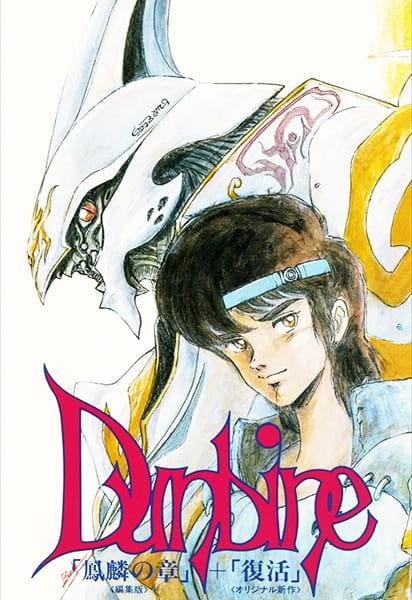
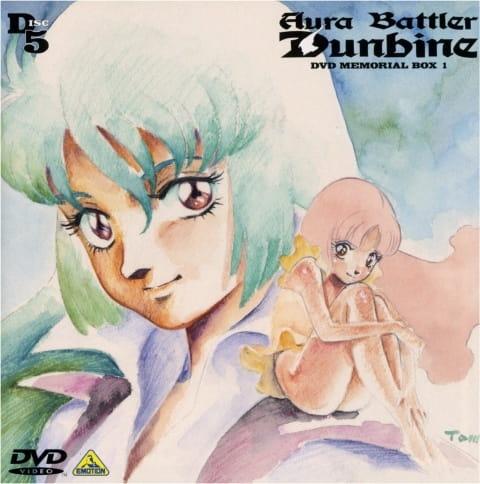
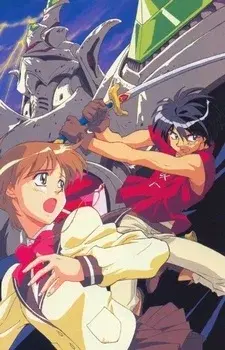
Aura Battler Dunbine
聖戦士ダンバイン (Seisenshi Dunbine)
- Adventure
- Drama
- Fantasy
- Sci-Fi
- Isekai
- Mecha
- Episodes
- 49
- Duration
- 24 min per ep
- Aired
- Feb 5, 1983 to Jan 21, 1984
- Status
- Finished Airing
Synopsis
Eighteen-year-old Shou Zama leads a typical life in Tokyo until he is unexpectedly transported to the enchanting world of Byston Well. Here, he becomes embroiled in the ambitions of the power-hungry lord, Drake Luft, who seeks to dominate the realm. Those summoned from "Upper Earth," like Shou, possess unique aura abilities and are drafted to pilot formidable mecha known as "Aura Battlers," engineered by the mysterious Shot Weapon, another individual from Shou’s world.
As Shou navigates this new reality, his perspective shifts upon meeting Marvel Frozen, a daring young woman determined to oppose Drake's oppressive regime. With her guidance, Shou discovers the darker motives behind the lord's quest for power and decides to join the resistance led by the fearless Neal Given. Together with Riml, the conflicted daughter of their foe who yearns for freedom, they embark on a perilous journey to thwart Drake's ambitions and safeguard the future of Byston Well. United by their resolve, Shou and his allies must confront danger head-on, risking everything to bring about change in a world teetering on the brink of tyranny.
Otaku Consensus
Aura Battler Dunbine remains a respected cult entry rather than a universally embraced classic, reflected in its solid but modest MAL 7.06 and AniList 69 scores. Its strongest asset is Yoshiyuki Tomino’s direction: the series treats an isekai fantasy setting with the military escalation, shifting loyalties, and machine-of-war logic of Sunrise real-robot anime. The recurring criticism is that its 49-episode TV structure can feel uneven, especially for viewers used to tighter modern fantasy or mecha pacing.
Why You Should Watch
Watch Aura Battler Dunbine if you want isekai before the genre became codified: no RPG menus, no power-fantasy wish fulfillment, and no disposable fantasy backdrop. This is a Sunrise war series from 1983 that filters medieval imagery, aura magic, and insect-like mecha through the same hard-nosed dramatic instincts that define Yoshiyuki Tomino’s robot anime. It scratches the Mobile Suit Gundam itch for factional conflict and battlefield consequences, but replaces space colonies with Byston Well’s strange feudal-military texture. Viewers who like The Vision of Escaflowne’s fantasy-mecha blend will find one of its major ancestors here, while Tomino fans get a fascinating bridge between real-robot strategy and mythic otherworld adventure.
Key Characters
- SShow Zama(VA: Shigeru Nakahara)
Show stands out because he is less a wish-fulfillment hero than a Tomino-style outsider forced to define his ethics inside a war machine already in motion.
- MMarvel Frozen(VA: Mika Doi)
Marvel is remembered as the series’ sharp counterweight to Show, bringing experience, conviction, and a rare early-1980s mecha heroine presence that is active rather than ornamental.
- CCham Fau(VA: Maria Kawamura)
Cham gives the series a fairy-tale texture without softening its military tone, functioning as one of Dunbine’s most immediately recognizable fantasy signatures.
What Makes It Stand Out
- 1
It is a 1983 Sunrise TV original created and directed by Yoshiyuki Tomino, placing it in the same studio-era conversation as the early real-robot boom rather than the later light-novel isekai wave.
- 2
The series’ identity comes from its genre collision: AniList tags it as Isekai, War, Military, Real Robot, Super Robot, and Magic, a combination that explains why it feels structurally closer to a campaign chronicle than a standard fantasy quest.
- 3
Tomonori Kogawa handled the character designs, giving the cast the lean, expressive look associated with early-1980s Sunrise drama rather than the glossy archetypes of later fantasy anime.
- 4
Its full 49-episode run allows the conflict to expand through shifting alliances and military pressure, a scale that modern one-cour isekai rarely has room to attempt.
- 5
The production credits include Yasuhiro Imagawa as episode director, storyboard artist, and producer, making Dunbine part of the early career path of a creator later strongly associated with high-energy, operatic mecha direction.
Fun Facts & Trivia
- Fun fact 1
- Aura Battler Dunbine aired from February 5, 1983 to January 21, 1984, meaning its isekai setup predates the modern boom by decades.
- Fun fact 2
- Yoshiyuki Tomino is credited twice at the core of the project: as original creator and director, making this a true Tomino-led original rather than an adaptation assignment.
- Fun fact 3
- The Japanese theme song performance is credited to MIQ, a singer closely associated with classic robot anime music culture.
- Fun fact 4
- Carl Macek is credited for the English ADR script, connecting Dunbine’s English-language history to one of the most influential and controversial figures in early North American anime localization.
- Fun fact 5
- Michihiro Itou is credited for sound effects, a detail worth noting because Dunbine’s fantasy-mecha identity depends heavily on making organic-looking machines feel mechanically violent.
Studios
- Sunrise
No community data yet. Be the first to add Aura Battler Dunbine to your list!