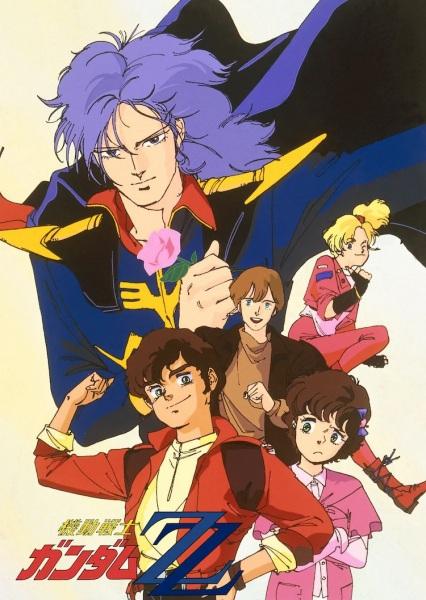
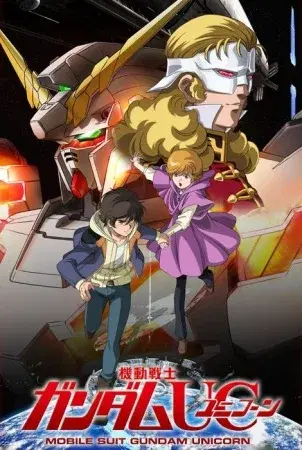
Mobile Suit Zeta Gundam
機動戦士Ζガンダム (Kidou Senshi Zeta Gundam)
- Drama
- Romance
- Sci-Fi
- Mecha
- Military
- Space
- Episodes
- 50
- Duration
- 24 min per ep
- Aired
- Mar 2, 1985 to Feb 22, 1986
- Status
- Finished Airing
Synopsis
Universal Century 0087 follows the end of the One Year War, with the Earth Federation turning to an elite unit called the Titans to eliminate remaining Zeon elements. Tasked with keeping order, the Titans instead grow increasingly authoritarian, prompting the rise of a resistance movement: the Anti-Earth Union Group (AEUG).
In the colony Green Noa—also home to a Titan base—17-year-old Kamille Bidan draws attention after striking a Titan officer. As tensions erupt during an AEUG raid led by former Zeon ace Char Aznable, now operating under the name Quattro Bajeena, Kamille seizes a Titans prototype Gundam. The theft pulls him into a widening struggle in space, where shifting loyalties and military ambition collide.
Otaku Consensus
Yoshiyuki Tomino’s uncompromising direction, Sunrise’s unusually strong mid-1980s television animation, and a politically charged examination of postwar institutional collapse make Zeta Gundam one of the franchise’s defining sequels. Its mobile-suit battles carry lasting dramatic consequences, but the 50-episode structure is frequently criticized for repetitive confrontations, abrupt character behavior, strained dialogue, and uneven mid-series pacing. Even divided viewers tend to recognize the opening and climactic runs as exceptionally forceful television animation for their era.
Why You Should Watch
Watch Zeta Gundam if you want military science fiction without stable moral blocs, easy victories, or heroes protected from psychological fallout. It scratches the political-space-opera itch of Legend of the Galactic Heroes while anticipating Neon Genesis Evangelion’s interest in emotionally vulnerable pilots trapped inside military systems. Tomino uses 50 episodes to show how violence reshapes relationships, authority, and even the returning veterans of the original Mobile Suit Gundam; familiar faces matter, but they never displace the new generation. Sunrise’s sharply staged fleet engagements, the varied mechanical lineup shaped by Kunio Okawara and Mamoru Nagano, and Shigeaki Saegusa’s dramatic score give the conflict considerable audiovisual weight. This is best approached after the 1979 series: much of its power comes from seeing earlier ideals survive in compromised people and institutions.
Key Characters
- KKamille Bidan(VA: Nobuo Tobita)
Kamille’s abrasive impulsiveness, acute sensitivity, and mounting exposure to military trauma make him a deliberately difficult protagonist rather than a conventional adolescent ace.
- CChar Aznable(VA: Shuuichi Ikeda)
Operating as Quattro Bajeena, Char becomes fascinating in a new register: the franchise’s charismatic former rival must function as a public leader and guide while carrying the weight of his earlier identity.
What Makes It Stand Out
- 1
Sunrise treats mobile suits as components of coordinated military operations rather than isolated superhero machines, emphasizing formations, pursuit, retreat, and the spatial geography of combat.
- 2
The series shifts its dramatic center to a new generation while retaining figures such as Char, Amuro, Kai, and Hayato in smaller but consequential roles, allowing the sequel to examine what became of the original cast without turning into a reunion vehicle.
- 3
Yoshikazu Yasuhiko’s character-design foundation is paired with mechanical work by Kunio Okawara and design contributions from Mamoru Nagano, giving the production a visual bridge between the original Gundam and more elaborate 1980s mecha aesthetics.
- 4
The opening and final five-episode stretches are repeatedly singled out in fan commentary for near-film-level animation and memorable combat staging, standing above the more variable television production between them.
- 5
Shigeaki Saegusa’s music supports both military spectacle and personal tragedy, reinforcing Zeta Gundam’s darker register without abandoning the operatic scale associated with Universal Century storytelling.
Fun Facts & Trivia
- Fun fact 1
- Yoshiyuki Tomino held both original-creator and chief-director credits, and he also wrote lyrics for an insert song, extending his authorship beyond story and direction.
- Fun fact 2
- Osamu Sekita directed 11 episodes spread across the entire broadcast, from episode 2 through episode 48, giving him a recurring production role at regular intervals rather than responsibility for one continuous block.
- Fun fact 3
- The insert-song staff joins performer Hiroko Moriguchi with composer Kouji Makaino and lyricist Yoshiyuki Tomino, an unusual overlap between the series’ chief director and its musical credits.
- Fun fact 4
- Zeta Gundam aired for 50 episodes from March 2, 1985, to February 22, 1986, making it a full-year television sequel rather than a later compilation or revival project.
- Fun fact 5
- Although it directly follows the first Mobile Suit Gundam, the series makes Kamille its protagonist and reduces returning heroes such as Amuro, Kai, and Hayato to secondary yet significant appearances.
Studios
- Sunrise