The Vision of Escaflowne
天空のエスカフローネ (Tenkuu no Escaflowne)
- Adventure
- Fantasy
- Isekai
- Romance
- Love Polygon
- Mecha
- Episodes
- 26
- Duration
- 24 min per ep
- Aired
- Apr 2, 1996 to Sep 24, 1996
- Status
- Finished Airing
Synopsis
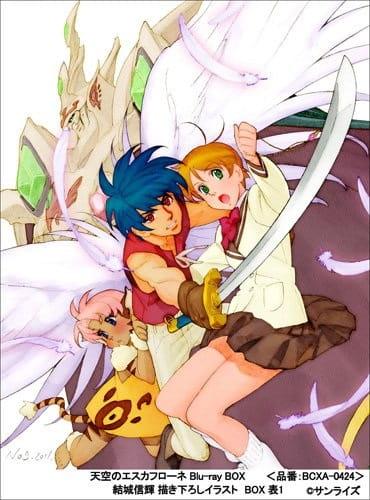
Fifteen-year-old Hitomi Kanzaki leads a normal student life, aside from her fascination with tarot and fortune-telling. One night, her quiet routine is shattered when Van Fanel drops into her world from the sky, pursued by a ferocious dragon. Acting on a sudden premonition, Hitomi helps Van turn the tide—only for a blinding beam of light to whisk them away to Gaea, a strange realm where Earth itself hangs overhead.
On Gaea, Hitomi learns Van is the prince of Fanelia, a kingdom soon crushed under assault by the Zaibach Empire. Desperate to resist, Van awakens Escaflowne, his family’s ancient guymelef, but even its power can’t prevent Fanelia’s fall. Forced into flight, the pair cross paths with Allen Schezar, a gallant Asturian knight who bears an uncanny resemblance to someone Hitomi admired back on Earth. With new companions and mounting stakes, Hitomi and Van struggle against Zaibach’s advance as the empire seeks to restore a long-dormant force.
Otaku Consensus
The Vision of Escaflowne remains a well-regarded 1996 Sunrise original because Kazuki Akane’s direction keeps its romance, war drama, swordplay, and super-robot spectacle moving with unusual urgency across a complete 26-episode run. Critics and fans consistently praise its emotionally charged plotting, strong animation, and genre fusion, reflected in a durable 7.66 MAL score from over 70,000 votes and a 73/100 AniList score. Its recurring flaw is compression: the series covers so much political conflict, mythology, villainy, and romantic tension that some developments feel overstuffed rather than fully breathed.
Why You Should Watch
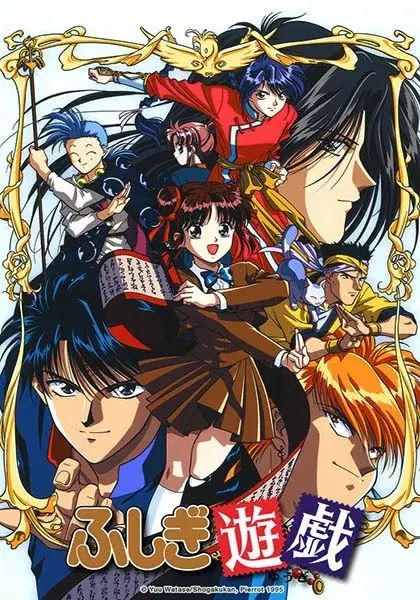
Watch The Vision of Escaflowne if you want isekai before the genre became level screens, guild quests, and self-insert power fantasy. It scratches the same itch as Fushigi Yuugi’s romantic otherworld drama and Gundam’s war-machine politics, but filters both through tarot premonitions, knightly swordplay, dragons, ancient technology, and giant armored guymelefs. The appeal is the collision of moods: a shoujo-leaning love polygon sits beside fugitive travel, imperial strategy, and mythic lost-civilization lore without treating any one strand as decorative. Viewers who like fantasy with mechanical design, or mecha where the battlefield has emotional and political consequences, will find a rare hybrid here. Its 26-episode length also makes it tighter than many 1990s epics while still feeling like a full adventure.
Key Characters
- HHitomi Kanzaki
Hitomi is memorable because her tarot and premonitions make her an active pressure point in the story’s strategy, romance, and supernatural machinery rather than a passive isekai observer.
- VVan Fanel
Van is the series’ sharpest genre blend: a fantasy prince, sword-fighter, and super-robot pilot whose appeal comes from how often heroism is tangled with anger, duty, and vulnerability.
- AAllen Schezar
Allen is designed like a classic chivalric bishonen ideal, and fans tend to remember him for how that polished gallantry complicates the show’s romance and loyalty dynamics.
What Makes It Stand Out
- 1
Sunrise builds the series around guymelefs rather than conventional hard-sci-fi mobile suits, letting the mecha action lean into swordplay, royal lineages, and fantasy warfare while still delivering super-robot spectacle.
- 2
The creative spine is unusually concentrated: Shouji Kawamori is credited as original creator, supervisor, and series composition, with Sunrise’s Hajime Yatate also credited as original creator and Kazuki Akane directing the TV run.
- 3
Nobuteru Yuuki’s character designs and Kimitoshi Yamane’s mechanical designs give the show two distinct visual languages: elegant, sharp-featured character drama and ornate war machines that feel native to a fantasy world.
- 4
Its structure is denser than many 1990s adventure shows, moving through travel, fugitive survival, war, politics, mythology, and lost-civilization material in 26 episodes instead of relying on episodic reset adventures.
- 5
Contemporary and retrospective reviews repeatedly note that the series is not only an adventure-romance hybrid; beneath the spectacle are pointed critiques of imperial ambition, proxy conflict, and political manipulation.
Fun Facts & Trivia
- Fun fact 1
- The show aired as a completed two-cour TV anime from April 2, 1996 to September 24, 1996, giving it a compact broadcast footprint compared with many longer 1990s fantasy and mecha productions.
- Fun fact 2
- Hajime Yatate, credited here as an original creator, is Sunrise’s collective house name, while Shouji Kawamori’s multiple credits show how closely the Macross co-creator was tied to Escaflowne’s concept and structure.
- Fun fact 3
- The production credits separate character design, mechanical design, and design assistance: Nobuteru Yuuki handled characters, Kimitoshi Yamane handled mecha, and Junya Ishigaki and Shingo Takeba are credited for design assistance.
- Fun fact 4
- AniList’s tag profile captures the show’s unusual mix: Isekai at 96%, Lost Civilization at 84%, Dragons and Travel at 82%, Swordplay at 80%, and Politics, War, Fugitive, and Proxy Battle all clustered around 79%.
- Fun fact 5
- Even decades after airing, it retains a sizable database footprint: over 70,000 MAL voters, a MAL popularity rank around the mid-1500s, and 876 AniList favourites.
Studios
- Sunrise
No community data yet. Be the first to add The Vision of Escaflowne to your list!