One Piece isn’t just “that really long pirate anime.” It’s a decades-spanning adventure story that blends slapstick comedy, heartfelt drama, and surprisingly sharp worldbuilding into a single, endlessly expanding voyage. If you’ve ever wondered why fans treat it like a modern myth—or whether it’s actually a good place to start—this is your spoiler-free primer.
What is One Piece About?
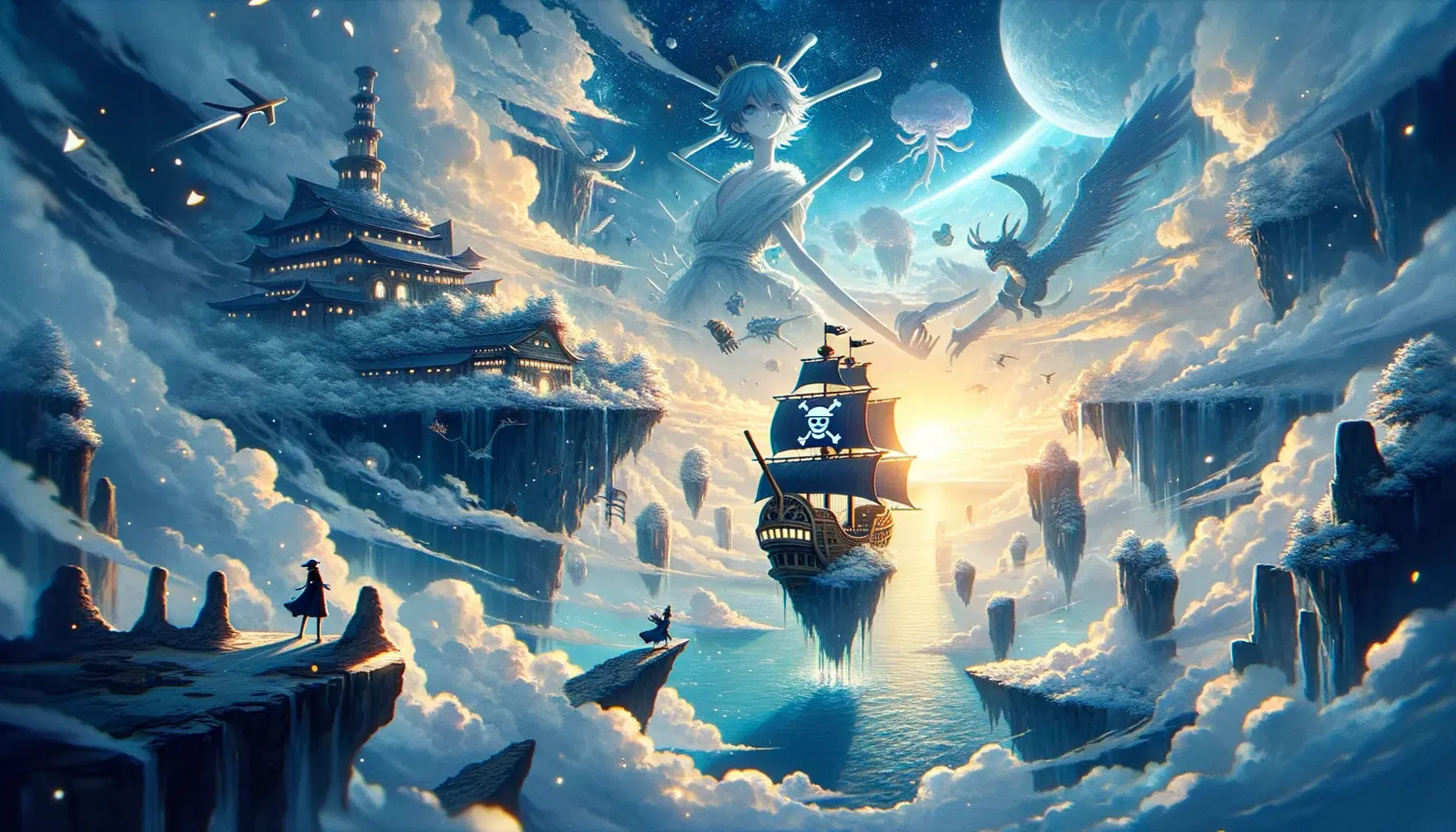
At its core, One Piece follows Monkey D. Luffy, a rubber-bodied dreamer with one simple goal: become the Pirate King by finding the legendary treasure known as the “One Piece.” That premise sounds straightforward, but the hook is how quickly the series turns “pirate adventure” into a full-on living world—one with shifting governments, dangerous seas, eccentric islands, and a cast of characters whose dreams are as important as Luffy’s.
The story begins with Luffy setting out to sea to build a crew. Not a disposable team of sidekicks, but a found family: specialists with distinct goals, flaws, and histories. They’re not chasing treasure for the sake of greed; they’re chasing freedom, truth, redemption, and belonging. One Piece’s tone is famously elastic: it can pivot from absurd comedy to emotional gut-punches without feeling like it’s betraying itself. That’s because the series treats ideals—friendship, loyalty, personal conviction—as real forces that shape the world.
The world of One Piece is also structured like an escalating travelogue. Each new location introduces different cultures, rules, and conflicts, which keeps the “adventure of the week” feeling fresh while feeding a bigger, long-term mystery. If you like stories where tiny details matter later, where the map keeps expanding, and where every new crewmate changes the emotional chemistry, this is the blueprint.
For newcomers deciding between big shonen pillars, it’s helpful to know One Piece’s vibe: it’s more about exploration and camaraderie than tournament ladders. If you’re coming from something like Naruto or Bleach, One Piece will feel less like a straight climb up a power scale and more like a long road trip where the world itself is the main character.
Why is One Piece So Popular?
One Piece is popular for the same reason long-running epics become cultural touchstones: it makes viewers feel like they’re living inside a world that keeps growing. The series has an almost unmatched talent for payoff—planting ideas early and returning to them much later in ways that feel earned. That creates a “just one more episode” effect, but also a “wait, that mattered?” satisfaction that keeps fans engaged for years.
1) A world that feels bigger than the plot
Many anime build a setting to support a story. One Piece builds a setting that seems like it could exist even if Luffy weren’t in it. There are political powers, criminal networks, ideologies, and historical mysteries that extend beyond any single arc. That scope is part of why fans talk about it the way fantasy readers talk about massive novel series.
2) Characters with real emotional gravity
One Piece’s character writing is deceptively strong. Even when designs are exaggerated, motivations tend to be grounded: people want to protect their homes, prove their worth, heal from loss, or reclaim stolen freedom. The crew dynamic is a key ingredient—watching bonds form through shared hardship is the emotional engine. If you’ve enjoyed the “found family” appeal of My Hero Academia or the crew chemistry of Cowboy Bebop, One Piece offers that, scaled up.
3) Tone control: comedy that doesn’t undercut stakes
One Piece can be hilarious—often cartoonishly so—but when it asks you to take something seriously, it commits. That balance is hard to pull off. Shows like Gintama are masters of whiplash comedy-to-drama; One Piece does it with a more earnest, adventure-forward spirit.
4) Cultural impact and longevity
There’s also the simple fact of time: One Piece has been a weekly fixture for so long that multiple generations have grown up with it. It’s a gateway anime in many regions, and it’s a shared language for fandom—references, memes, debates, and emotional milestones. In the same way Dragon Ball Z defined a global shonen baseline, One Piece became a modern benchmark for long-form storytelling.
5) The “freedom” fantasy
Underneath the pirates and punchlines, One Piece is about choosing your own path—and paying the price to protect that choice. That theme resonates across cultures, which is why the series doesn’t just survive; it recruits.
Where to Watch One Piece
Availability varies by region, but One Piece is widely accessible on major streaming platforms, typically with both subtitled and dubbed options.
- Crunchyroll: Often the most comprehensive option for the anime, with a large episode library and subtitles (and frequently dub availability depending on region). It’s usually the go-to for staying current.
- Netflix: In many countries, Netflix carries select batches of episodes (sometimes organized by “sagas” or seasons). It’s a convenient entry point if you want to sample the series without committing to a dedicated anime service.
- Hulu: In the U.S., Hulu has historically offered a significant portion of the series, often with sub and dub options.
If you’re new: check whether your platform lists One Piece as “Season 1/2/3…” or by saga—different services label arcs differently. Also, if you prefer English dub, confirm the dub coverage for your region, since some platforms have more complete dub catalogs than others.
For tracking your progress (and avoiding the “what episode was I on?” problem), you can follow the series on Otaku Den here: One Piece.
Is One Piece Worth Watching?
Yes—with a very specific caveat: One Piece is worth watching if you’re open to the idea that the journey is the point. This isn’t a 12-episode sprint; it’s a long-form adventure designed to be lived in.
Otaku Insider’s take
One Piece is one of the rare “mega-series” that earns its reputation because it understands momentum. Even when individual arcs vary in pace, the show’s strengths—worldbuilding, emotional crescendos, and the crew’s chemistry—create a sense of forward motion that keeps you invested.
You’ll probably love One Piece if you want:
- A big, imaginative world with constant discovery
- A cast that grows into a true found family
- Emotional storytelling that can hit hard without losing its sense of fun
- Long-term mysteries and payoffs
You might bounce off One Piece if you prefer:
- Tight, short seasons with minimal filler or slow stretches
- A consistently serious tone (this series is proudly silly at times)
- Fast power-progression storytelling over exploration
If you’re worried about length, treat it like a long-running sitcom or a sprawling fantasy saga: watch an arc, take a break, come back when you miss the crew. It’s not homework—it's a voyage.
Similar Anime to One Piece
If One Piece’s mix of adventure, friendship, and larger-than-life ambition grabbed you, these series hit similar notes—whether through pirate energy, grand journeys, or that “crew against the world” feeling.
-
Hunter x Hunter (2011) A top-tier pick for fans who love adventure structure and clever escalation. Like One Piece, it starts with a simple goal and expands into a complex world with shifting rules.
-
Fullmetal Alchemist: Brotherhood For viewers who want tight plotting with big emotional payoffs. It’s shorter and more streamlined than One Piece, but scratches the same itch for found family, moral stakes, and world mysteries.
-
Magi: The Labyrinth of Magic A globe-trotting fantasy with vibrant settings, power systems, and a sense of wonder. If you like the “new country, new culture, new conflict” rhythm of One Piece, Magi is a great next stop.
-
Fairy Tail If what you love most is the friendship-first vibe and a big ensemble cast, Fairy Tail leans hard into that warm, guild-as-family atmosphere.
-
JoJo’s Bizarre Adventure Not a pirate story, but absolutely a “generational epic” with iconic characters, creative battles, and a fandom culture that thrives on big moments and bigger personalities.
-
Dragon Ball Z A foundational shonen journey with globe-shaking fights and a sense of mythic escalation. If you want to understand the DNA that influenced modern battle anime—including One Piece’s era—this is essential.
-
Naruto Another long-running shonen pillar with a huge cast and a central theme of belonging. If you enjoy long arcs, rivalries, and emotional backstories, Naruto is a natural companion.
-
Bleach For fans who want stylish action, a big roster of allies and enemies, and arc-based storytelling. Bleach is more supernatural than nautical, but it shares that “crew expands, world expands” progression.
If you want even more “big journey” anime, you can also browse Otaku Den staples like Attack on Titan for high-stakes world mysteries, or Demon Slayer for a more modern, tightly paced shonen experience.
If you’ve been on the fence, the best way to understand One Piece is to sample the early stretch and see whether the crew’s energy clicks for you. When it does, you’re not just watching episodes—you’re joining an ongoing adventure that’s become a cornerstone of anime culture.
Written by Ranen with AI support — Ranen picks every story, shapes the angle, and reviews each article before it's published. Learn more in our editorial policy.